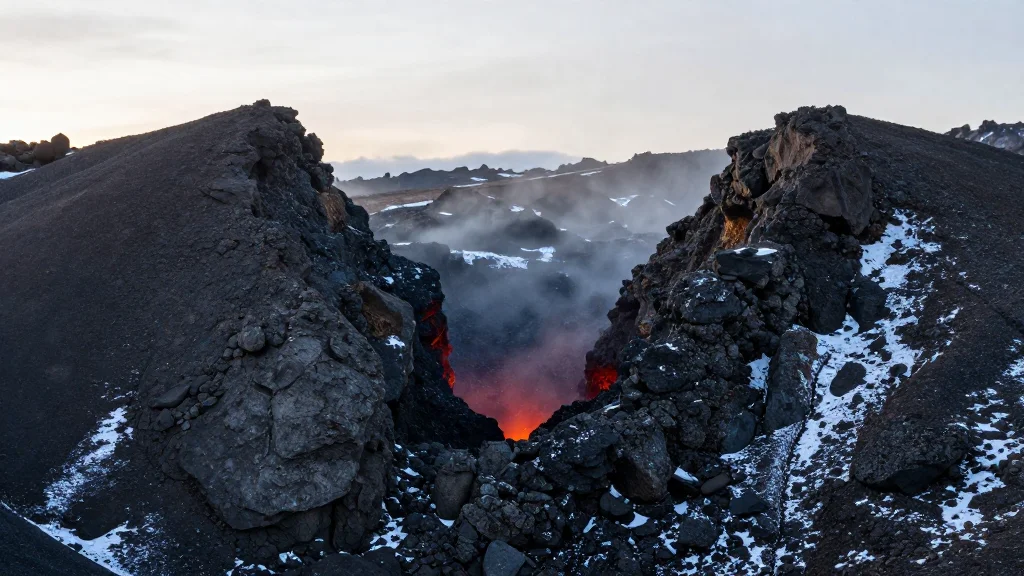
Surveys Capture the Pulsing of Mantle Plumes—A Potential Cause of Mass Extinctions
Why It Matters
Understanding pulsing mantle plumes reshapes how scientists model rapid carbon release and climate disruption, improving predictions of future volcanic impacts on the atmosphere. It also refines exploration strategies for large igneous provinces that host valuable mineral resources.
Key Takeaways
- •Seismic imaging shows periodic melt surges beneath Iceland’s ridges
- •Rock samples reveal mantle source 30 °C hotter than trench rocks
- •Pulsing plumes can generate carbon spikes matching extinction timescales
- •Study links plume pulses to PETM carbon budget surge
- •Similar pulsing hinted beneath Canary Islands and East African Afar
Pulse Analysis
The traditional view of mantle plumes as continuous, furnace‑like columns has been challenged by a new suite of geophysical observations around Iceland. Over five years, scientists deployed ocean‑bottom seismometers from the research vessel Marcus G. Langseth and recovered volcanic cores with the retired JOIDES Resolution. Repeating anomalies in seismic wave speeds, coupled with rock chemistry that records a mantle source roughly 30 °C hotter than surrounding material, point to episodic melt pulses that thicken the crust in distinct V‑shaped ridges. This “lava‑lamp” model provides a tangible mechanism for how deep Earth processes can vary on thousand‑year timescales.
The pulsing plume hypothesis carries profound implications for Earth’s climate history. Large igneous provinces have long been implicated in mass‑extinction events, yet the timing of carbon release has been difficult to reconcile with the rapid temperature spikes recorded in the fossil record. Intermittent melt surges can unleash massive CO₂ bursts in relatively short intervals, matching the abrupt climate perturbations seen at the end‑Permian extinction and the Paleocene‑Eocene Thermal Maximum (PETM). By quantifying the heat excess and melt volume associated with each pulse, researchers can now estimate carbon fluxes that align with geological carbon‑isotope excursions, bridging a critical gap between volcanism and rapid warming.
Beyond paleoclimate, recognizing plume pulsatility reshapes exploration of mineral-rich large igneous provinces and informs hazard assessments for modern volcanic regions. Similar pulse signatures have been identified beneath the Canary Islands and East Africa’s Afar plume, suggesting a broader, perhaps global, phenomenon. Future work will integrate high‑resolution seismic tomography with geochemical modeling to map pulse frequencies and amplitudes worldwide. Such insights will refine climate‑impact forecasts and guide resource extraction strategies, underscoring the interdisciplinary relevance of mantle dynamics.
Surveys capture the pulsing of mantle plumes—a potential cause of mass extinctions
Comments
Want to join the conversation?
Loading comments...