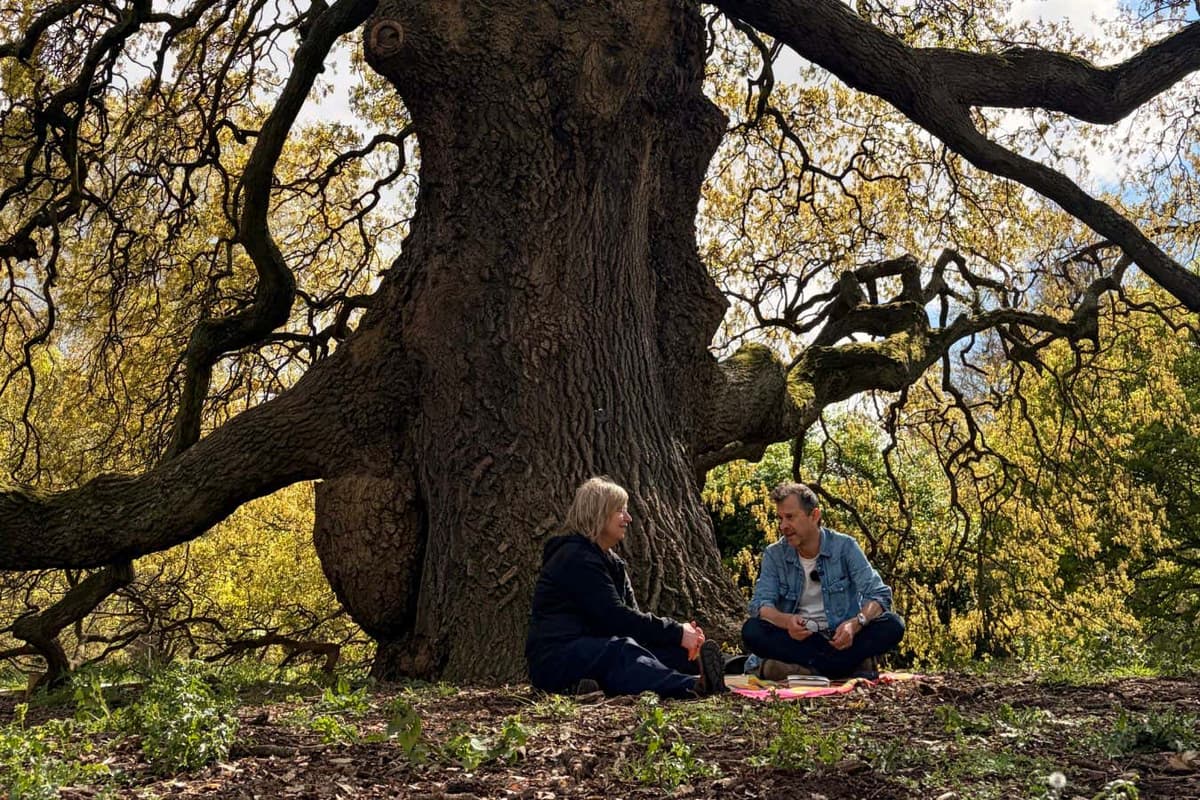
Suzanne Simard on the Wood Wide Web, Connectedness – and Avatar
Why It Matters
Understanding tree communication reshapes forest management and carbon‑sequestration strategies, while media attention amplifies public support for ecosystem‑based policies.
Key Takeaways
- •1997 study proved trees share nutrients through fungal networks
- •Finding the Mother Tree sparked global interest and scientific controversy
- •Critics argue resource sharing lacks rigorous empirical proof
- •Simard’s work influences climate‑resilient forestry and restoration projects
- •Hollywood interest may bring ecological concepts to mainstream audiences
Pulse Analysis
Suzanne Simard’s research on mycorrhizal networks has redefined how scientists view forest ecosystems. Her 1997 Nature paper documented that trees exchange carbon, water, and nutrients through a subterranean fungal web, a phenomenon popularly dubbed the “wood wide web.” By mapping carbon flow between parent “mother trees” and their offspring, Simard demonstrated that individual trees operate as cooperative units rather than isolated competitors. This paradigm shift has sparked interdisciplinary studies, linking ecology with soil science, remote sensing, and even network theory, and has become a cornerstone for modern forest‑biology curricula.
The elegance of Simard’s findings has not been without controversy. Some botanists contend that the observed nutrient transfer is incidental rather than a purposeful exchange, arguing that experimental designs often lack controls for soil heterogeneity. Recent meta‑analyses, however, have begun to quantify the magnitude of carbon sharing, suggesting that mature trees can subsidize seedlings during droughts. This debate underscores a broader methodological challenge: measuring invisible below‑ground processes at ecosystem scales. As more high‑resolution isotopic tracing and DNA sequencing tools become affordable, the scientific community is poised to resolve lingering doubts.
Beyond academia, Simard’s work is reshaping forest management and climate policy. Agencies are incorporating the concept of “mother trees” into restoration guidelines, protecting legacy trees that serve as nutrient hubs and enhance carbon sequestration. The public’s fascination, amplified by best‑selling books and a pending James Cameron film collaboration, translates into stronger political support for ecosystem‑based approaches and carbon‑credit schemes that reward whole‑forest health. By bridging rigorous science with compelling storytelling, Simard is helping to align economic incentives with ecological resilience, a synergy that could accelerate the transition to nature‑positive economies.
Suzanne Simard on the wood wide web, connectedness – and Avatar
Comments
Want to join the conversation?
Loading comments...