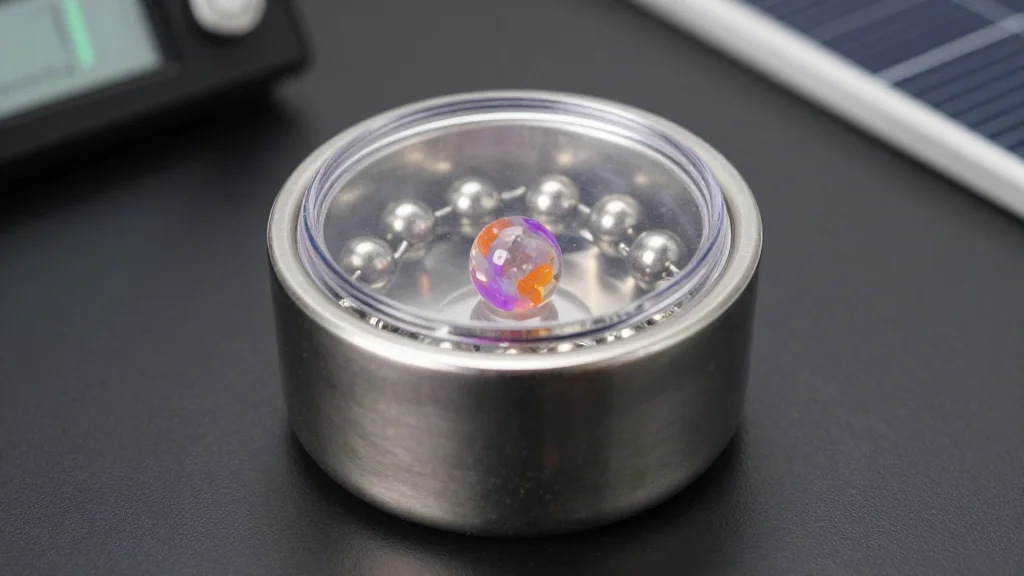
Swift Creation of Conductive Organic Compounds via Mechanochemistry
Why It Matters
The method slashes reaction time and solvent waste, lowering production costs and environmental impact while enabling broader industrial adoption of conductive organic materials.
Key Takeaways
- •Mechanochemical DHDP synthesis completes in 15 minutes.
- •Solvent consumption reduced by approximately 99%.
- •Reaction proceeds under ambient air, no inert atmosphere needed.
- •Ball‑mill approach offers scalable, cost‑effective production.
- •Conductive DHDPs support greener OLED and photovoltaic technologies.
Pulse Analysis
Mechanochemistry has moved from a niche laboratory curiosity to a mainstream tool for sustainable synthesis, driven by its ability to replace bulk solvents with mechanical energy. The Nagoya University team’s lithium‑mediated annulative dimerization showcases how solid‑state reactions can achieve complex bond formations that previously required multi‑step, solvent‑heavy protocols. By leveraging high‑speed vibrational milling, the researchers not only accelerated the formation of DHDPs but also demonstrated that the reaction tolerates air, eliminating the need for costly inert‑gas gloveboxes.
The technical elegance of the process lies in its simplicity: solid lithium wire and 2‑arylethynylnaphthalene are combined with a trace amount of THF in a stainless‑steel milling jar, then subjected to vigorous ball‑milling. Within 15 minutes, the annulative dimerization yields high‑purity DHDP derivatives, which are quenched with aqueous ammonium chloride for easy isolation. This rapid, low‑solvent workflow translates directly into manufacturing advantages—reduced energy consumption, minimal waste handling, and a compact equipment footprint that can be scaled from gram to kilogram batches without the safety and regulatory burdens of large‑volume solvent handling.
Beyond DHDPs, the study signals a broader shift toward green chemistry in the electronics supply chain. Conductive organic compounds are integral to next‑generation OLED panels, flexible photovoltaics, and anti‑static coatings; making them more sustainably could lower the carbon intensity of consumer devices. As industries grapple with stricter environmental regulations and rising material costs, mechanochemical routes like this offer a viable path to greener, cost‑effective production, encouraging further investment in ball‑mill technology and interdisciplinary collaborations that blend mechanical engineering with synthetic organic chemistry.
Swift Creation of Conductive Organic Compounds via Mechanochemistry
Comments
Want to join the conversation?
Loading comments...