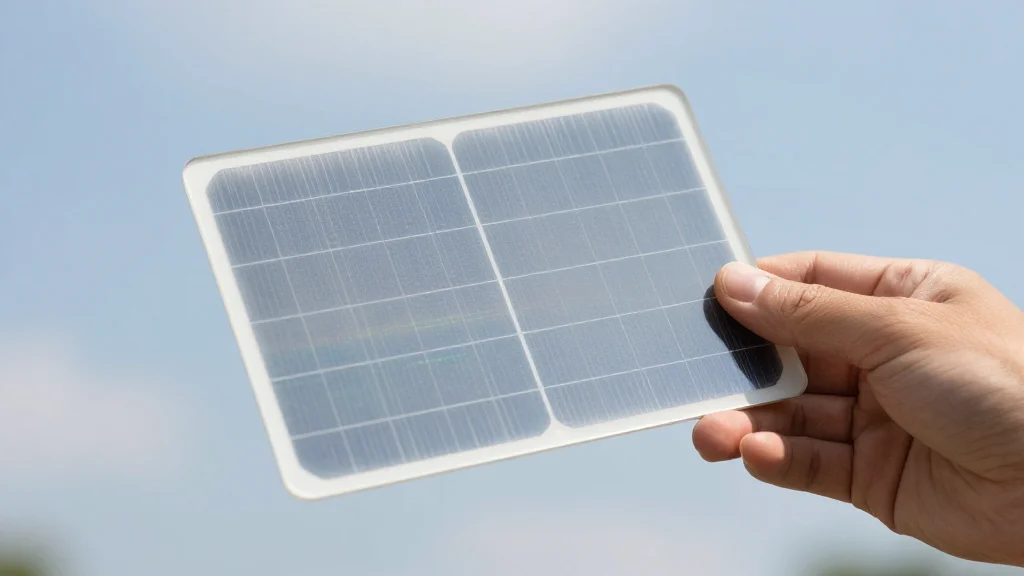
Synergistic Dual‐Passivation of Grain Boundaries and Buried Interface for High‐Efficiency and Stable Perovskite Solar Cells
Why It Matters
The breakthrough pushes perovskite solar cells closer to commercial viability by pairing record‑high efficiency with unprecedented long‑term stability, addressing two of the industry’s biggest hurdles.
Key Takeaways
- •Dual-passivation uses DMDPTF for grain boundaries and Co(OAc)2 for SnO2 interface
- •Achieved 25.41% efficiency in n‑i‑p cells, 26.41% in p‑i‑n cells
- •Small‑area devices retain 99% performance after 2,448 hours dark storage
- •Module size 10 cm² reaches 22.18% efficiency, demonstrating scalability
- •Strategy simultaneously improves crystallization and reduces interfacial recombination
Pulse Analysis
Perovskite photovoltaics have surged in research labs, yet widespread adoption has been hampered by defect‑induced losses and rapid degradation. Traditional passivation techniques often target either bulk crystal quality or interfacial recombination, leaving a performance gap. The dual‑passivation strategy reported here bridges that gap by simultaneously repairing grain boundaries with DMDPTF and engineering a low‑defect SnO2 interface via Co(OAc)2. This coordinated chemistry not only accelerates perovskite crystallization but also creates a chemically benign contact that curtails charge‑carrier traps, a combination rarely achieved in a single processing step.
The experimental results underscore the potency of the approach. Small‑area n‑i‑p devices achieved a 25.41% PCE, while the inverted p‑i‑n architecture pushed efficiency to 26.41%, surpassing most single‑junction perovskite records. Even when scaled to a 10 cm² module, the cells maintained a respectable 22.18% efficiency, indicating that the passivation chemistry translates beyond laboratory‑scale flakes. Moreover, the unencapsulated devices preserved 99% of their initial performance after 2,448 hours of dark storage, a stability metric that rivals commercial silicon panels and addresses a critical reliability concern for investors and utilities.
From a market perspective, coupling high efficiency with long‑term stability could accelerate perovskite integration into tandem architectures and utility‑scale farms. The low‑temperature, solution‑based processes are compatible with existing roll‑to‑roll manufacturing lines, suggesting a clear pathway to cost‑effective, high‑throughput production. As the renewable sector seeks ever‑higher energy yields, this dual‑passivation breakthrough positions perovskite technology as a credible contender for the next generation of solar power, potentially reshaping the competitive landscape against traditional silicon and thin‑film solutions.
Synergistic Dual‐Passivation of Grain Boundaries and Buried Interface for High‐Efficiency and Stable Perovskite Solar Cells
Comments
Want to join the conversation?
Loading comments...