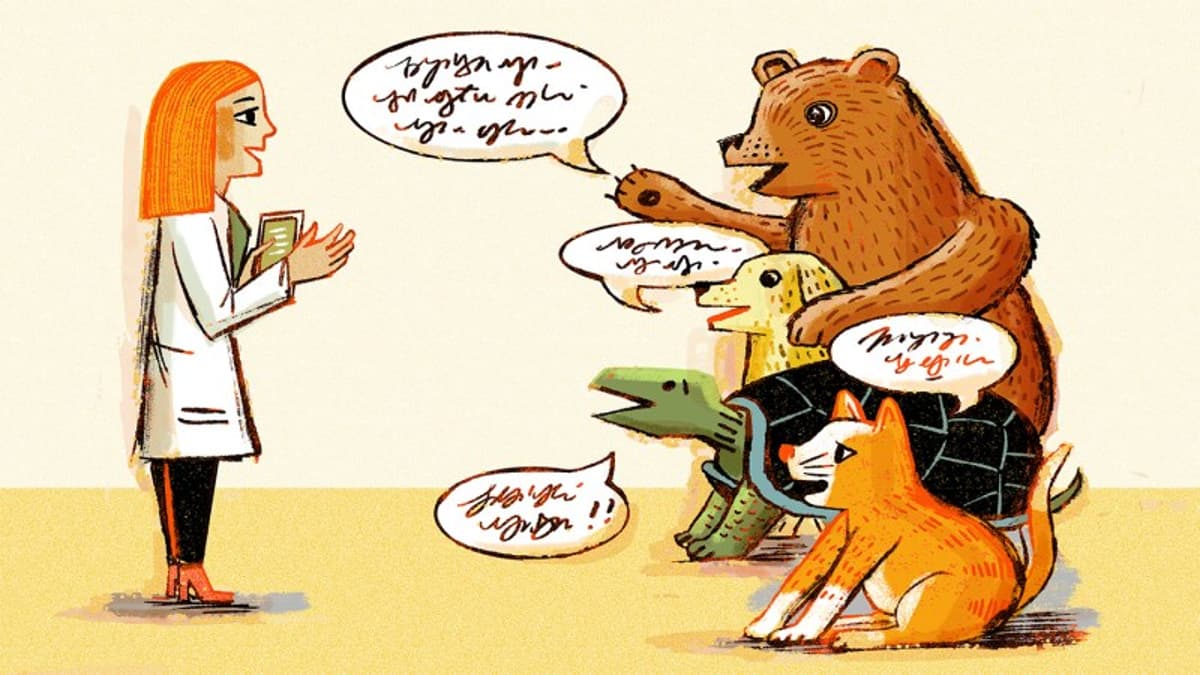
Talking Dogs and Chatty Cats Could One Day ‘Speak’ in Our Language
Why It Matters
Translating animal communication could transform pet care, wildlife conservation, and our understanding of cognition, while also raising new ethical considerations.
Key Takeaways
- •AI advances accelerate animal vocalization decoding.
- •Only about 1% of vertebrates are true vocal learners.
- •Scientists decoded a whale “hello,” enabling brief interspecies chat.
- •Mice engineered with human NOVA1 protein emit richer vocalizations.
- •Animals also communicate via posture, color and ground thumping.
Pulse Analysis
Understanding animal communication has moved from speculative fiction to a burgeoning scientific discipline. Researchers define true vocal learners—species capable of modifying sounds based on auditory feedback—as the key to decipherable speech, a trait found in less than one percent of vertebrates. Advances in machine learning, high‑resolution acoustic recording, and neural imaging now allow scientists to map the structure of animal calls with unprecedented precision. By converting these patterns into statistical models, AI can begin to translate the syntax of dolphin clicks, bird songs, and even rodent squeaks into human‑readable data.
Recent milestones illustrate how quickly the field is progressing. In 2023 a team successfully translated a humpback whale’s greeting into a simple English “hello,” enabling a brief back‑and‑forth exchange that, while rudimentary, proved interspecies dialogue is feasible. Parallel work at Rockefeller University showed a parrot that spent years in California could acquire and use Spanish, highlighting the plasticity of avian vocal circuits. Meanwhile, genetic engineering experiments inserting the human‑compatible NOVA1 protein into mice have produced more intricate ultrasonic vocalizations, offering a laboratory model for testing translation algorithms.
The practical ramifications extend far beyond academic curiosity. Pet owners could soon access real‑time interpreters that convey a cat’s hunger or a dog’s anxiety, improving animal welfare and reducing miscommunication. In wildlife conservation, decoded calls may reveal stress signals in endangered species, informing more effective protection strategies. However, the technology also raises ethical questions about privacy, anthropomorphism, and the potential manipulation of animal behavior. As AI-driven translation tools mature, regulators, ethicists, and technologists will need to collaborate to ensure that the newfound voice of animals is used responsibly.
Talking dogs and chatty cats could one day ‘speak’ in our language
Comments
Want to join the conversation?
Loading comments...