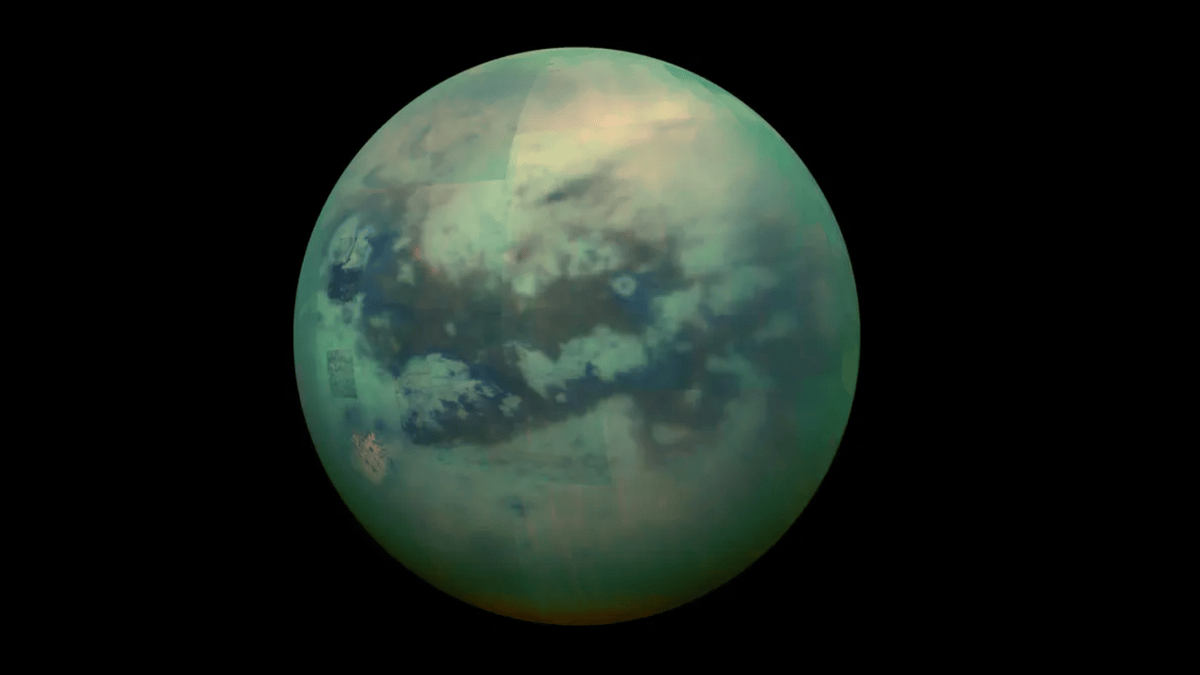
'Tall Waves Moving in Slow Motion': Here's How Oily Oceans on Saturn's Giant Moon Titan May Behave
Why It Matters
Understanding wave activity on Titan and other worlds is critical for interpreting shoreline geology and for engineering probes that can survive harsh extraterrestrial seas.
Key Takeaways
- •PlanetWaves model incorporates gravity, pressure, density, viscosity, surface tension.
- •Model validated on 20 years of Lake Superior buoy data.
- •Titan's low gravity and light hydrocarbons enable 10‑foot waves.
- •Findings inform design of future floating probes on Titan.
- •Exoplanet wave predictions show stronger winds needed on denser liquids.
Pulse Analysis
PlanetWaves marks a leap forward in planetary fluid dynamics by moving beyond simple gravity‑only calculations. By integrating atmospheric pressure and the physical characteristics of the liquid—density, viscosity, and surface tension—the model reproduces Earth‑based wave measurements with high fidelity. This multi‑parameter approach gives scientists a robust tool to simulate wave environments on bodies where liquid exists under exotic conditions, from methane lakes on Titan to hypothetical oceans on distant super‑Earths.
On Titan, the model’s prediction of 10‑foot waves generated by a modest breeze reshapes expectations of coastal processes. Such energetic waves could erode shorelines, explaining the scarcity of delta formations despite abundant river networks. For mission planners, these insights are practical: any lander or floating platform must be engineered to withstand the kinetic energy of slow‑moving, massive waves, influencing hull design, anchoring systems, and power budgeting for future Titan lake explorers.
Extending the analysis to Mars’s ancient seas and a suite of exoplanets illustrates the broader relevance of wave physics in comparative planetology. Denser liquids like sulfuric acid on Kepler‑1649b or viscous lava on 55 Cancri e would demand far stronger winds for comparable wave heights, affecting climate models and habitability assessments. By quantifying how liquid properties and gravity interact, PlanetWaves equips astronomers and engineers with predictive capabilities essential for interpreting remote observations and for the next generation of interplanetary exploration missions.
'Tall waves moving in slow motion': Here's how oily oceans on Saturn's giant moon Titan may behave
Comments
Want to join the conversation?
Loading comments...