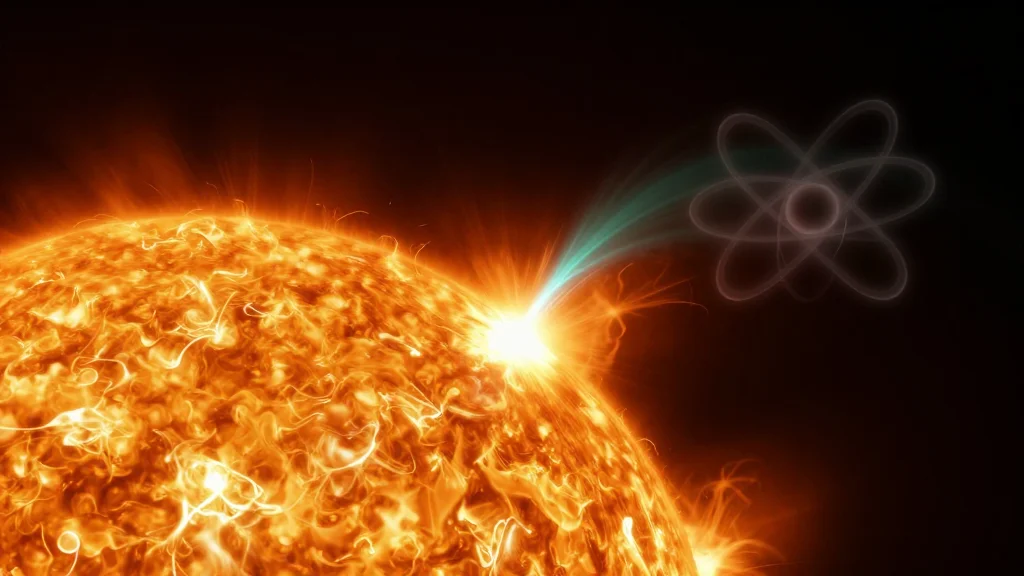
Tandem Superflare Observations Reveal Origin of the Stellar Fe Kα Line
Why It Matters
Confirming photoionization as the source of the stellar Fe Kα line gives astronomers a reliable diagnostic for locating and characterizing flares on distant stars, a key factor in assessing stellar activity’s impact on exoplanet environments.
Key Takeaways
- •UV emission leads X‑ray by 1.4 hours in UX Arietis superflare
- •Fe Kα line peaks with thermal X‑ray, not UV, indicating photoionization
- •Study confirms photoionization as dominant Fe Kα production mechanism
- •Fe Kα line now usable to map stellar flare locations
Pulse Analysis
The iron Kα line has long been a cornerstone of high‑energy astrophysics, offering clues about the composition and dynamics of hot plasma in solar and stellar flares. Yet scientists debated whether the line’s photons arise from photoionization—X‑ray photons stripping electrons from iron atoms—or from direct collisions with energetic electrons. Resolving this ambiguity matters because each mechanism points to different flare geometries and energy transport processes, influencing models of stellar magnetic activity.
In a coordinated campaign, researchers pointed NICER’s X‑ray detectors and Hisaki’s ultraviolet spectrograph at UX Arietis, a bright RS Canum Venaticorum‑type system. The superflare’s UV signature surged 1.4 hours before the X‑ray peak, while the Fe Kα line’s intensity tracked the thermal X‑ray continuum rather than the early UV burst. This temporal alignment provides compelling evidence that the line originates from photoionization by the hot flare plasma, settling a decades‑old controversy with direct, time‑resolved data.
The implications extend beyond academic curiosity. With the Fe Kα line now validated as a tracer of flare‑induced X‑ray illumination, astronomers can map flare locations on stellar surfaces and better gauge the high‑energy radiation environments that orbiting exoplanets experience. Upcoming missions such as XRISM, featuring superior energy resolution, will refine these measurements, enabling detailed studies of flare structure and its role in atmospheric erosion. Ultimately, this breakthrough enhances predictive models of stellar weather, a critical component for assessing habitability around active stars.
Tandem superflare observations reveal origin of the stellar Fe Kα line
Comments
Want to join the conversation?
Loading comments...