Why It Matters
It shows how amateur astronomers can generate high‑quality data that supports nebular research, spurring demand for advanced imaging equipment.
Key Takeaways
- •69h15m exposure captured over three months
- •Twin 8-inch f/5 Newtonians used
- •Blue reflection nebula within red emission region
- •Located in Orion’s “head” complex
- •Highlights advances in amateur deep‑sky imaging
Pulse Analysis
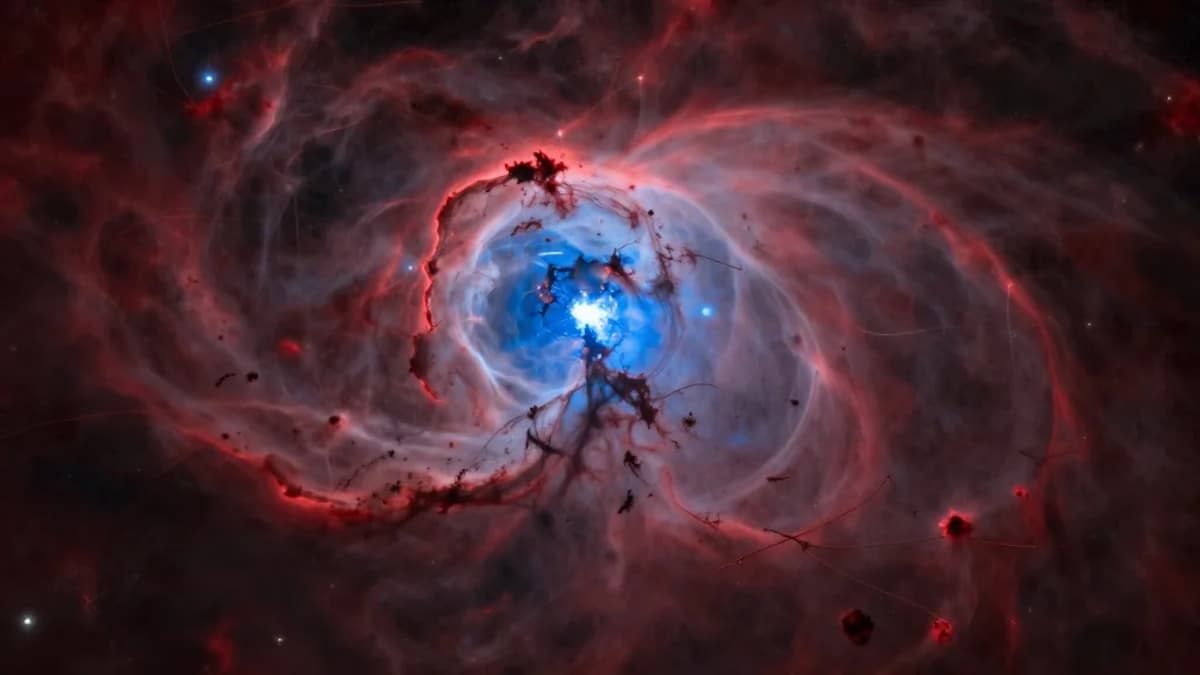
The Monkey Head Nebula region, where Cederblad 51 resides, is a laboratory for studying star formation. The blue reflection nebula glows by scattering starlight, while the surrounding red H II emission traces ionized hydrogen gas heated by massive young stars. Together they illustrate the dynamic processes that shape stellar nurseries in Orion, one of the sky’s most studied constellations, offering both visual splendor and scientific insight.
Andronic’s image was assembled from over 69 hours of narrow‑band Hα and broadband RGB exposures taken with twin 8‑inch f/5 Newtonian reflectors. This modest aperture, paired with precise tracking and modern sensor technology, rivals the output of larger, professional instruments for certain deep‑sky targets. The workflow—long integration, stacking, and meticulous calibration—highlights a growing market for high‑performance, affordable astrophotography gear, driving innovation among telescope manufacturers and software developers.
Beyond aesthetics, such data enriches the astronomical community. High‑resolution, calibrated frames of Cederblad 51 can be shared in public archives, aiding researchers who model dust grain properties and nebular dynamics. The project underscores the collaborative potential between amateurs and professionals, suggesting that future surveys may increasingly rely on citizen‑science contributions to map and monitor transient phenomena across the Milky Way.
Tangled up in red
0
Comments
Want to join the conversation?
Loading comments...