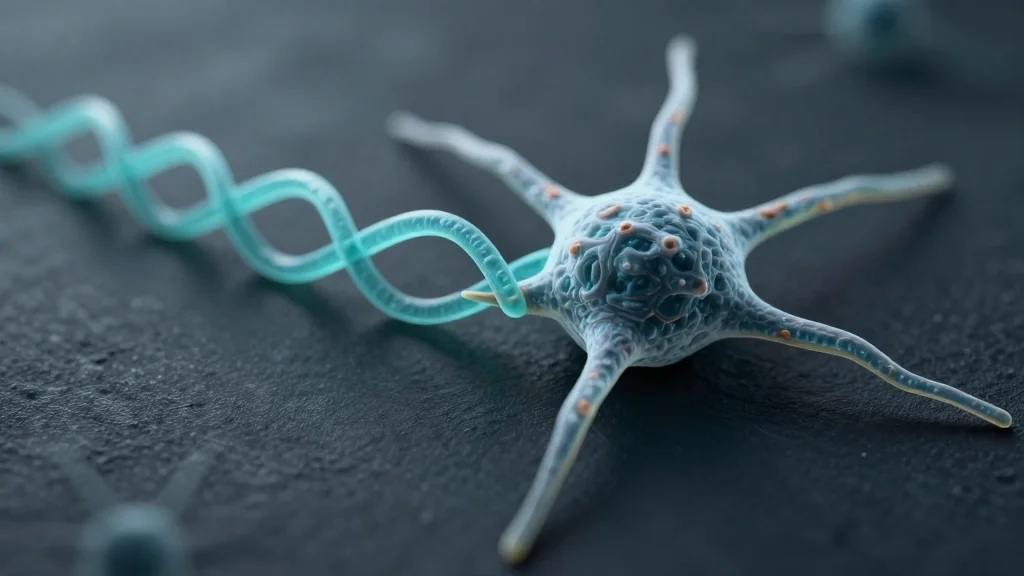
Tau Aggregates Cause Reactivation of Transposable DNA Elements, Leading to Z-RNA–ZBP1-Mediated Neuronal Death
Why It Matters
Linking tau aggregation to innate immune‑driven necroptosis uncovers a novel therapeutic axis that could halt neurodegeneration in Alzheimer’s and related tauopathies.
Key Takeaways
- •Tau aggregates reactivate endogenous transposable elements in neurons.
- •Reactivated elements generate Z‑RNA that binds ZBP1.
- •ZBP1 activation triggers RIPK3‑MLKL necroptosis pathway.
- •ZBP1 haploinsufficiency restores synaptic function in PS19 mice.
- •Targeting ZBP1 may offer new treatment for tauopathies.
Pulse Analysis
Tauopathies such as Alzheimer’s disease are defined by the accumulation of misfolded tau protein, yet the downstream mechanisms that translate tau aggregation into neuronal loss have remained elusive. Recent work shows that tau aggregates destabilize heterochromatin, prompting the re‑expression of endogenous transposable elements. These elements generate left‑handed Z‑RNA structures, a rare nucleic‑acid conformation that escapes normal cellular surveillance and serves as a danger signal in the brain’s immune landscape.
The Z‑RNA is sensed by Z‑binding protein 1 (ZBP1), an innate immune adaptor traditionally linked to viral infection‑induced necroptosis. Upon binding Z‑RNA, ZBP1 oligomerizes and recruits RIPK3, which phosphorylates MLKL to execute programmed necrotic cell death. In mouse models carrying the PS19 tau mutation, this ZBP1‑driven necroptotic pathway accounts for the majority of neuronal death, as evidenced by reduced TUNEL positivity, lower pMLKL staining, and restored synaptic markers when Zbp1 is knocked out or reduced. Human Alzheimer’s brain samples echo these findings, displaying elevated Z‑RNA and ZBP1 activation co‑localized with tau pathology.
The identification of ZBP1 as a pivotal mediator of tau‑induced neurodegeneration opens fresh therapeutic avenues. Small‑molecule inhibitors or antisense oligonucleotides that dampen ZBP1 expression or block its interaction with Z‑RNA could interrupt the necroptotic cascade before irreversible neuronal loss occurs. Moreover, the pathway offers a biomarker platform—measuring Z‑RNA or ZBP1 activity in cerebrospinal fluid may enable early detection of disease progression. As drug pipelines increasingly target protein‑protein interactions and innate immune checkpoints, the ZBP1‑necroptosis axis stands out as a promising target for disease‑modifying interventions in Alzheimer’s and related tauopathies.
Tau aggregates cause reactivation of transposable DNA elements, leading to Z-RNA–ZBP1-mediated neuronal death
Comments
Want to join the conversation?
Loading comments...