Why It Matters
The detection provides a real‑time view of planetary collisions that shape solar system architecture and may be crucial for forming habitable worlds like Earth.
Key Takeaways
- •Gaia20ehk showed unusual brightness dips starting 2016.
- •Infrared spikes indicated hot debris from planetary collision.
- •Collision resembles Earth‑Moon forming impact at 1 AU distance.
- •Rubin Observatory could detect ~100 similar events in decade.
- •Findings inform frequency of habitable‑world‑forming impacts.
Pulse Analysis
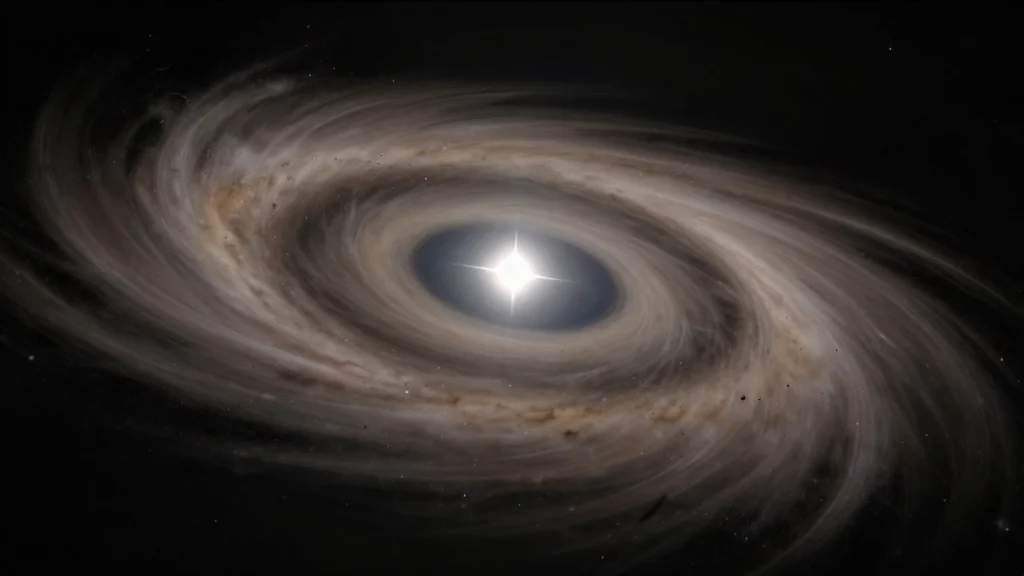
The discovery of a planetary smash‑up around Gaia20ehk underscores how chaotic early planetary systems can be. By mining archival data from 2020 and cross‑referencing visible‑light dips with a sudden infrared surge, researchers captured a collision in action—an event usually inferred only after the fact. Such real‑time observations are scarce; only a handful have been documented, making this case a valuable laboratory for testing models of planet formation and debris dynamics.
The debris cloud’s orbit, roughly one astronomical unit from its star, echoes the distance at which Earth and the Moon formed after a giant impact. This parallel offers a tangible analog for the processes that delivered Earth’s stabilizing satellite, a factor many astrobiologists cite as essential for long‑term climate stability and life. The hot dust’s infrared signature confirms that the impact generated enough energy to vaporize rock, creating a transient, glowing veil that gradually cools and may coalesce into new bodies.
Looking ahead, the Vera C. Rubin Observatory’s Legacy Survey of Space and Time promises to transform such serendipitous finds into systematic science. Simulations suggest the telescope could spot up to a hundred similar collisions over the next decade, providing statistical weight to theories about how often Earth‑like worlds acquire moons. By mapping these violent events, astronomers can better gauge the prevalence of planetary architectures conducive to habitability, sharpening the search for life beyond our solar system.
Team finds rare evidence of 2 planets colliding
Comments
Want to join the conversation?
Loading comments...