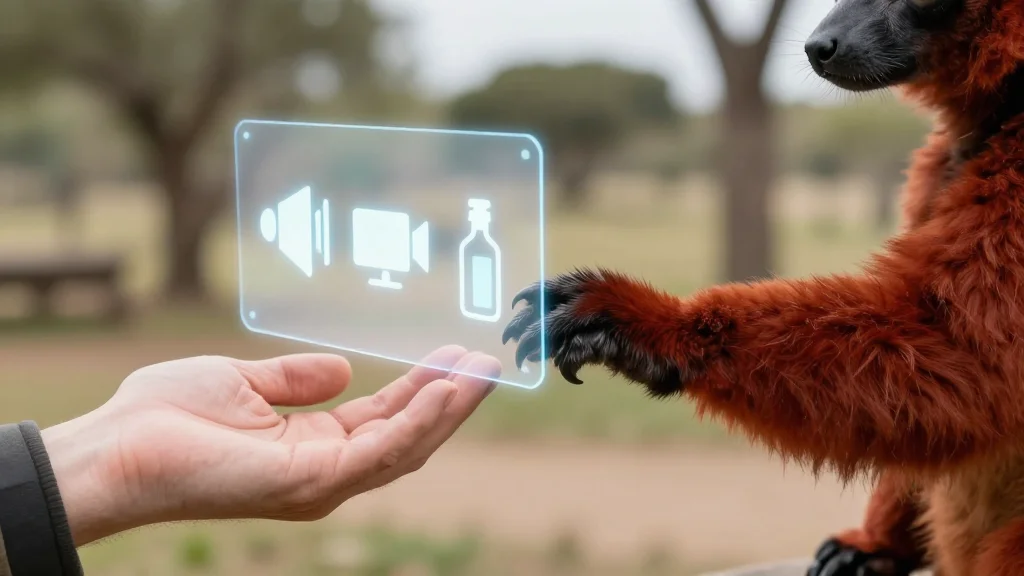
Tech Can Enable Cross-Species Experiences, New Research Suggests
Why It Matters
By turning passive observation into collaborative interaction, the technology boosts visitor engagement and can translate into stronger conservation support and new revenue opportunities for zoological institutions.
Key Takeaways
- •Shared control increased lemur engagement versus solo control
- •Visitor dwell time rose significantly with CreatureConnect
- •Empathy scores peaked when humans co‑controlled stimuli
- •System delivered sounds, visuals, scents via dual interfaces
- •Findings suggest tech can boost wildlife conservation support
Pulse Analysis
The University of Glasgow’s Animal‑Computer Interaction team has taken a bold step beyond traditional enrichment tools by introducing CreatureConnect, a dual‑interface platform that lets red‑ruffed lemurs and zoo guests jointly manipulate sound, video and scent cues. Over a 20‑day pilot at Blair Drummond Safari Park, more than 1,600 visitors engaged with the system while lemurs responded 541 times, revealing a clear preference for shared over solitary control. The data, presented at CHI 2026, provide the first empirical evidence that cross‑species co‑creation can be quantified and optimized.
From a commercial perspective, the experiment translates directly into higher footfall and longer dwell times—key performance indicators for modern zoological institutions. Visitors who participated reported elevated empathy scores and were more likely to discuss conservation, suggesting that such interactive experiences can deepen brand loyalty and open new revenue streams through premium ticketing or sponsorships. Such data also enable targeted marketing campaigns that highlight the unique interactive element. The multimodal nature of CreatureConnect also aligns with the growing demand for immersive, sensory‑rich attractions, positioning zoos to compete with theme parks and digital entertainment venues.
Looking ahead, the framework can be adapted to less charismatic species, insects or even marine life, potentially widening the empathy gap for under‑represented fauna. Integration with augmented‑reality overlays or remote‑access APIs could allow schools and donors to co‑experience animal behavior from afar, creating scalable educational products. However, designers must balance animal agency with human curiosity, ensuring welfare standards guide any deployment. If managed responsibly, cross‑species interaction platforms could become a cornerstone of conservation fundraising and experiential education in the next decade.
Tech can enable cross-species experiences, new research suggests
Comments
Want to join the conversation?
Loading comments...