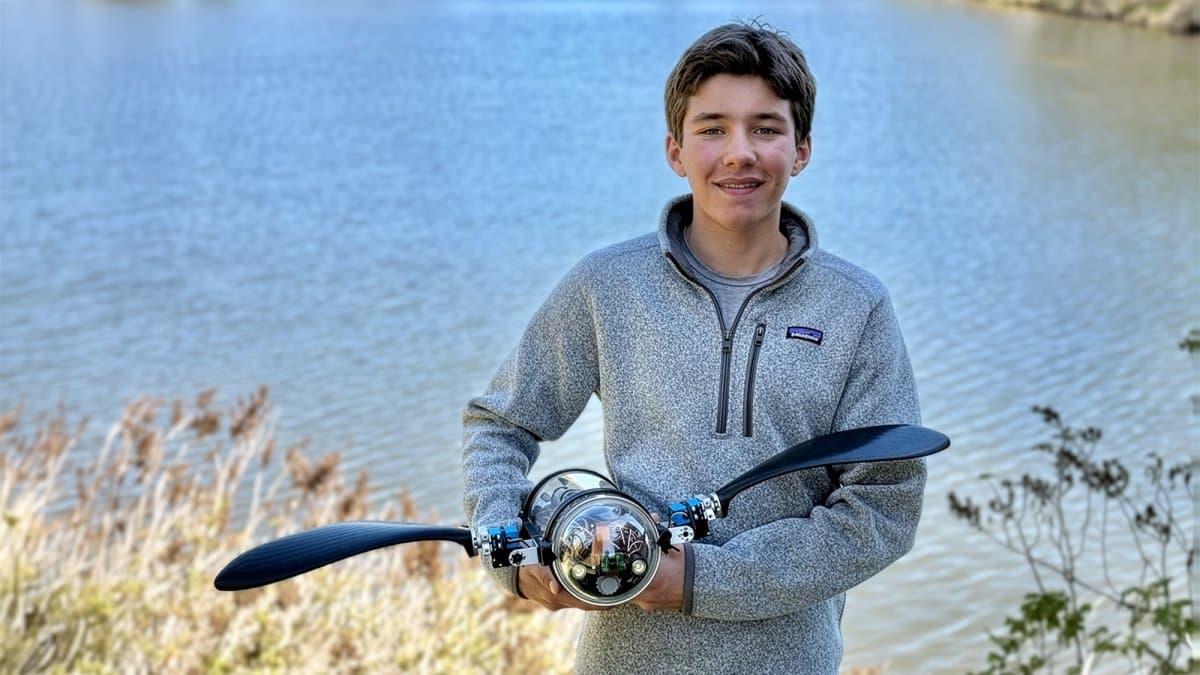
Teen Builds ‘Bionic Underwater Robotic Turtle’ to Detect Ecological Threats
Companies Mentioned
Why It Matters
BURT offers a silent, low‑impact platform for marine data collection, reducing reliance on noisy, tethered drones and speeding response to environmental degradation.
Key Takeaways
- •BURT mimics turtle flipper motion for quiet, non‑disruptive swimming.
- •AI on a Raspberry Pi detects coral bleaching with 96% accuracy.
- •Eight‑hour battery life, solar panel extends missions in remote waters.
- •Won EU Contest for Young Scientists and Canada‑Wide Science Fair.
- •Future goal: fleets of autonomous turtles monitoring microplastics and invasive species.
Pulse Analysis
Marine scientists have long struggled with monitoring tools that disturb the very ecosystems they study. Traditional underwater drones rely on propellers that generate noise and pressure waves, potentially altering animal behavior and damaging fragile habitats such as coral reefs. A quieter, biomimetic solution can fill this gap, providing continuous, high‑resolution data without compromising the environment. The rise of low‑cost micro‑computing platforms and advanced sensor suites has made it feasible for hobbyists and startups alike to develop such specialized tools.
BURT’s design leverages biomimicry, replicating the fluid kinematics of sea turtles through four articulated flippers. This approach eliminates the acoustic signature of conventional thrusters, allowing the robot to glide silently while maintaining precise maneuverability. Integrated AI models running on a Raspberry Pi analyze visual feeds and sensor inputs in real time, flagging signs of coral bleaching, invasive species, or microplastic concentrations with near‑lab accuracy. The addition of GPS, depth sensors, and an ultrasonic transducer equips BURT for autonomous grid‑based surveys, while its eight‑hour lithium‑ion battery—supplemented by a solar panel—supports extended deployments in remote or off‑grid waterways.
The broader implications extend beyond academic curiosity. Scalable fleets of autonomous, low‑impact robots could become a cornerstone of coastal management, offering governments and NGOs a cost‑effective way to monitor climate‑related stressors across vast marine territories. Moreover, the project showcases how young innovators can accelerate environmental tech, inspiring educational programs that blend robotics, AI, and conservation. As regulatory bodies tighten standards for marine observation, solutions like BURT may set new industry benchmarks for sustainable, data‑driven stewardship.
Teen builds ‘Bionic Underwater Robotic Turtle’ to detect ecological threats
Comments
Want to join the conversation?
Loading comments...