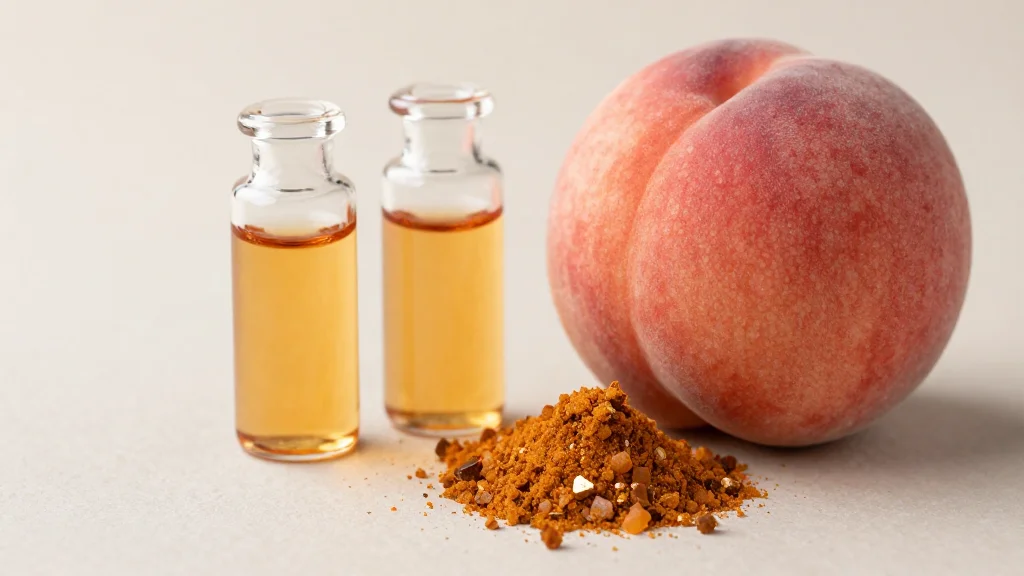
Temperature-Regulated Defective MIL-100(Fe) for Clove Essential Oil Loading as an Effective Natural Preservative for Peaches
Why It Matters
The approach offers an eco‑friendly alternative to chemical fungicides, extending shelf life of perishable produce without refrigeration. It also showcases defect engineering in MOFs as a scalable strategy for food‑safety applications.
Key Takeaways
- •D‑MIL‑100(Fe)‑1 loads 610.6 mg CEO per gram, 1.45× higher than MIL‑100(Fe)
- •Sustained release: 42.3 % CEO delivered over 16 days at 25 °C
- •Treated peaches retain firmness and color comparable to refrigeration
- •Antibacterial activity remains 2.8–3.2× stronger than free CEO after 5 days
- •TFA modulation boosts surface area to 1,670 m² g⁻¹, enhancing loading capacity
Pulse Analysis
The global food supply chain faces mounting pressure to reduce waste while meeting consumer demand for fresh, chemical‑free produce. Traditional preservation relies on synthetic fungicides and cold‑chain logistics, both of which carry environmental and cost drawbacks. Essential oils such as clove oil offer potent antimicrobial and antioxidant properties, but their high volatility and rapid oxidation limit practical use. Recent advances in material science have turned to metal‑organic frameworks (MOFs) as carriers that can encapsulate volatile compounds, protecting them from degradation and enabling controlled release.
Defect engineering emerges as a powerful tool to tailor MOF performance. By introducing trifluoroacetic acid (TFA) during synthesis, the researchers created a series of defective MIL‑100(Fe) structures with enlarged pores and increased surface area—reaching 1,670 m² g⁻¹ for the D‑MIL‑100(Fe)‑1 sample. This hierarchical porosity allowed a record CEO loading of 610.6 mg g⁻¹, 1.45 times higher than the non‑defective counterpart. Kinetic studies showed a first‑order, non‑Fickian release profile, delivering 42.3 % of the oil over 16 days at ambient temperature, a dramatic slowdown compared with free CEO that evaporates within hours. The sustained release preserved antioxidant activity and extended antibacterial efficacy, keeping inhibition zones 2.8–3.2 × larger than free oil after five days.
Applying the D‑MIL‑100(Fe)‑1/CEO composite to peaches demonstrated real‑world impact: fruit retained firmness, soluble solids, and acidity levels comparable to refrigerated controls, while bacterial counts stayed below spoilage thresholds for the entire 10‑day trial. This technology offers a low‑cost, energy‑efficient alternative to refrigeration, aligning with sustainability goals and consumer preferences for natural additives. As supply chains seek to minimize cold‑storage dependence, scalable MOF‑based encapsulation could be integrated into packaging or post‑harvest treatments, paving the way for broader adoption across fruits, vegetables, and other perishable goods.
Temperature-regulated defective MIL-100(Fe) for clove essential oil loading as an effective natural preservative for peaches
Comments
Want to join the conversation?
Loading comments...