Terahertz Imaging Maps Chirality at 100‑µm Resolution in Advanced Metasurfaces

Why It Matters
Mapping chirality at sub‑millimeter resolution fills a critical gap between bulk spectroscopic measurements and high‑resolution microscopy. In fields ranging from pharmaceuticals to quantum photonics, the handedness of a structure determines its functional properties. By providing a fast, non‑destructive way to see where left‑ and right‑handed domains reside, the new THz imaging technique enables researchers to correlate structural chirality with performance metrics in real time. The breakthrough also showcases the growing versatility of terahertz radiation as a probe of complex material behavior. Historically limited to bulk dielectric studies, THz light is now being harnessed for spatially resolved chiral analysis, opening avenues for new instrumentation, standards, and cross‑disciplinary collaborations that could reshape how scientists interrogate matter at the nanoscale.
Key Takeaways
- •Terahertz circular dichroism imaging achieved 100 µm spatial resolution, a tenfold improvement over prior THz methods.
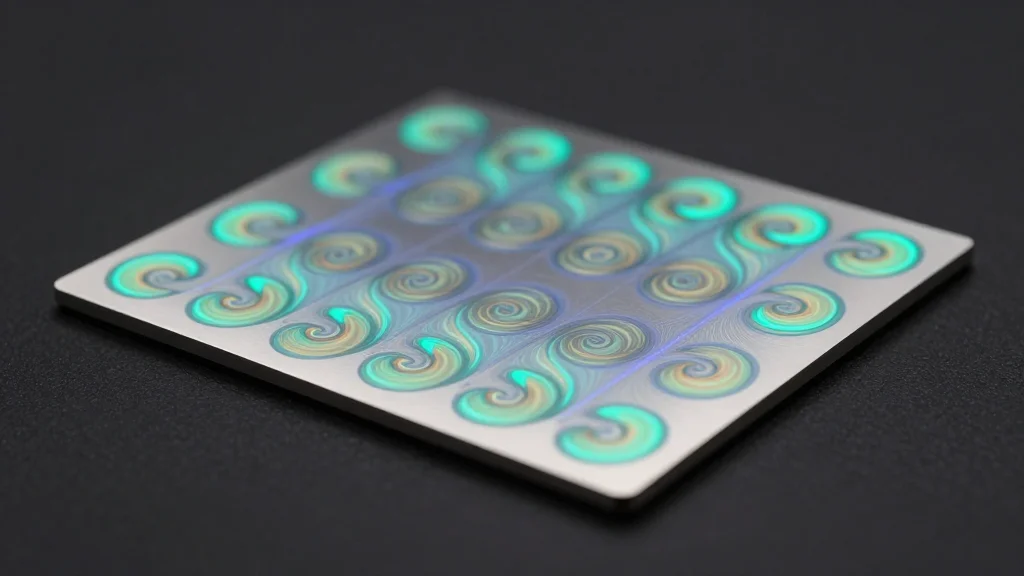
- •The technique visualizes left‑ and right‑handed regions on a moiré‑type metasurface fabricated from stacked silver disks.
- •Study led by Prof. Katsuhiko Miyamoto (Chiba University) with collaborators from Tohoku University and NIMS, published in ACS Photonics.
- •Potential applications include chiral photonic devices, drug‑screening of enantiomers, and in‑situ monitoring of manufacturing processes.
- •Future work aims to reach sub‑10 µm resolution using near‑field THz probes and to test biological chiral assemblies.
Pulse Analysis
Terahertz imaging has long been celebrated for its ability to penetrate opaque materials and sense collective vibrational modes, yet its spatial resolution lagged behind optical and electron‑based techniques. The 100‑µm breakthrough reported by Miyamoto’s team repositions THz spectroscopy from a bulk‑averaging tool to a true imaging modality. Historically, researchers have relied on synchrotron‑based circular dichroism or scanning probe methods to resolve chirality, both of which demand expensive infrastructure or invasive sample preparation. By leveraging a cleverly engineered metasurface that amplifies the chiral response at THz frequencies, the Japanese group sidestepped these constraints and delivered a scalable, tabletop solution.
From a market perspective, the development could catalyze a new class of THz imaging systems aimed at the pharmaceutical and semiconductor sectors, where chiral purity and structural uniformity are paramount. Companies that already supply THz spectrometers may now see a demand for add‑on modules that incorporate polarization control and high‑resolution detector arrays. The timing aligns with a broader push toward label‑free, real‑time analytics in manufacturing, suggesting that early adopters could gain a competitive edge.
Looking ahead, the key technical challenge will be shrinking the pixel size without sacrificing signal‑to‑noise ratio. Near‑field probes and metamaterial‑enhanced hotspots are promising routes, but they will require interdisciplinary engineering across photonics, nanofabrication, and signal processing. If the community can overcome these hurdles, terahertz chirality imaging could become a staple in the toolkit for next‑generation materials discovery, complementing electron microscopy and X‑ray diffraction with a uniquely non‑destructive, spectrally rich perspective.
Terahertz Imaging Maps Chirality at 100‑µm Resolution in Advanced Metasurfaces
Comments
Want to join the conversation?
Loading comments...