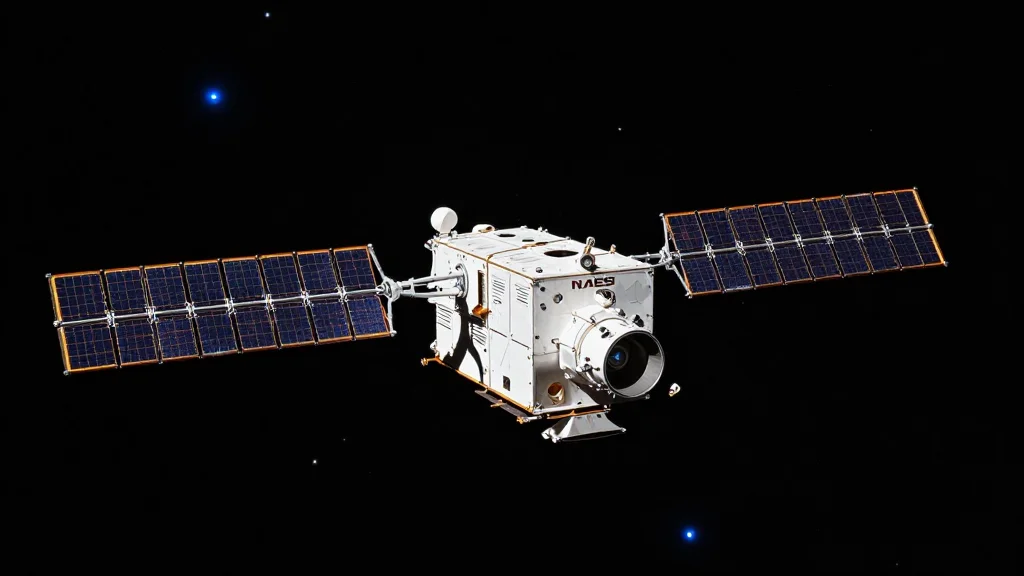
TESS Reanalysis Finds 10,091 New Exoplanet Candidates, Doubling Known Count

Why It Matters
The surge of over 10,000 exoplanet candidates dramatically expands the empirical foundation for planetary science, allowing researchers to refine models of planet formation and migration across a wider range of stellar environments. A larger, more diverse sample also improves the odds of identifying rare, potentially habitable worlds that can be prioritized for atmospheric characterization with next‑generation telescopes. Beyond pure science, the discovery demonstrates the value of applying cutting‑edge machine‑learning techniques to legacy datasets, a strategy that can accelerate discovery without the expense of new missions. This approach may become a standard part of the data‑analysis toolkit for future space observatories, ensuring that every photon collected continues to yield fresh insights.
Key Takeaways
- •T16 project’s reanalysis of TESS’s first‑year data uncovered 10,091 new exoplanet candidates.
- •The candidates were found by applying modern machine‑learning algorithms to ~83 million faint stars.
- •All candidates show at least three transit events, meeting the standard threshold for planet‑like signals.
- •If confirmed, the haul would more than double the current count of ~6,300 confirmed exoplanets.
- •Follow‑up observations with ground‑based telescopes and the upcoming Roman Space Telescope are planned to verify the candidates.
Pulse Analysis
The T16 discovery is less a surprise than a logical outcome of two converging trends: the exponential improvement of AI‑driven pattern recognition and the under‑exploited depth of TESS’s archival data. Early TESS pipelines prioritized bright, Sun‑like stars to maximize signal‑to‑noise, leaving a vast reservoir of fainter targets untouched. By training neural networks on known transits and then casting a wide net across 83 million light curves, the T16 team has effectively turned a decade‑old dataset into a new planet‑hunting mission.
Historically, each major exoplanet survey—Kepler, K2, TESS—has delivered a stepwise increase in known worlds, but the T16 result could be a quantum leap. The sheer volume of candidates will force the community to prioritize verification resources, potentially accelerating the development of automated vetting pipelines and high‑throughput spectrographs. Moreover, the discovery may shift the strategic focus of upcoming missions: rather than hunting for the first Earth analogs, agencies might now aim to characterize a statistically robust sample of hot Jupiters, super‑Earths, and sub‑Neptunes to map out atmospheric diversity.
Looking ahead, the real test will be how many of these candidates survive rigorous follow‑up. Even a 30% confirmation rate would add over 3,000 planets, reshaping occurrence rate calculations and informing the design of future direct‑imaging missions. The T16 breakthrough underscores a broader lesson for the scientific enterprise: legacy data, when paired with modern analytics, can yield discoveries that rival those from brand‑new instruments, offering a cost‑effective boost to humanity’s quest to understand its place in the cosmos.
TESS Reanalysis Finds 10,091 New Exoplanet Candidates, Doubling Known Count
Comments
Want to join the conversation?
Loading comments...