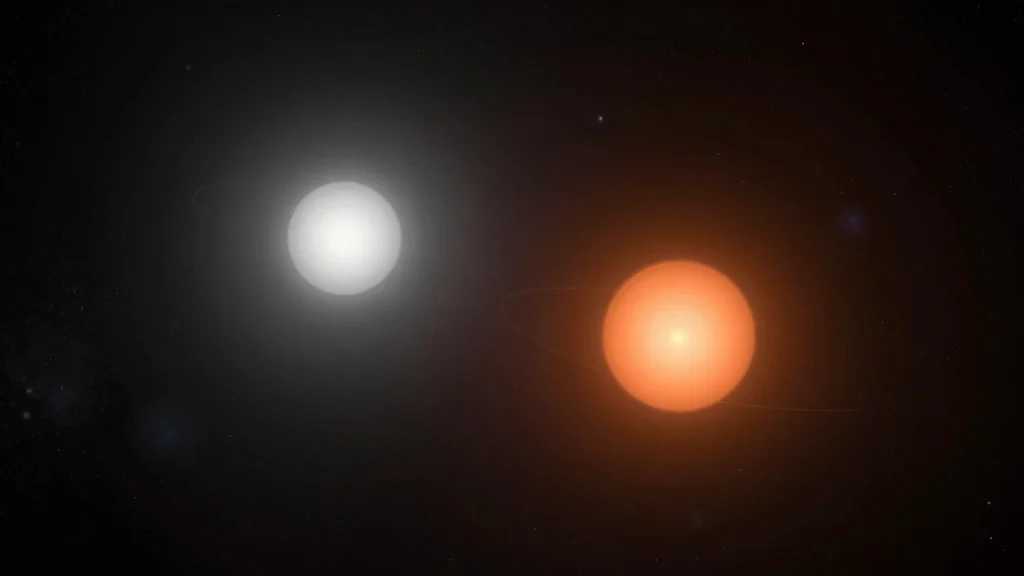
TESS Uncovers 27 New Circumbinary Planet Candidates, Doubling Known Sample

Why It Matters
The identification of 27 new circumbinary planet candidates reshapes our understanding of planetary system formation, suggesting that the chaotic environments of binary stars may not be as prohibitive as once believed. This has direct implications for the search for habitable worlds, as binary systems are common in the galaxy; expanding the pool of potentially life‑supporting planets broadens the scope of astrobiology. Additionally, the success of the apsidal‑precession detection method demonstrates the value of innovative data‑analysis techniques in extracting hidden signals from large survey datasets, a lesson that will inform future missions like PLATO and the Roman Space Telescope. Beyond scientific theory, the discovery fuels public fascination with "Tatooine‑like" worlds—planets with two suns—reinforcing the cultural relevance of exoplanet research and supporting continued funding for space‑based observatories. As follow‑up observations confirm masses and atmospheres, these worlds could become prime targets for atmospheric spectroscopy, offering a glimpse into the chemistry of planets formed under dual‑star illumination.
Key Takeaways
- •27 new circumbinary planet candidates identified using TESS data and apsidal precession analysis
- •Candidates increase known circumbinary sample from ~18 to 45, a >100% rise
- •Planet sizes range from Earth‑size to gas giants; several lie in binary habitable zones
- •Discovery challenges traditional planet‑formation models that struggle with binary dynamics
- •Follow‑up spectroscopy planned with ESPRESSO and ELT‑HIRES to confirm masses and orbits
Pulse Analysis
The UNSW team's breakthrough underscores a broader shift in exoplanet science: the move from cataloguing isolated planets to probing the full diversity of planetary architectures. Historically, binary‑star systems were treated as outliers, largely because early detection methods—primarily radial velocity and transit photometry—were ill‑suited to disentangle the overlapping signals of two stellar hosts. The adoption of apsidal precession as a detection lever flips that paradigm, turning a previously confounding dynamical effect into a diagnostic tool. This methodological innovation mirrors the early days of Kepler, when the community learned to extract planetary transits from noisy stellar variability.
From a market perspective, the find revitalizes interest in TESS as a long‑term data source. Investors in space‑tech firms that provide high‑precision spectrographs stand to benefit as demand for follow‑up observations spikes. Moreover, the result may influence the prioritization of future mission concepts; agencies could allocate more resources to missions that can monitor binary systems continuously, such as the proposed HabEx and LUVOIR concepts, which aim to directly image exoplanets in reflected light. The scientific payoff is clear: confirming a robust population of circumbinary worlds would force a reevaluation of core‑accretion theory, potentially elevating alternative pathways like pebble accretion or disk fragmentation.
Looking forward, the next critical step is moving from candidate to confirmed status. Mass measurements will reveal whether these worlds are rocky or gaseous, directly informing habitability assessments. If a sizable fraction prove terrestrial and reside in temperate zones, the astrobiology community will have fresh targets for biosignature searches with JWST and later the Extremely Large Telescope. In sum, the 27‑planet surge is not just a numerical win; it is a catalyst that could reshape theoretical models, drive new instrumentation, and expand the frontier of life‑searching endeavors.
TESS Uncovers 27 New Circumbinary Planet Candidates, Doubling Known Sample
Comments
Want to join the conversation?
Loading comments...