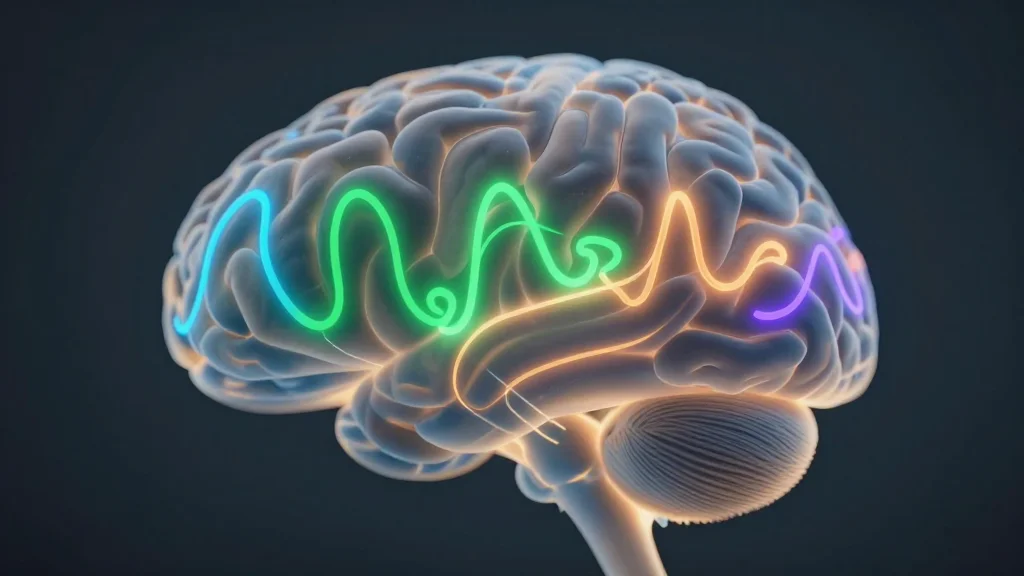
Thalamic Oscillations Distinguish Natural States of Consciousness in Humans
Why It Matters
Identifying reliable thalamic biomarkers of consciousness enables more accurate monitoring in intensive care and informs neuromodulation therapies for disorders of consciousness.
Key Takeaways
- •Human thalamic recordings reveal distinct oscillatory signatures for wake, NREM, REM
- •Low‑frequency spindle activity correlates with deep sleep, high‑beta with arousal
- •Thalamic beta bursts predict momentary conscious awareness during anesthesia
- •Findings support thalamus as a hub for state‑dependent information gating
- •May enhance brain‑computer interfaces and ICU consciousness monitoring
Pulse Analysis
The thalamus has long been recognized as a relay station that synchronizes cortical activity, but its precise rhythmic fingerprints across natural conscious states remained elusive. Classic work by Steriade and colleagues established the presence of spindle and slow‑wave oscillations in sleep, while more recent imaging studies hinted at thalamic involvement in arousal. By leveraging high‑resolution intracranial recordings from patients undergoing clinical monitoring, the new study bridges this gap, providing a direct electrophysiological map that links specific frequency bands to wakefulness, non‑REM, REM, and drug‑induced unconsciousness. This granular view clarifies how low‑frequency spindles orchestrate memory consolidation during deep sleep, whereas transient beta bursts signal momentary re‑engagement of cortical networks.
Methodologically, the team combined depth electrode recordings with simultaneous scalp EEG and behavioral probes, applying advanced spectral decomposition to separate periodic (oscillatory) from aperiodic components. Their analysis revealed that spindle density and coherence sharply increase in the anterior thalamus during stage 2 sleep, while a surge of 20‑40 Hz beta activity precedes conscious reports during light anesthesia. Importantly, these thalamic signatures were reproducible across subjects and aligned with established cortical markers, confirming the thalamus as a reliable readout of state transitions. The findings also demonstrate that thalamic oscillations can be modulated in real time, opening avenues for closed‑loop stimulation.
Clinically, the ability to pinpoint thalamic oscillatory states offers a powerful tool for intensive‑care monitoring, where distinguishing between vegetative and minimally conscious states is critical. Real‑time detection of beta bursts could guide titration of anesthetic agents or inform deep‑brain stimulation protocols aimed at restoring consciousness after traumatic brain injury. Moreover, integrating thalamic biomarkers into brain‑computer interfaces may improve command accuracy for patients with severe motor impairment. As research progresses, these insights are poised to reshape both basic neuroscience and therapeutic strategies targeting the thalamocortical axis.
Thalamic oscillations distinguish natural states of consciousness in humans
Comments
Want to join the conversation?
Loading comments...