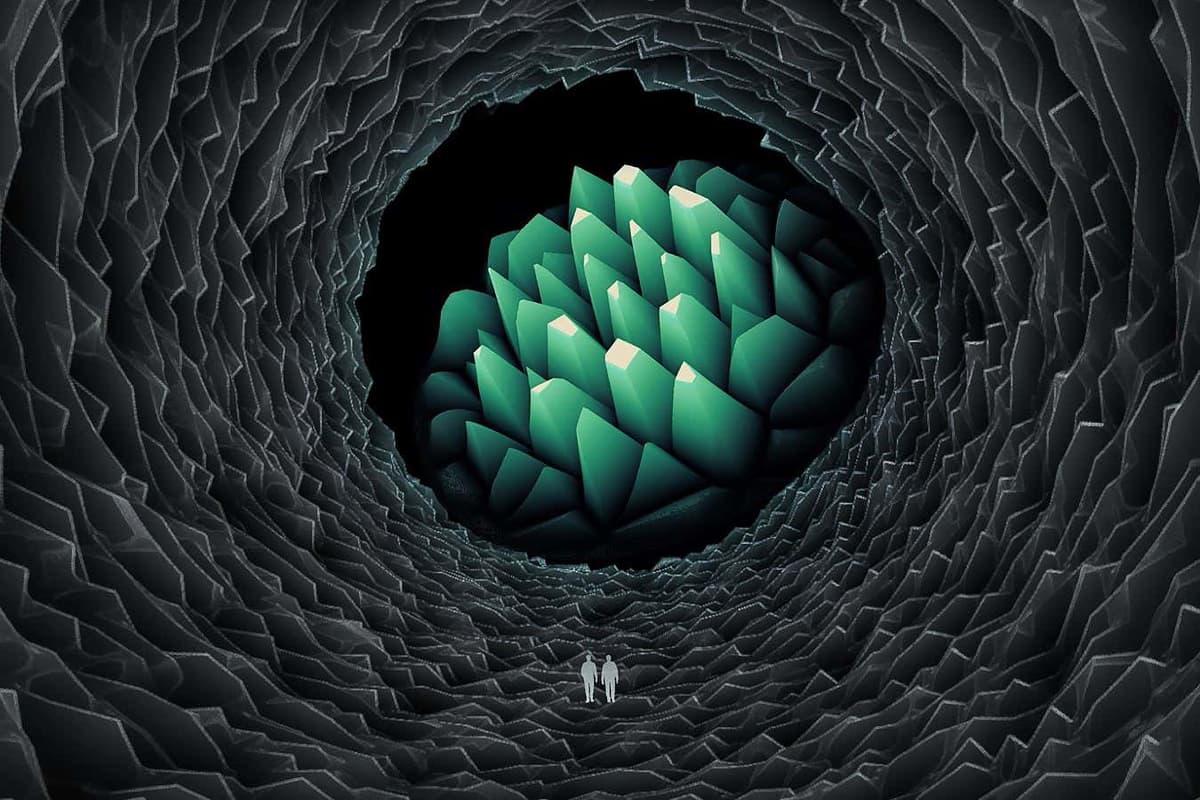
The 50-Year Quest to Create a Quantum Spin Liquid May Finally Be Over
Why It Matters
A naturally occurring quantum spin liquid could provide a ready‑made platform for robust qubit entanglement, accelerating quantum‑computing development and lowering engineering barriers.
Key Takeaways
- •Herbertsmithite identified as potential natural quantum spin liquid
- •Discovery stems from 1970s Iranian Kali Kafi mine samples
- •Natural entanglement could simplify quantum computer hardware
- •Argonne researchers liken spin liquid to a hive‑mind network
- •Validation may shift focus to mineral‑based quantum platforms
Pulse Analysis
Quantum spin liquids (QSLs) have long been the holy grail of condensed‑matter physics because their electrons remain in a constantly fluctuating, entangled state even at the lowest temperatures. Historically, creating such a phase required finely tuned synthetic crystals and ultra‑cold environments, limiting practical applications. The recent identification of herbertsmithite—a mineral originally dubbed anarakite—adds a new dimension: a naturally occurring solid that appears to host a QSL. This breakthrough not only validates decades‑old theoretical predictions but also opens a geological avenue for sourcing exotic quantum materials.
The significance for quantum information science is profound. Entanglement is the engine behind quantum computing, yet engineering it in solid‑state platforms has been fraught with decoherence and fabrication challenges. A mineral that already exhibits a “hive‑mind” spin network could serve as a ready‑made entanglement reservoir, potentially reducing the need for complex laser cooling or superconducting circuits. Researchers at Argonne National Laboratory emphasize that leveraging such intrinsic entanglement might enable more stable qubits and simplify error‑correction protocols, bringing practical quantum advantage closer to reality.
From an industry perspective, the discovery could shift R&D investment toward mineral extraction and characterization rather than solely synthetic crystal growth. Companies developing quantum processors may explore partnerships with mining firms to secure supply chains for herbertsmithite or similar QSL candidates. However, challenges remain, including scaling up crystal purity, integrating the material with existing chip architectures, and confirming reproducible quantum behavior across batches. If these hurdles are overcome, natural QSLs could become a cornerstone of the next wave of quantum hardware, reshaping the competitive landscape of the emerging quantum economy.
The 50-year quest to create a quantum spin liquid may finally be over
Comments
Want to join the conversation?
Loading comments...