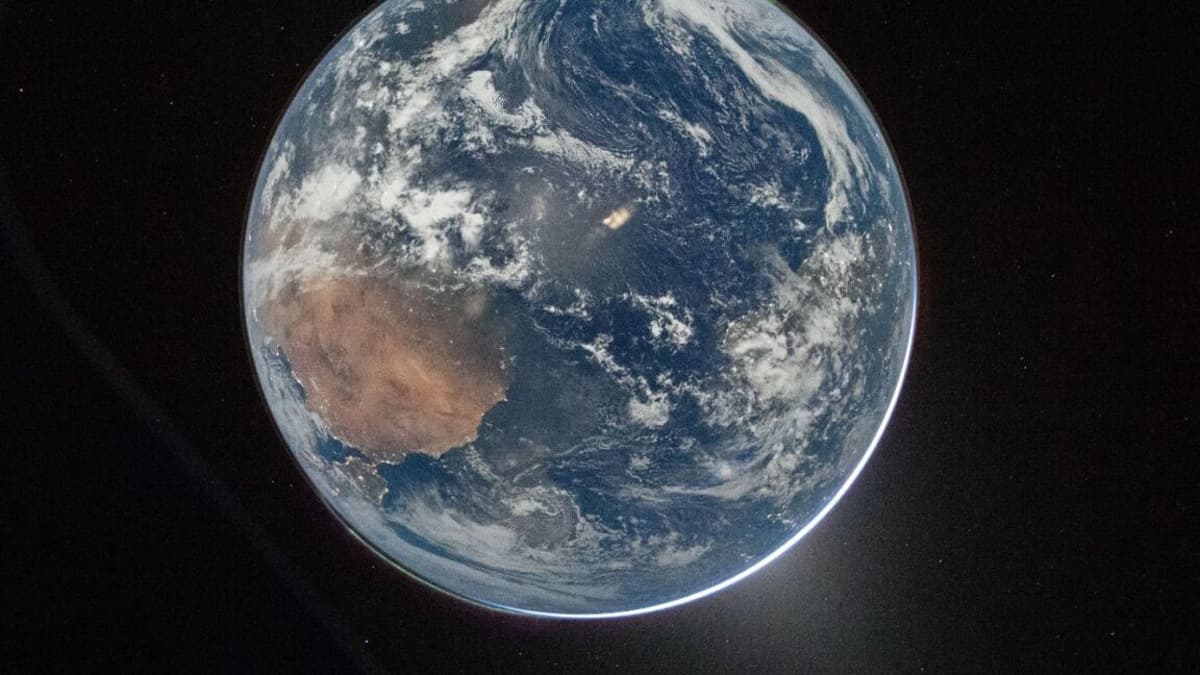
The Animated Version of the Iconic "Hello, World" Image Reveals Striking New Details
Why It Matters
The release democratizes high‑resolution space photography, offering scientists and the public unprecedented views of Earth’s dynamic environment and the visual challenges of orbital imaging.
Key Takeaways
- •NASA released over 12,000 Artemis II photos to public archive
- •Animation shows 17 sequential Earth shots sped up 30×
- •Lightning, aurorae, and satellite silhouettes captured from Orion
- •Solar array illusion likely caused by window optics, not real size
- •Andy Saunders processed images, enhancing color and contrast
Pulse Analysis
The Artemis II mission, NASA’s first crewed flight to the Moon since Apollo, has become a treasure trove of visual data. By uploading more than 12,000 raw images to the Gateway to Astronaut Photography, the agency is embracing open‑data principles that allow educators, researchers, and hobbyists to explore space‑borne photography in unprecedented detail. The archive includes shots from three onboard cameras—a Nikon D5, a Nikon Z9, and an iPhone 17 s—showcasing the blend of professional and consumer imaging technology now standard on deep‑space missions.
One of the most celebrated frames is the “Hello, world” image captured as Orion left Earth’s limb. Andy Saunders, known for curating historic Gemini and Apollo imagery, selected 17 consecutive exposures that form a seamless sequence. After applying color balance and contrast tweaks, he animated the frames at a 30× speed, compressing a minute‑and‑twenty‑second real‑time view into a few seconds. The resulting clip highlights dramatic lightning storms, shimmering aurorae, and faint silhouettes of satellites, offering a dynamic portrait of Earth’s atmosphere and near‑space environment that static photos cannot convey.
Beyond its aesthetic appeal, the animation raises technical questions about how spacecraft windows affect visual perception. The apparent kilometer‑wide solar arrays on passing satellites are likely an optical artifact caused by reflections and refraction through Orion’s viewport, reminding engineers of the challenges in capturing accurate measurements from inside a vehicle. For the broader space community, the release underscores the growing value of high‑resolution, publicly accessible imagery for climate monitoring, orbital debris tracking, and public outreach, setting a new benchmark for transparency in future lunar and deep‑space missions.
The animated version of the iconic "Hello, world" image reveals striking new details
Comments
Want to join the conversation?
Loading comments...