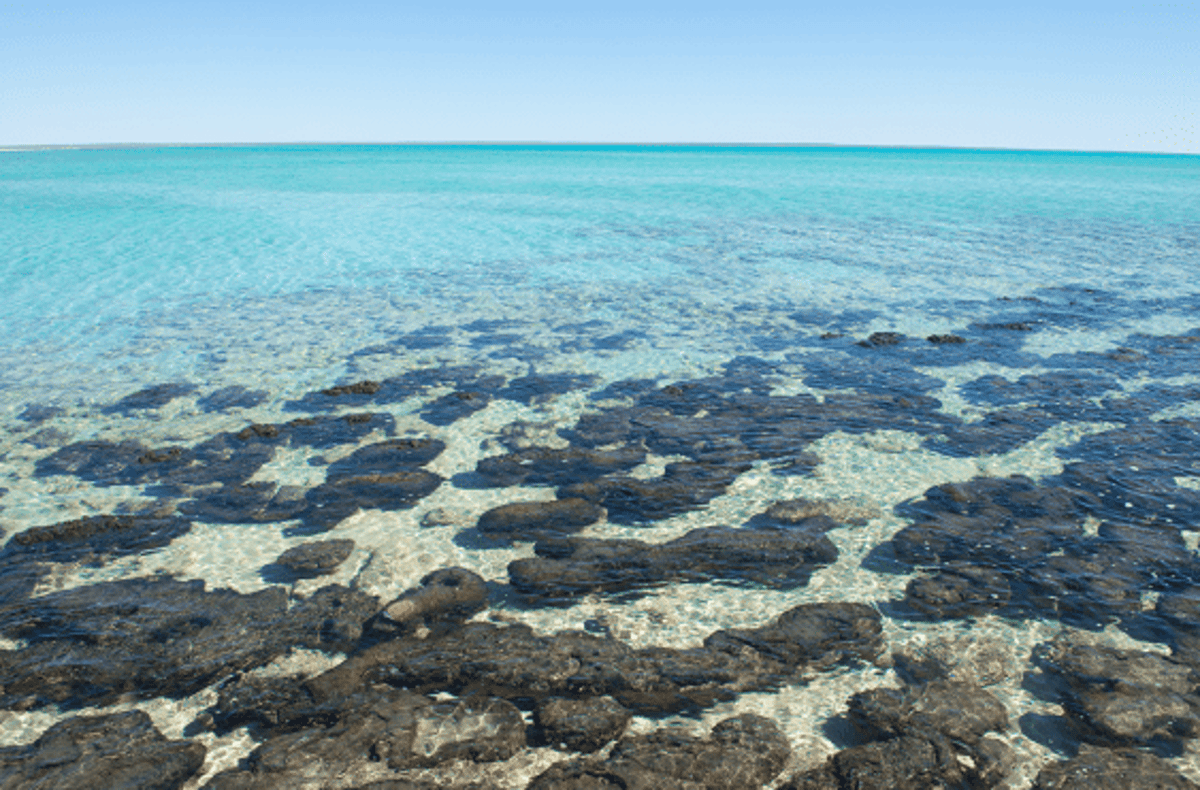
The Australian Rocks That House the Oldest Life-Forms on Earth
Companies Mentioned
Why It Matters
The discovery provides a tangible model for how symbiotic microbial interactions may have driven the transition to complex eukaryotic life, a cornerstone question in evolutionary biology. It also validates extreme modern habitats as windows into primordial processes, guiding future origin‑of‑life research.
Key Takeaways
- •Stromatolites in Shark Bay host newly identified Asgard archaeon N. marumarumayae.
- •Electron cryotomography revealed nanotubes linking archaeon and bacteria.
- •Microbial exchange includes H₂, acetate, amino acids, and vitamins.
- •Partnership may model how eukaryotic cells first formed.
- •Study highlights value of extreme environments for origin‑of‑life insights.
Pulse Analysis
Shark Bay’s shallow, hypersaline pools have long attracted scientists for their striking stromatolites—layered sedimentary structures built by microbial communities. These formations are among the few living analogues of Earth’s earliest biosignatures, preserving biochemical strategies that predate multicellular life. By sampling the mats and extracting DNA, an Australian team uncovered a previously unknown Asgard archaeon, N. marumarumayae, named after the local Malgana term for "ancient home." The organism’s presence adds a new piece to the puzzle of early microbial diversity in one of the planet’s most extreme niches.
High‑resolution electron cryotomography allowed the researchers to peer into the stromatolite matrix at a millionth‑of‑a‑millimeter scale, revealing delicate nanotubes that physically connect the archaeon to neighboring bacteria. These conduits act like microscopic pneumatic tubes, shuttling hydrogen, acetate, formate, sulfite from the archaeon while receiving amino acids and vitamins from the bacteria. Such reciprocal nutrient trading would have conferred a survival advantage under intense UV radiation and salinity, illustrating how cooperation can emerge under stress. The observed metabolic hand‑off mirrors hypotheses that early eukaryotes arose from intimate partnerships between distinct prokaryotic lineages.
The broader implication is profound: a concrete, observable mechanism linking two ancient microbes may recapitulate the steps that led to cellular complexity over two billion years ago. By confirming that nanoscopic exchange structures exist in modern analogues of primordial ecosystems, the study bolsters the view that symbiosis—not just random mutation—was a driving force in evolution. Future investigations targeting other extreme environments could uncover additional microbial alliances, refining our understanding of how life transitioned from simple mats to the sophisticated eukaryotic cells that dominate today.
The Australian Rocks That House the Oldest Life-Forms on Earth
Comments
Want to join the conversation?
Loading comments...