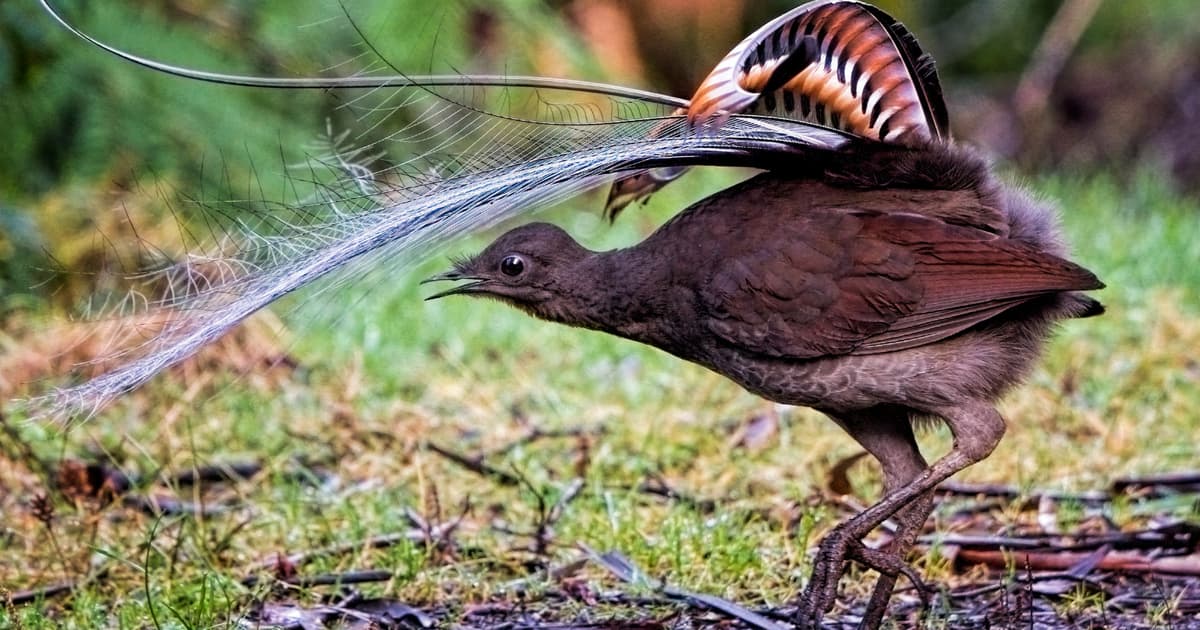
The Australian Superb Lyrebird Can Imitate Almost Any Sound It Has Ever Heard — Chainsaws, Camera Shutters, Car Alarms, the Calls of More than 20 Other Species — with Enough Accuracy that the Birds Being Imitated Often Can’t Tell the Difference
Why It Matters
Understanding lyrebird mimicry sheds light on complex animal communication and sexual selection, informing broader studies in evolutionary biology and bioacoustic monitoring.
Key Takeaways
- •Lyrebirds accurately mimic 20‑25 other species during breeding season
- •Playback tests fooled grey shrike‑thrushes, showing near‑perfect acoustic match
- •Both male and female lyrebirds use mimicry, females favor hawk calls
- •Mimicry may serve courtship, predator deception, and mixed‑species mobbing illusion
- •Captive birds popularized chainsaw sounds; wild birds mainly copy natural forest noises
Pulse Analysis
The Australian superb lyrebird (Menura novaehollandiae) has long fascinated scientists and the public with its uncanny ability to replicate a vast soundscape, from the calls of more than twenty bird species to human‑made noises like chainsaws and camera shutters. Recent playback experiments conducted by researchers at the Australian National University demonstrated that grey shrike‑thrushes approached a speaker broadcasting lyrebird‑generated songs just as readily as they would a genuine conspecific performance. This finding confirms that lyrebird mimicry can achieve acoustic fidelity high enough to fool even the original signal‑senders, highlighting the bird’s sophisticated vocal learning mechanisms and providing a rare field example of interspecific acoustic deception.
Beyond sheer novelty, the mimicry serves several hypothesized evolutionary functions. Males intensify their repertoire during the breeding season, likely to showcase vocal prowess to potential mates, a classic indicator of fitness in many avian species. However, studies also reveal that males can fabricate the sound of a mixed‑species mobbing flock at critical moments, possibly creating a sensory trap that deters rivals or protects a courting pair. Female lyrebirds, while reproducing fewer species, disproportionately imitate hawk calls, suggesting a role in predator awareness or territory signaling. The dual‑sex involvement complicates any single‑purpose narrative, indicating that mimicry may be a multifunctional tool shaped by sexual selection, predator avoidance, and social dynamics.
The lyrebird’s vocal versatility offers valuable insights for bioacoustic monitoring and conservation. As researchers develop automated sound‑analysis tools, the bird’s ability to blend natural and anthropogenic sounds challenges algorithms designed to differentiate species based on call signatures. Moreover, the iconic chainsaw and drill imitations, largely stemming from captive individuals, underscore how human interaction can amplify certain traits in public perception. Continued interdisciplinary research—combining field playback, neurobiology, and acoustic modeling—will deepen our grasp of how complex vocal mimicry evolves and persists, informing both ecological theory and practical wildlife management strategies.
The Australian superb lyrebird can imitate almost any sound it has ever heard — chainsaws, camera shutters, car alarms, the calls of more than 20 other species — with enough accuracy that the birds being imitated often can’t tell the difference
Comments
Want to join the conversation?
Loading comments...