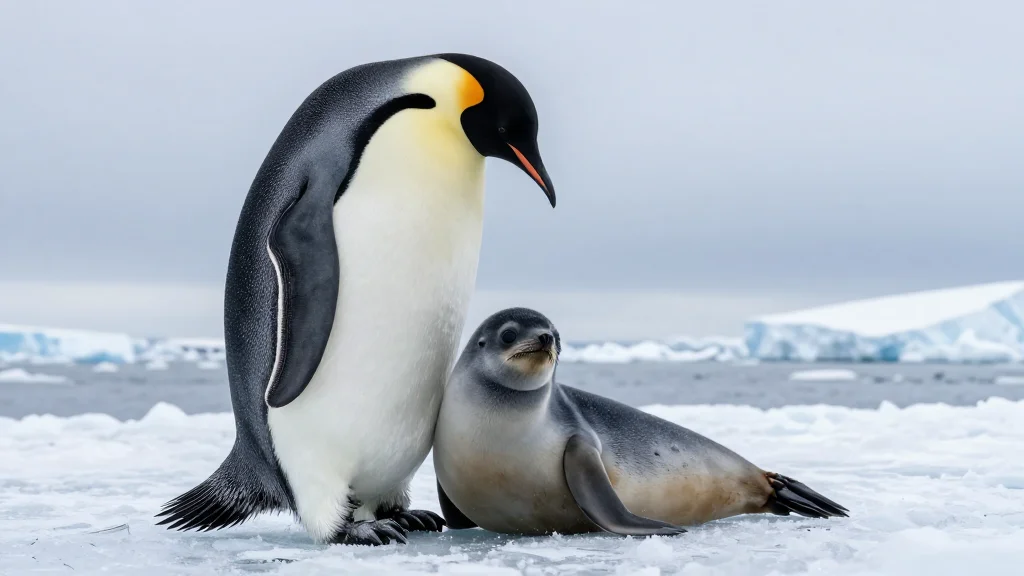
The Beloved Emperor Penguin & Antarctic Fur Seal Are Now Officially Endangered. Here’s What Can Be Done.
Why It Matters
The listings signal accelerating ecosystem disruption in Antarctica, highlighting urgent climate and disease threats that could cascade through the marine food web and impact global biodiversity.
Key Takeaways
- •Emperor penguins projected to lose 50% of population by 2073.
- •Antarctic fur seal numbers fell >50% since 1999, now 944k mature.
- •Shrinking sea ice and southward krill shift drive predator declines.
- •Avian influenza outbreaks now killing seal and penguin pups.
- •Real‑time monitoring and fishing limits essential for recovery.
Pulse Analysis
The International Union for Conservation of Nature’s decision to classify emperor penguins and Antarctic fur seals as endangered underscores a watershed moment for Southern Ocean conservation. Both species have become emblematic of climate‑driven change: penguins rely on stable sea‑ice platforms for breeding, while fur seals depend on abundant krill that are now moving farther south and deeper in the water column. Their rapid slide toward extinction illustrates how warming temperatures can restructure entire predator‑prey dynamics, turning once‑stable ecosystems into volatile habitats.
Scientific assessments link the declines to a confluence of stressors. Sea‑ice loss reduces the breeding success of emperor penguins, with early ice breakup leaving chicks vulnerable. Simultaneously, krill redistribution diminishes the primary food source for fur seals, intensifying competition with expanding whale populations. Adding to these chronic pressures, recent avian influenza outbreaks have caused unprecedented mortality among seal pups and penguin chicks, compounding the demographic squeeze. The dual impact of climate change and disease creates a feedback loop that accelerates population drops and threatens the broader Antarctic food web.
Policymakers and conservationists now face a narrow window to act. Strengthening real‑time monitoring networks will improve early detection of disease and population trends, while stricter regulation of commercial fishing can safeguard krill stocks essential to predator survival. Moreover, integrating these species into international climate agreements can drive the emissions reductions needed to preserve sea‑ice habitats. Investing in remote research infrastructure and collaborative data sharing will fill critical knowledge gaps, enabling adaptive management strategies that could reverse the current trajectory and secure the future of Antarctica’s iconic wildlife.
The Beloved Emperor Penguin & Antarctic Fur Seal Are Now Officially Endangered. Here’s What Can Be Done.
Comments
Want to join the conversation?
Loading comments...