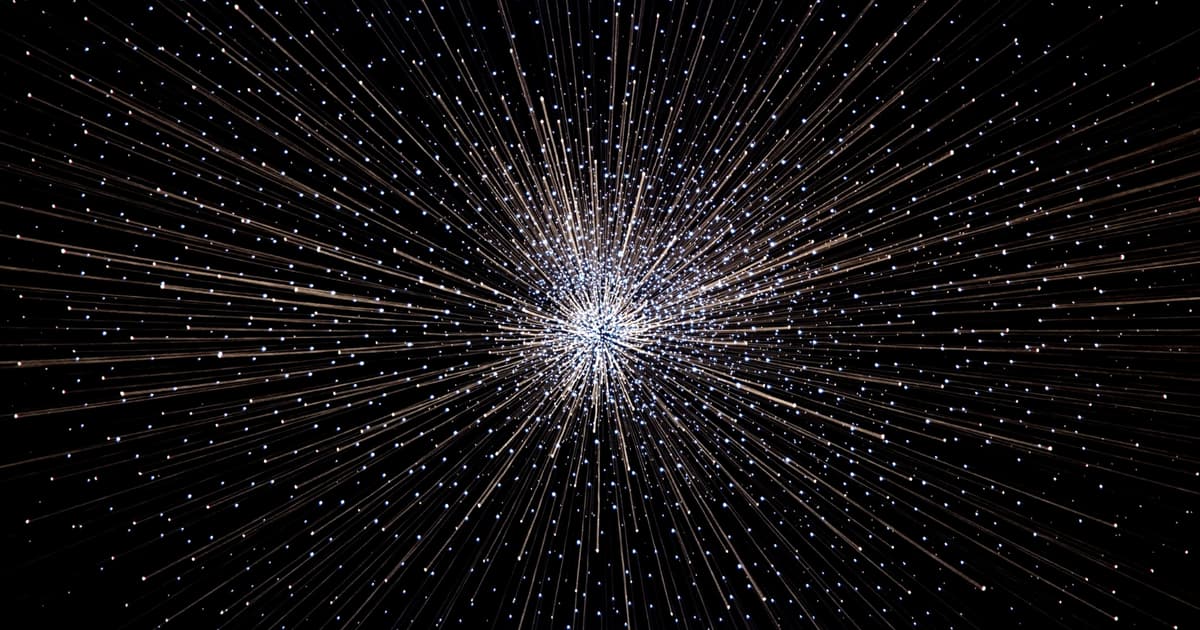
The Big Bang Did Not Explode Into Empty Space From a Central Point. It Was Space Itself Expanding Everywhere at Once. That Is Why the Universe Has No Centre in the Ordinary Sense, Why Every Galaxy Sees Distant Galaxies Moving Away From Its Own Vantage Point, and Why the Question “Where Did the Big Bang Happen?” Has the Strange but Genuine Answer: Everywhere — Including the Place Where You Are Sitting Now.
Why It Matters
Understanding that the universe has no center reshapes fundamental physics and guides investment in cosmology‑driven technologies, from satellite observatories to data‑intensive research platforms.
Key Takeaways
- •Big Bang expanded space, not exploded into a void.
- •Every location serves as its own center in expanding universe.
- •Hubble‑Lemaître law links galaxy recession speed to distance.
- •Uniform CMB radiation proves hot early universe was everywhere.
- •Observable universe ~93 billion light‑years; total size still uncertain.
Pulse Analysis
The popular image of a colossal explosion at a single point misrepresents the physics of the early universe. In the 1920s, Alexander Friedmann and Georges Lemaître applied Einstein’s general relativity to show that space itself can stretch, creating a homogeneous, isotropic cosmos without a privileged center. This expansion is not a motion of galaxies through space; rather, the metric that defines distances between points grows, a nuance that underpins modern cosmology and informs the design of precision instruments that measure cosmic distances.
Observational pillars cement the everywhere‑at‑once view. Edwin Hubble’s 1929 discovery that recession speed scales with distance, later formalized as the Hubble‑Lemaître law, reveals that any observer—whether in the Milky Way or a galaxy ten billion light‑years away—sees the same pattern of outward motion. Complementary evidence arrives from the cosmic microwave background (CMB), whose near‑perfect uniformity across the sky, mapped by missions such as COBE, WMAP and ESA’s Planck, indicates the hot, dense early state filled all of space. These data drive multi‑billion‑dollar space missions, fuel advances in detector technology, and generate high‑value data streams that power cloud‑based analytics platforms.
While the expansion model explains much, key questions remain open, keeping the field vibrant and commercially relevant. The nature of the initial singularity, the true size of the universe beyond the 93 billion‑light‑year observable horizon, and the integration of quantum mechanics with gravity are active research frontiers. Upcoming observatories—like the James Webb Space Telescope’s successors and next‑generation CMB experiments—promise deeper insights, attracting venture capital and government funding alike. For businesses, staying attuned to these scientific breakthroughs can unlock opportunities in aerospace, high‑performance computing, and data‑science services that support the ever‑expanding quest to map the cosmos.
The Big Bang did not explode into empty space from a central point. It was space itself expanding everywhere at once. That is why the universe has no centre in the ordinary sense, why every galaxy sees distant galaxies moving away from its own vantage point, and why the question “where did the Big Bang happen?” has the strange but genuine answer: everywhere — including the place where you are sitting now.
Comments
Want to join the conversation?
Loading comments...