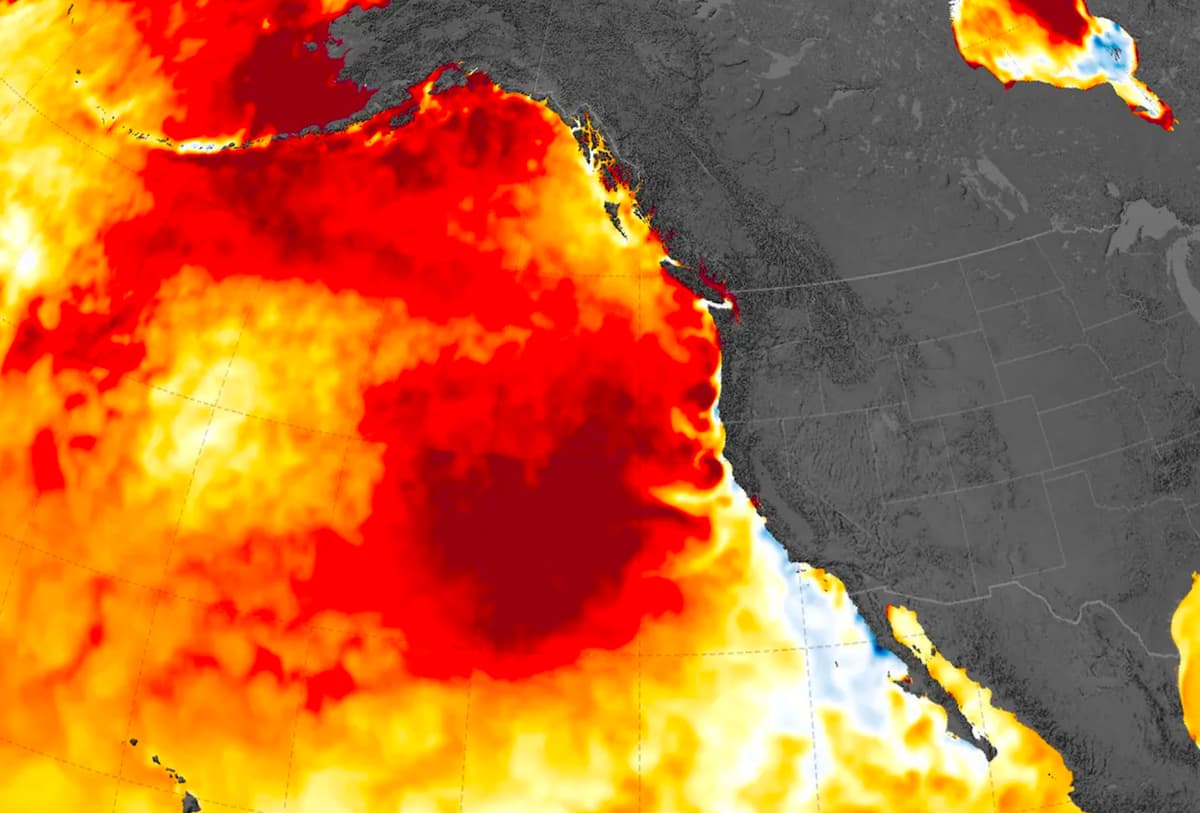
‘The Blob’ Marine Heatwave Reignites Off California, Shattering Records
Why It Matters
The unprecedented warming threatens fisheries, marine biodiversity, and coastal economies, while signaling accelerating climate volatility for the Pacific region.
Key Takeaways
- •Surface water hit 68.5°F, 7.7°F above seasonal average.
- •Bottom temperature reached 67.6°F, hottest April reading in a century.
- •Scripps Pier broke over 25 daily temperature records this year.
- •El Niño forecasted as possible 'super' event, amplifying warming.
- •Marine species like tuna appear far north, disrupting ecosystems.
Pulse Analysis
Marine heatwaves are prolonged periods of unusually warm ocean temperatures that can reshape ecosystems and weather patterns. The original 2015 event, known as “The Blob,” emerged from a persistent high‑pressure ridge that stifled winter storms along the eastern Pacific, allowing the sun to heat the sea surface unchecked. That episode triggered record‑high sea temperatures, altered marine food webs, and highlighted the sensitivity of coastal climates to atmospheric anomalies. Understanding the physical drivers of such events is essential for climate scientists tracking the increasing frequency of extreme oceanic conditions.
The 2026 resurgence is already surpassing previous benchmarks. Data from Scripps Pier show surface waters at 68.5°F—well above the climatological norm—and bottom temperatures at 67.6°F, the warmest April measurement in a century. More than 25 daily temperature records have been broken, and April 17 tied the hottest day on record for that date. Coupled with forecasts of a potentially “super” El Niño, the heatwave could intensify, pushing subtropical species like tuna and swordfish hundreds of miles northward. Such range shifts strain native species, disrupt spawning cycles, and raise concerns for commercial fisheries that depend on stable temperature regimes.
The economic stakes are high for California’s coastal communities, where fisheries, tourism, and aquaculture generate billions of dollars annually. Warmer waters can reduce fish stocks, increase harmful algal blooms, and elevate the risk of coastal erosion. NOAA’s real‑time monitoring and predictive modeling are critical tools for policymakers and industry leaders to mitigate impacts. Investing in adaptive management—such as adjusting catch limits, enhancing habitat resilience, and supporting climate‑smart infrastructure—will be vital to safeguard livelihoods and preserve marine biodiversity amid a warming Pacific. The current Blob underscores the urgency of integrating oceanic heatwave forecasts into broader climate‑risk strategies.
‘The Blob’ Marine Heatwave Reignites Off California, Shattering Records
Comments
Want to join the conversation?
Loading comments...