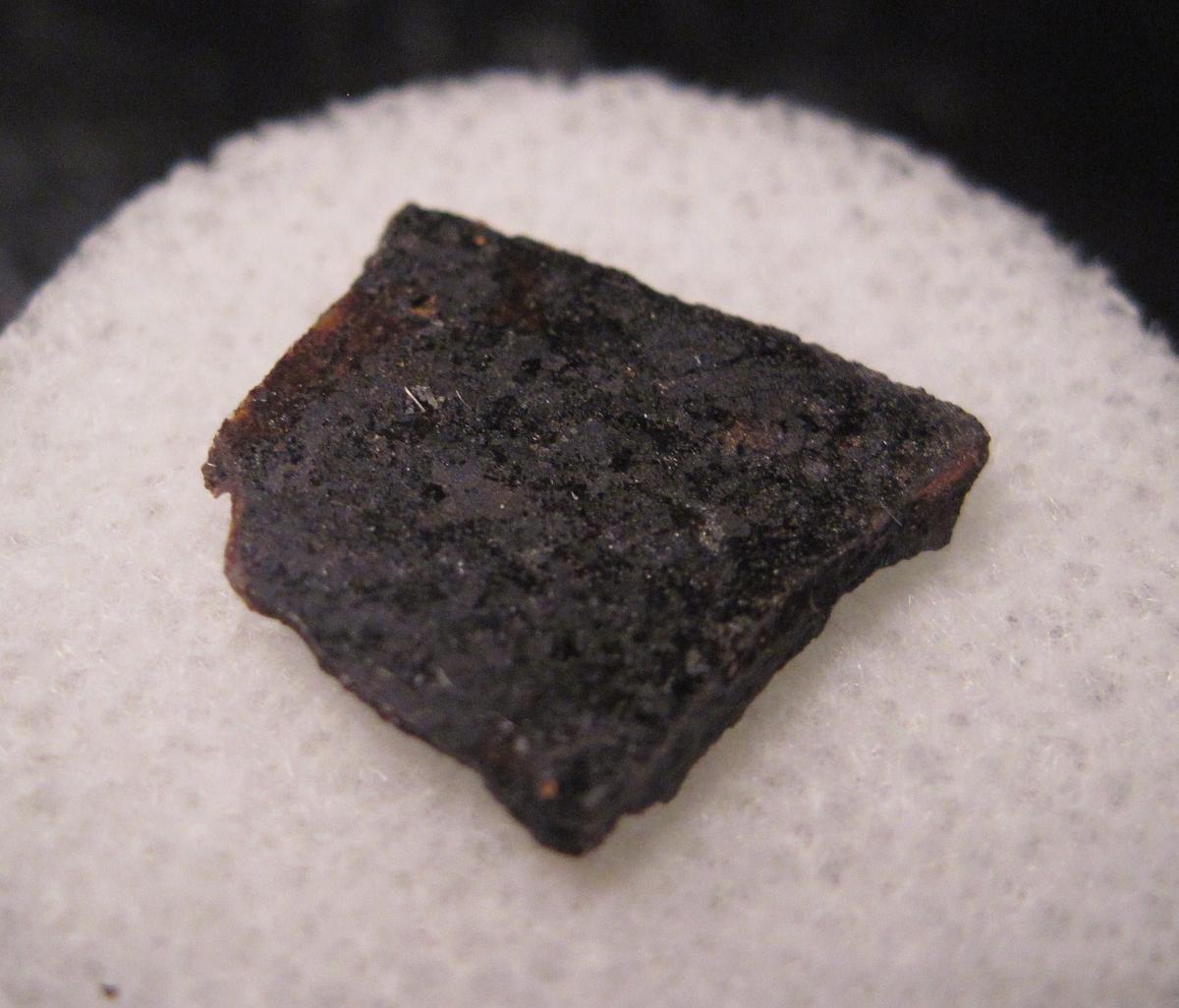
The Destroyed Remnants of a Lost World Are Falling to Earth, Scientists Discover
Why It Matters
The discovery reshapes models of early planetary accretion by confirming that sizable planetary embryos existed and were destroyed before the major planets formed, influencing our understanding of solar system formation dynamics. It also provides a rare window into the composition of early differentiated bodies.
Key Takeaways
- •Angrites date to ~4.56 billion years, among oldest volcanic rocks
- •New geobarometer indicates parent body radius ≥620 mi (≈1,000 km)
- •Parent body size comparable to Pluto, possibly Moon-sized protoplanet
- •Findings support hypothesis of early large embryos shattered in inner solar system
Pulse Analysis
The angrite meteorite family has long intrigued scientists because its volcanic composition hints at formation within a differentiated body, yet no parent asteroid has ever been identified. Recent advances in high‑pressure mineral analysis allow researchers to extract formation conditions from tiny crystal signatures, turning these space rocks into forensic clues about early solar system processes. By focusing on the unusually aluminum‑rich NWA 12,774, the team could calibrate a geobarometer that translates mineral chemistry into pressure, revealing that the rock crystallized under at least 1.7 GPa—pressures only achievable deep inside a body hundreds of kilometers across.
That pressure estimate translates to a minimum radius of roughly 620 miles (about 1,000 km), placing the angrite parent body in the size regime of dwarf‑planetary embryos such as Pluto or even the Moon. This size is dramatically larger than the asteroid‑scale bodies traditionally assumed for early differentiated objects. The implication is that the inner solar system, within its first three million years, hosted multiple sizable protoplanets that rapidly accreted, differentiated, and then collided catastrophically. The destruction of such a body would have seeded the asteroid belt with fragments, some of which survived the eons to land on Earth as the rare angrites we study today.
For planetary scientists, these findings force a reevaluation of accretion timelines and collision frequencies during the solar system’s infancy. If Moon‑sized embryos formed and were shattered so early, the dynamical environment was far more violent than many models suggest, potentially influencing the growth pathways of Earth and Mars. Moreover, angrites now serve as tangible samples of a lost planetary class, offering a unique laboratory for probing core‑formation, mantle differentiation, and early magmatic activity beyond the familiar terrestrial planets. Future missions targeting asteroid belt remnants could prioritize angrite‑rich fragments, unlocking further insights into the composition and fate of these primordial worlds.
The Destroyed Remnants of a Lost World Are Falling to Earth, Scientists Discover
Comments
Want to join the conversation?
Loading comments...