Why It Matters
Understanding the physical rules behind chloroplast positioning clarifies how plants adapt to fluctuating light, a key factor for photosynthetic efficiency and crop productivity. The insight opens pathways for bio‑engineered plants that manage light more intelligently.
Key Takeaways
- •Elodea chloroplasts self‑organize into mathematically optimal packing patterns
- •Light intensity triggers a glass‑like transition, making the cytoplasm fluid
- •Study links plant cell behavior to classic Kepler packing problems
- •Findings could guide engineering of crops with improved light efficiency
Pulse Analysis
Plants have long been known to shuffle chloroplasts in response to light, a behavior first noted in the early 1800s under simple microscopes. While leaf‑level movements such as heliotropism occur over minutes, the subcellular choreography happens in seconds, allowing cells to fine‑tune photosynthesis and avoid photodamage. This dynamic has fascinated biologists for decades, yet the underlying physics remained elusive, with most research focusing on actin‑based motor proteins rather than collective geometry.
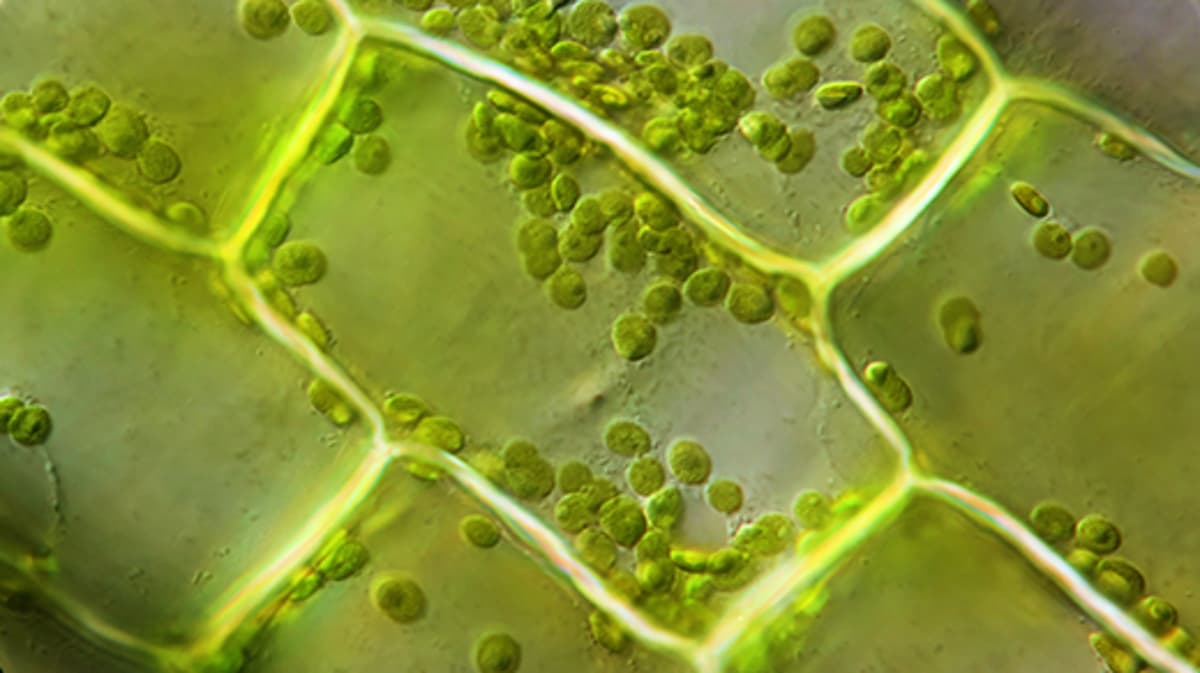
In a 2025 Proceedings of the National Academy of Sciences article, Schramma and Jalaal combined high‑resolution imaging of Elodea densa with statistical physics models to show that chloroplasts behave like discs solving a two‑dimensional packing problem. Under steady light the organelles adopt a dense, ordered lattice that maximizes photon capture. When illumination spikes, the cell interior undergoes a reversible glass transition, temporarily fluidizing the cytoplasm and allowing chloroplasts to disperse into sparse clusters that shade themselves against the cell wall. This emergent behavior mirrors Kepler’s sphere‑packing principles, demonstrating that evolution has co‑opted a universal geometric solution.
The discovery carries practical weight for agriculture and synthetic biology. By decoding the physical parameters that dictate optimal organelle arrangement, researchers can design crops whose chloroplasts reposition more efficiently, boosting yields under variable sunlight. Moreover, the glass‑transition concept suggests new strategies for engineering plant cells that dynamically adjust internal viscosity, potentially improving stress resilience. Future work will explore whether similar packing dynamics operate in terrestrial species and how genetic manipulation of cytoskeletal components might fine‑tune the transition threshold, paving the way for next‑generation, light‑smart crops.
The Hidden Mathematical Dance Inside Plant Cells
Comments
Want to join the conversation?
Loading comments...