Why It Matters
High‑resolution amateur imaging adds valuable data on nearby reflection nebulae, supporting professional studies of early stellar evolution and interstellar medium dynamics.
Key Takeaways
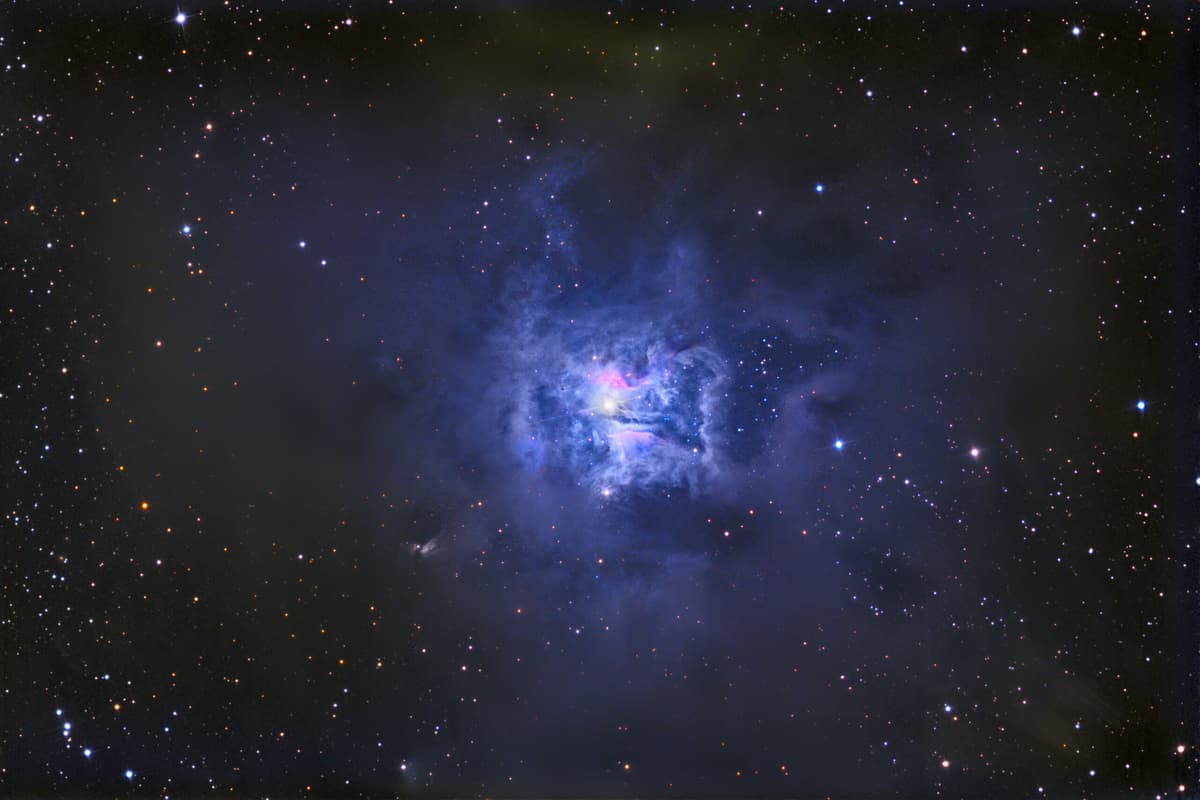
- •Iris Nebula lies about 1,400 light‑years away in Cepheus
- •Central star reflects blue light, carving cavity in dark cloud LDN 1174
- •Rodney Pommier recorded 10 h 35 m LRGB exposure with a 17‑inch telescope
- •Image shows wispy dust lanes and scattered stars around nebula core
- •Data help researchers probe early stellar evolution and nebular structure
Pulse Analysis
The Iris Nebula, officially NGC 7023, is a classic example of a reflection nebula where dust particles scatter the blue light of a nascent star. Positioned in the northern sky’s Cepheus region, the nebula’s proximity—about 1,400 light‑years—makes it an accessible laboratory for studying the interplay between young stars and their natal clouds. Its surrounding dark cloud, LDN 1174, provides a stark contrast that highlights the nebula’s delicate filaments and the star’s emerging cavity, offering insights into how stellar winds sculpt interstellar material.
Rodney Pommier’s recent imaging effort showcases the power of modern amateur equipment. By integrating 10 hours 35 minutes of LRGB data through a 17‑inch aperture, he achieved a depth and color fidelity comparable to many professional observatories. The LRGB technique—combining luminance with red, green, and blue filters—captures fine structural detail while preserving accurate color balance, essential for interpreting dust composition and illumination patterns. Such contributions demonstrate how dedicated hobbyists can supplement large‑scale surveys, filling gaps in temporal coverage and providing high‑resolution snapshots of dynamic regions.
Beyond its visual appeal, the new image serves scientific purposes. Detailed morphology of the dust lanes and the distribution of embedded stars help astronomers model the early stages of star formation, including feedback mechanisms that disperse surrounding material. Moreover, publicly shared high‑quality nebular images engage a broader audience, fostering interest in astrophysics and supporting citizen‑science initiatives. As imaging technology continues to improve, collaborations between amateurs and professionals are poised to accelerate discoveries in nearby star‑forming regions like the Iris Nebula.
The Iris blooms
Comments
Want to join the conversation?
Loading comments...