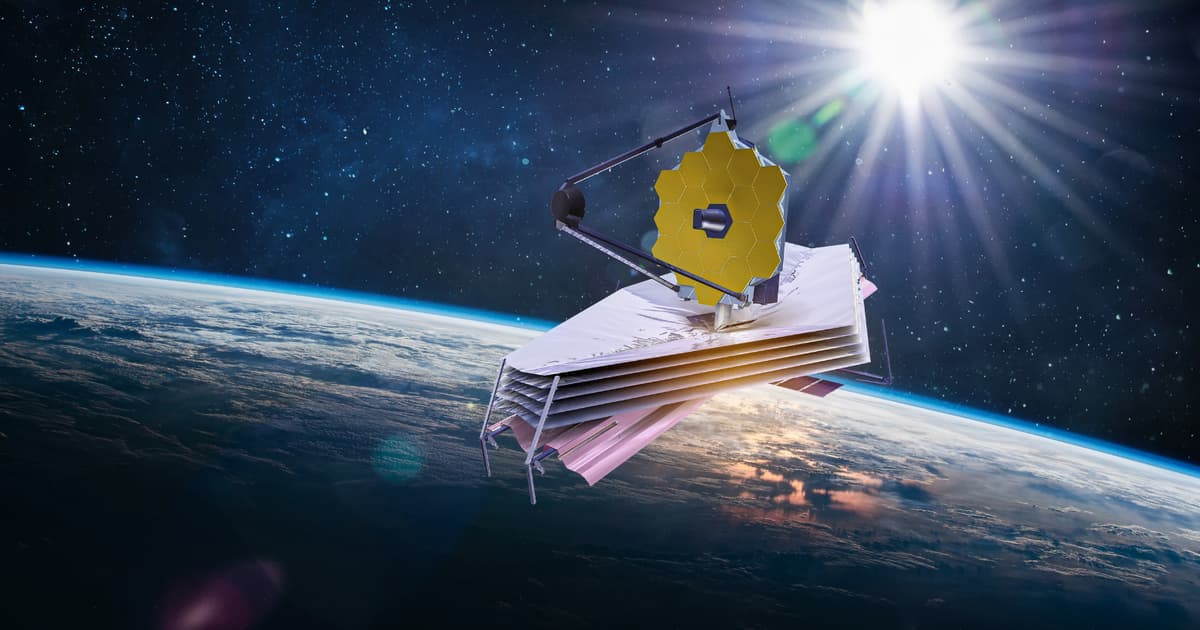
The James Webb Telescope Keeps Finding Early Galaxies that Look Brighter, Bigger and More Mature than Astronomers Expected, Forcing Researchers to Rethink How Quickly the First Galaxies Formed Stars and Assembled After the Big Bang.
Companies Mentioned

NASA
Alma
Why It Matters
The findings reshape models of early galaxy evolution, indicating star formation and chemical enrichment proceeded far faster than previously thought, which will steer both theoretical work and future observations.
Key Takeaways
- •Webb confirmed MoM‑z14 at redshift 14.44, 280 Myr post‑Big Bang.
- •UV‑bright galaxies at z > 10 are >100× more common than predicted.
- •Revised estimates lower galaxy masses after accounting for black‑hole light contamination.
- •Possible explanations: efficient star formation, bursty activity, top‑heavy IMF, reduced dust.
- •Upcoming spectroscopic surveys aim to quantify abundance and early chemical enrichment.
Pulse Analysis
James Webb’s latest spectroscopic breakthrough, the confirmation of MoM‑z14 at redshift 14.44, pushes the observable frontier to just 280 million years after the Big Bang. Alongside JADES‑GS‑z14‑0, these galaxies are not only luminous but also spatially extended, suggesting they are powered by massive bursts of star formation rather than nascent black holes. Their unexpected brightness and sheer numbers have already exposed a gap between observations and the pre‑launch theoretical models that predicted far fewer such objects at cosmic dawn.
The discrepancy is prompting a rethink of early‑universe astrophysics rather than cosmology. Researchers propose several complementary mechanisms: star formation may have been dramatically more efficient in the dense, low‑metallicity gas of the era; the process could have been highly bursty, causing galaxies to flare brightly before fading; and the initial stellar mass function might have been top‑heavy, producing more luminous massive stars per unit mass. Additionally, reduced dust content and contributions from accreting black holes can inflate observed luminosities, meaning earlier mass estimates were likely overstated. Together, these factors suggest that galaxies assembled their stellar mass far more rapidly than traditional models allow.
Future progress hinges on larger spectroscopic samples and multi‑wavelength follow‑ups. ALMA’s detection of oxygen in JADES‑GS‑z14‑0 indicates chemical enrichment occurring within the first 200 million years, a timeline faster than simulations predict. Upcoming JWST deep‑field campaigns and coordinated observations with ground‑based facilities aim to map the true prevalence of bright early galaxies and disentangle stellar light from black‑hole activity. These data will refine star‑formation efficiency parameters, improve models of early chemical evolution, and ultimately provide a more accurate picture of how the first cosmic structures emerged.
The James Webb telescope keeps finding early galaxies that look brighter, bigger and more mature than astronomers expected, forcing researchers to rethink how quickly the first galaxies formed stars and assembled after the Big Bang.
Comments
Want to join the conversation?
Loading comments...