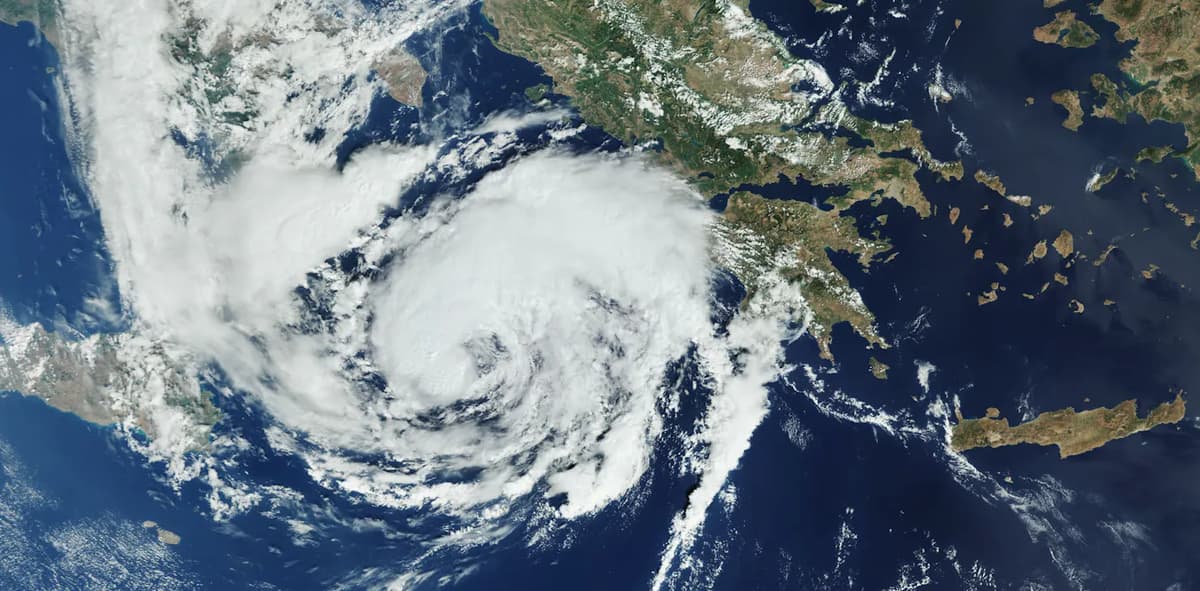
The Mediterranean Sea Is Capable of Generating Hurricanes and Climate Change Will Make Them Worse
Companies Mentioned
Why It Matters
Medicanes threaten over half a billion people along the Mediterranean coast, demanding urgent climate‑adaptation and civil‑protection measures.
Key Takeaways
- •Medicanes strike <3 times annually, limiting long‑term statistical confidence
- •Sea‑surface temps rose ~0.4 °C per decade (1990‑2020)
- •Jolina (2026) caused extensive damage across North Africa
- •Warmer waters boost medicane wind speeds and heavy rainfall
- •ESA’s MEDICANES project drives early‑warning system development
Pulse Analysis
The Mediterranean’s reputation as a temperate, tourist‑friendly region masks a growing climatological hazard: medicanes, or Mediterranean hurricanes. While these tropical‑like cyclones have historically been rare—averaging fewer than three occurrences per year—their physical structure mirrors that of true tropical storms, with a defined eye and powerful winds. Recent events such as Ianos (2020), Daniel (2023) and Jolina (2026) have demonstrated that when they do form, medicanes can unleash catastrophic flooding and wind damage across multiple national borders, affecting densely populated coastal zones that house roughly 540 million residents.
Climate change is the primary driver behind the escalating intensity of these storms. The Copernicus Climate Change Service reports a basin‑wide sea‑surface temperature increase of about 0.4 °C per decade since 1990, and individual medicane episodes have recorded anomalies of 2 °C or more. Warmer waters amplify evaporation and heat flux, feeding storms with more moisture and energy, which translates into higher wind speeds and, more consistently, heavier precipitation. Studies on Apollo (2022) and Daniel (2025) confirm that climate‑induced warming intensifies rainfall over Sicily, Libya and the eastern Mediterranean, raising the risk of flash floods and landslides.
In response, European research initiatives are scaling up monitoring and predictive capabilities. The ESA‑backed MEDICANES project leverages satellite imagery, real‑time eye‑tracking and rapid attribution studies to improve early‑warning systems and inform civil‑protection strategies. By integrating climate models with on‑the‑ground preparedness plans, policymakers can better allocate resources for infrastructure resilience, evacuation protocols and insurance frameworks. As the Mediterranean continues to warm, the convergence of scientific insight and proactive governance will be essential to mitigate the socioeconomic fallout of increasingly fierce medicanes.
The Mediterranean sea is capable of generating hurricanes and climate change will make them worse
Comments
Want to join the conversation?
Loading comments...