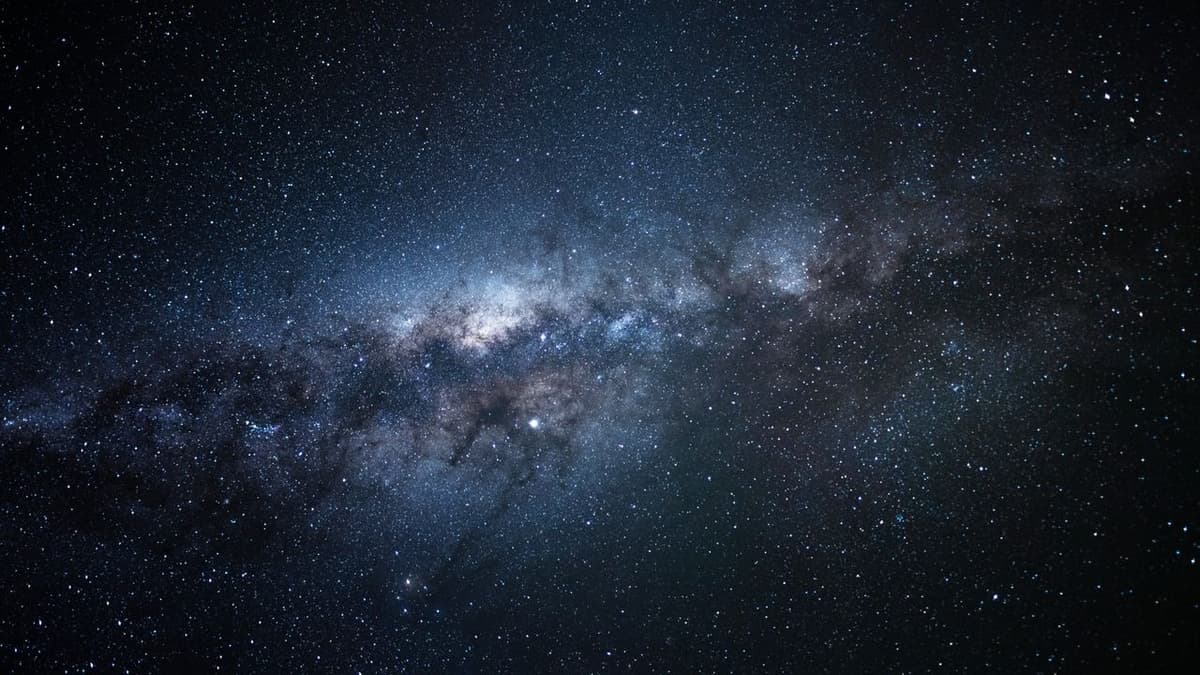
The Milky Way May Have Devoured Another Galaxy Named Loki, and Astronomers Think They've Found Its Remains
Why It Matters
The discovery provides direct evidence of a previously hidden building block of the Milky Way, improving models of galactic formation and chemical evolution. It also demonstrates the power of combined chemical and dynamical tagging to trace ancient accretion events.
Key Takeaways
- •20 metal-poor stars identified as remnants of dwarf galaxy Loki
- •Stars share chemical signatures from supernovae, hypernovae, neutron-star mergers
- •Orbits lie near Milky Way disc, unusual for metal-poor stars
- •Research blends spectroscopy, orbital dynamics, and theoretical simulations
- •Loki likely a short-lived, energetic dwarf galaxy accreted early
Pulse Analysis
The Milky Way’s present‑day structure is a mosaic of ancient mergers, and astronomers have long used “stellar archaeology” to piece together that history. Dwarf galaxies, the building blocks of larger systems, leave behind distinct chemical fingerprints in the stars they contribute. By mapping these elemental patterns—especially in metal‑poor stars that formed early—researchers can reconstruct the sequence of accretion events that shaped our galaxy.
In a recent study, a team led by postdoctoral fellow Federico Sestito pinpointed 20 metal‑poor stars whose orbits are confined to the Galactic disc, a region typically dominated by younger, metal‑rich populations. High‑resolution spectroscopy revealed that these stars share rare abundance ratios indicative of enrichment from high‑energy supernovae, hypernovae, and neutron‑star mergers, but not from white‑dwarf explosions. The combination of chemical tagging and precise orbital dynamics allowed the researchers to infer that the stars originated in a short‑lived, energetic dwarf galaxy they have named “Loki.” This discovery showcases how multi‑dimensional data can isolate a single accretion event hidden amid the crowded disc.
The implications extend beyond a single galaxy. As next‑generation multi‑object spectrographs come online, astronomers will obtain chemical profiles for thousands of stars, dramatically expanding the catalog of identifiable merger remnants. Such data will refine simulations of galaxy formation, improve estimates of the Milky Way’s mass assembly timeline, and deepen our understanding of nucleosynthesis pathways in the early universe. Loki’s detection is a proof‑of‑concept that the Milky Way’s hidden past can be uncovered with the right blend of spectroscopy, astrometry, and theory.
The Milky Way may have devoured another galaxy named Loki, and astronomers think they've found its remains
Comments
Want to join the conversation?
Loading comments...