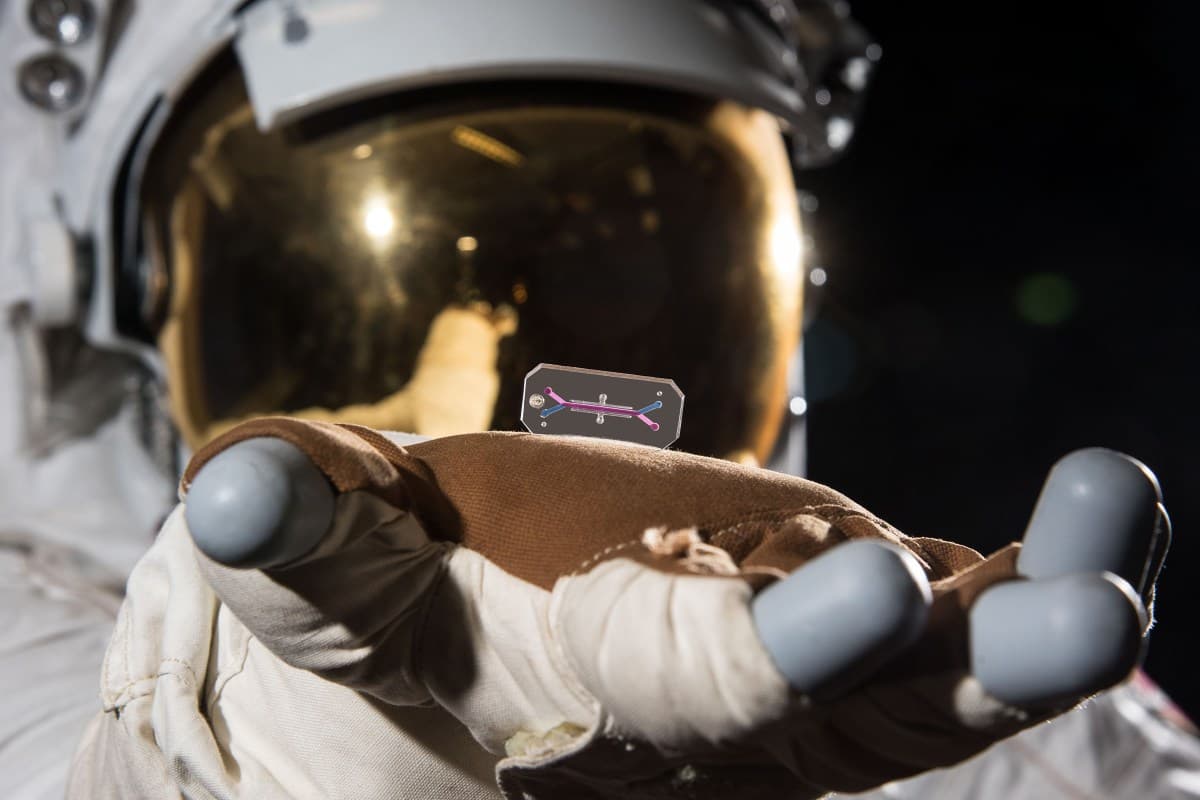
The Moon Astronauts Brought Along USB Stick-Sized Living Samples of Their Own Tissue

Why It Matters
Understanding real‑time radiation impacts on human tissue is critical for safeguarding crew health on long‑duration missions beyond low‑Earth orbit. The data will inform medical countermeasures and accelerate commercial organ‑chip applications in space research.
Key Takeaways
- •Artemis II carries personalized organ chips from each astronaut
- •Chips use bone marrow cells, highly sensitive to radiation
- •Experiment compares deep‑space radiation effects with ISS exposure
- •First mission pairing crew with matched organ‑on‑a‑chip
- •Results may speed biomedical countermeasures for future missions
Pulse Analysis
The Artemis II mission marks a watershed moment for biomedical research in space, as it transports the first personalized organ‑on‑a‑chip specimens. These micro‑organs, derived from each astronaut’s own bone‑marrow cells, are engineered to mimic the physiological response of real tissue while fitting into a USB‑sized cartridge. By placing matched human and chip samples on the same deep‑space trajectory, scientists can isolate the effects of solar and cosmic radiation that are otherwise impossible to replicate on Earth, providing a direct biological readout of exposure.
Radiation is the single most daunting hazard for crews venturing beyond low‑Earth orbit, and bone‑marrow cells are among the most vulnerable. The experiment’s design—sending identical chip sets to the International Space Station—creates a controlled comparison between deep‑space and low‑Earth‑orbit environments. This dual‑platform approach will generate high‑resolution data on DNA damage, cellular repair mechanisms, and inflammatory responses, informing the development of shielding strategies and pharmacological protectants for missions to Mars and beyond.
Beyond astronaut safety, the Artemis II organ‑chip study could catalyze a broader shift in how space agencies and commercial partners conduct biomedical testing. The low cost, scalability, and rapid turnaround of organ‑on‑a‑chip technology enable hundreds of parallel experiments, dramatically expanding the sample size compared to traditional animal or human studies. As the industry moves toward longer, deeper missions, such data‑driven insights will become indispensable for designing health protocols, insurance models, and even personalized medicine regimens for the next generation of spacefarers.
The Moon Astronauts Brought Along USB Stick-Sized Living Samples of Their Own Tissue
Comments
Want to join the conversation?
Loading comments...