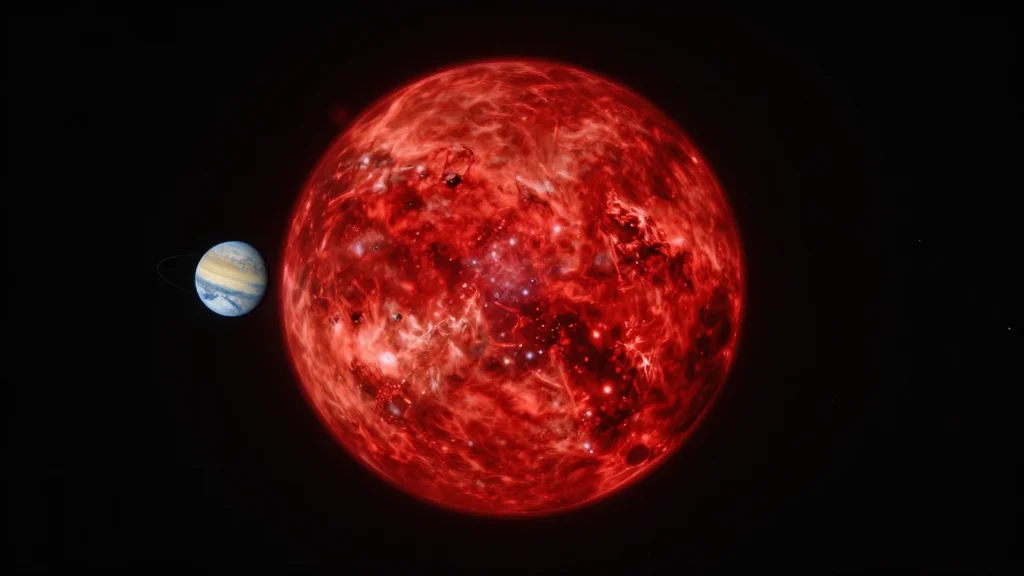
The Most Common Planets in the Galaxy Don't Appear Around the Most Common Stars, TESS Observations Suggest
Why It Matters
The discovery forces a revision of planet‑formation theories and reshapes target selection for habitability studies, influencing both academic research and future space‑mission investments.
Key Takeaways
- •Sub‑Neptunes rare around mid‑to‑late M dwarfs, per TESS data
- •Super‑Earths remain abundant around the galaxy’s most common stars
- •Findings challenge photoevaporation as sole driver of radius valley
- •Suggests water‑rich planet formation dominates around low‑mass stars
Pulse Analysis
The exoplanet field has accelerated dramatically since the first detections three decades ago, and NASA's Transiting Exoplanet Survey Satellite (TESS) now provides near‑continuous coverage of the entire sky. By focusing on mid‑to‑late M dwarfs—stars that comprise roughly 70% of the Milky Way’s stellar population—researchers have finally been able to probe a segment of the galaxy that was previously out of reach due to the stars' faintness. TESS’s 28‑day observation cadence, combined with sophisticated detection pipelines, yielded a statistically robust sample of planets orbiting these low‑mass stars, revealing a stark contrast to the planetary demographics around Sun‑like stars.
The analysis shows that sub‑Neptune‑sized worlds, which are common around G‑type stars, are almost absent around M dwarfs, while super‑Earths remain plentiful. This pattern undermines the long‑standing photoevaporation hypothesis, which attributes the radius valley to stellar radiation stripping planetary atmospheres. M dwarfs are highly active, yet the near‑total loss of sub‑Neptunes suggests that atmospheric erosion alone cannot explain the observations. Instead, the data point toward formation pathways that favor water‑rich, rocky planets, possibly due to the protoplanetary disk composition and lower gas accretion efficiency around small stars.
For investors, technology firms, and policymakers focused on the next wave of space exploration, the findings carry practical implications. Missions aimed at detecting biosignatures will likely prioritize M‑dwarf systems, where super‑Earths are abundant and potentially more amenable to atmospheric characterization with upcoming telescopes like the James Webb Space Telescope successor. Moreover, the shift in theoretical models may drive new instrumentation and data‑analysis tools tailored to the unique environments of low‑mass stars, opening fresh market opportunities in the burgeoning exoplanet industry.
The most common planets in the galaxy don't appear around the most common stars, TESS observations suggest
Comments
Want to join the conversation?
Loading comments...