The Mystery of the Giant Blobs at the Center of the Earth
Why It Matters
Understanding LLSVPs could reshape models of mantle convection, core‑mantle interaction, and Earth’s formative collisions, influencing both geoscience theory and resource exploration.
Key Takeaways
- •LLSVPs are continent‑sized low‑shear zones beneath Africa and the Pacific
- •They slow seismic shear waves without reducing wave amplitude
- •One theory links them to ancient subducted crust melted into dense slurry
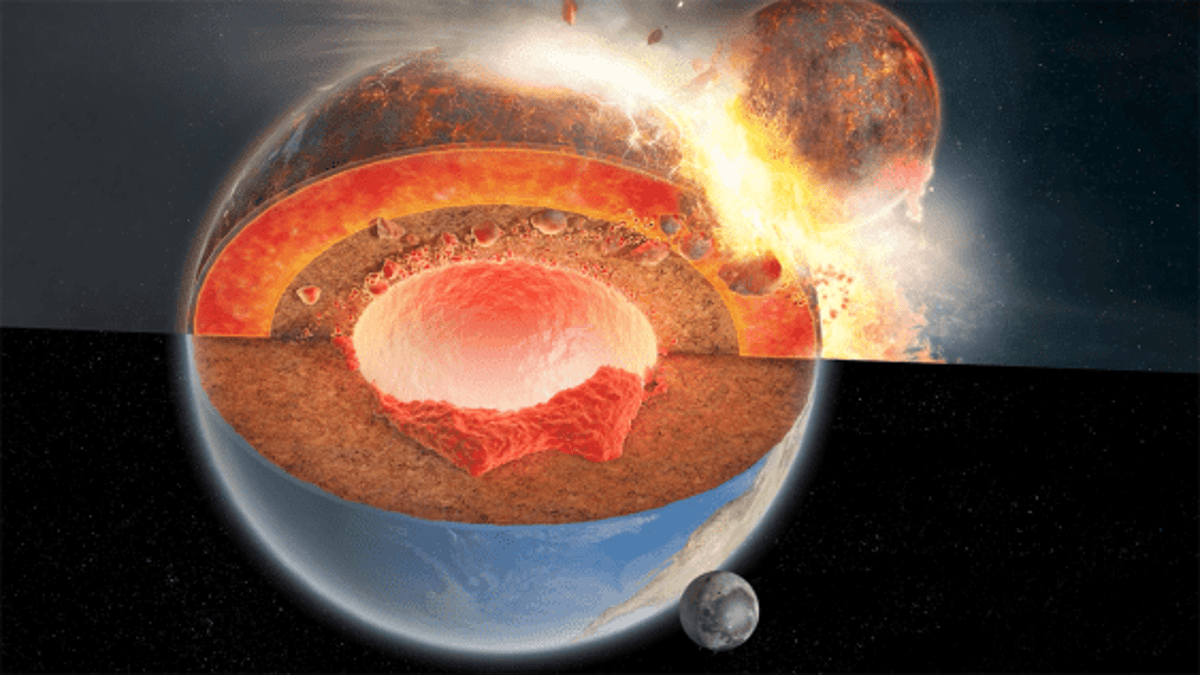
- •Alternative hypothesis: they are Theia remnants, the proto‑planet that formed the Moon
- •If up to 500 million years old, they preserve early mantle chemistry
Pulse Analysis
The discovery of Large Low‑Shear Velocity Provinces has revived interest in the deep Earth’s hidden architecture. Using global seismic networks, scientists map how shear‑wave speeds vary, revealing two vast anomalies that sit atop the core‑mantle boundary. Their ability to decelerate shear waves while preserving energy suggests a material contrast far greater than surrounding mantle, hinting at compositional or textural differences that standard convection models do not capture. This seismic fingerprint provides a rare window into processes occurring over 2,800 kilometers beneath the surface.
Two dominant theories compete to explain the blobs’ origin. The first posits that ancient slabs of oceanic crust, subducted billions of years ago, sank into the lower mantle, melted, and formed a dense, grain‑coarse slurry that resists mixing. Such a reservoir could trap iron‑rich material, accounting for the elevated metallic signatures detected in seismic studies. The second, more dramatic, scenario links the LLSVPs to Theia, the Mars‑sized body whose impact is believed to have birthed the Moon. If fragments of Theia survived the collision and settled at the core‑mantle interface, they would explain both the anomalous iron content and the blobs’ longevity, potentially preserving a snapshot of early solar‑system material.
Future progress hinges on higher‑resolution tomography, machine‑learning inversion, and deep‑earth drilling concepts that could sample mantle plumes. As computational power expands, researchers can simulate grain‑scale dynamics that reconcile seismic observations with mineral physics. Clarifying the nature of LLSVPs will refine models of mantle convection, heat flow, and the Earth’s magnetic field generation, while also informing exploration of deep‑mantle mineral deposits and comparative planetology.
The Mystery of the Giant Blobs at the Center of the Earth
Comments
Want to join the conversation?
Loading comments...