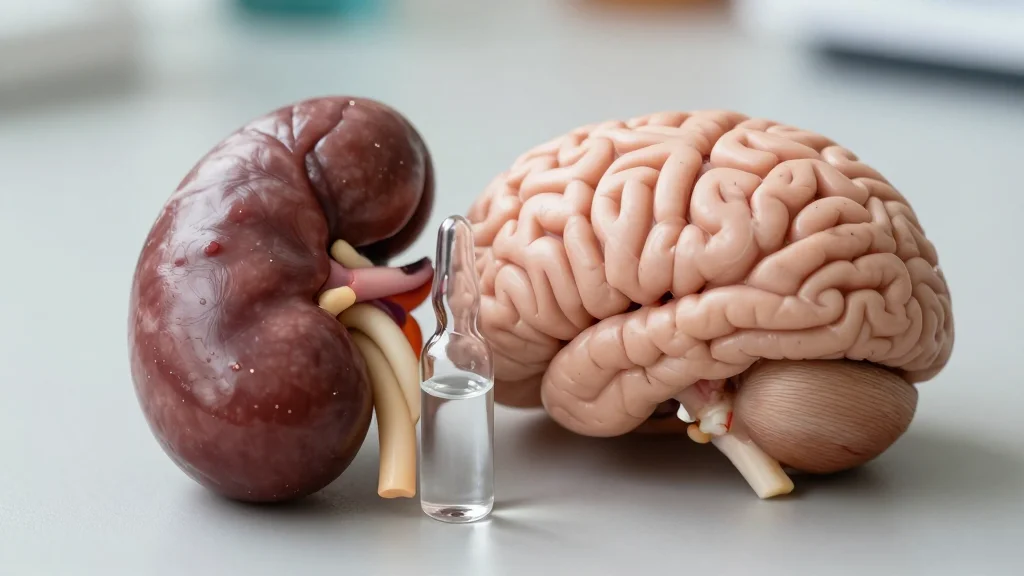
The Overlooked Organ That Could Be Hiding Your True Alzheimer’s Risk
Why It Matters
Kidney dysfunction can distort biomarker readings, potentially leading to mis‑diagnosis or overestimation of Alzheimer’s risk, affecting treatment decisions and clinical trial enrollment.
Key Takeaways
- •Lower eGFR linked to higher Alzheimer’s biomarker concentrations.
- •Neurofilament light chain elevation doubles dementia risk with impaired kidneys.
- •Kidney dysfunction may inflate biomarker readings without extra brain damage.
- •Clinicians should factor renal health into blood‑based Alzheimer’s test interpretation.
Pulse Analysis
Blood‑based biomarkers have been hailed as a game‑changer for early Alzheimer’s detection, offering a less invasive alternative to lumbar punctures and PET scans. However, the reliability of these assays hinges on understanding how peripheral physiology alters protein concentrations. Recent research highlights the kidneys as a critical, yet overlooked, regulator of circulating Alzheimer‑related proteins, prompting a reevaluation of how clinicians interpret test results in older adults.
The study tracked 2,000 dementia‑free participants with an average age of 72, measuring eGFR alongside tau, amyloid‑beta, neurofilament light chain (NfL) and GFAP levels. Participants with reduced eGFR consistently showed higher biomarker concentrations, with NfL exhibiting the strongest correlation. Even after removing individuals who later developed dementia, the pattern remained, suggesting that renal clearance—not neurodegeneration—drives the observed elevations. Notably, the combination of low kidney function and high NfL nearly doubled the odds of subsequent dementia, underscoring a synergistic risk factor that could confound risk stratification models.
For practitioners, the implication is clear: renal function must be integrated into the diagnostic algorithm for Alzheimer’s blood tests. Adjusting biomarker thresholds based on eGFR could improve specificity, reduce false‑positive rates, and refine patient selection for therapeutic trials. Future research should explore standardized correction factors and investigate whether improving kidney health can modulate biomarker levels, potentially opening new preventive avenues. As the field moves toward precision medicine, a holistic view that includes kidney health will be essential for accurate Alzheimer’s risk assessment.
The Overlooked Organ That Could Be Hiding Your True Alzheimer’s Risk
Comments
Want to join the conversation?
Loading comments...