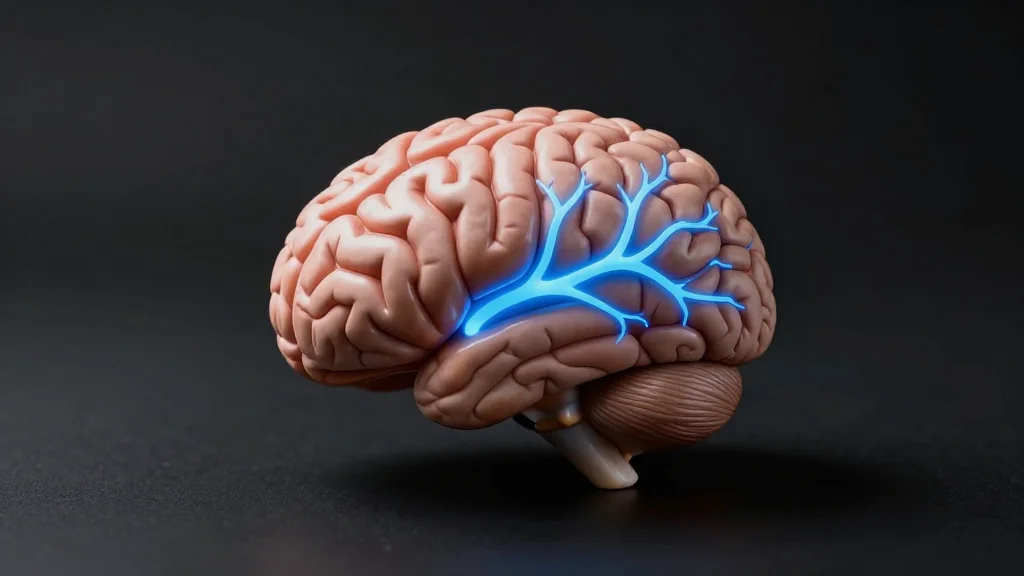
The Prefrontal Cortex Controls Memory Organization in the Hippocampus
Why It Matters
The discovery clarifies how prefrontal regions shape long‑term memory structure, opening new targets for treating disorders such as PTSD, schizophrenia, and age‑related memory decline. It also provides a biological blueprint for AI models that aim to emulate human memory consolidation.
Key Takeaways
- •vmPFC activity rises when different contexts are visited 7 days apart
- •Inhibiting vmPFC forces integration of otherwise separated memories
- •vmPFC projects to MEC, modulating dCA1 ensemble overlap
- •Disrupting vmPFC‑MEC pathway increases hippocampal neuron co‑activation
- •Linking prefrontal control to PTSD and other memory disorders
Pulse Analysis
The prefrontal cortex has long been implicated in high‑order cognition, but its exact role in shaping hippocampal memory traces remained elusive. The UCLA team combined in‑vivo calcium imaging with chemogenetic tools to map vmPFC activity across temporal and spatial contexts. Their data reveal that vmPFC neurons become highly active when mice explore distinct environments a week apart, a pattern that correlates with the segregation of memory engrams in the dorsal CA1 region. By selectively silencing vmPFC neurons, the researchers observed a marked increase in overlapping hippocampal ensembles, indicating that the prefrontal signal normally acts as a gatekeeper to prevent inappropriate memory blending.
Crucially, the study pinpoints the medial entorhinal cortex as the conduit for this top‑down influence. vmPFC axons terminate on MEC layers that project directly to CA1, allowing the prefrontal region to fine‑tune the excitability of hippocampal circuits during the consolidation window that spans several days. Optogenetic inhibition of vmPFC‑MEC terminals reproduced the integration phenotype, confirming that this pathway is both necessary and sufficient for controlling memory linking. These findings align with emerging models of distributed memory storage, where cortical hubs coordinate the timing and context of hippocampal replay to sculpt durable representations.
From a translational perspective, the vmPFC‑MEC axis offers a compelling target for therapeutic interventions aimed at disorders characterized by maladaptive memory integration, such as post‑traumatic stress disorder and certain psychoses. Pharmacological agents or neuromodulation techniques that enhance prefrontal control could restore proper segregation of traumatic versus neutral memories, reducing intrusive recollections. Moreover, the mechanistic insight feeds into next‑generation artificial intelligence systems that seek to emulate human‑like memory consolidation, suggesting that incorporating hierarchical, context‑dependent gating may improve the stability and flexibility of machine learning models.
The prefrontal cortex controls memory organization in the hippocampus
Comments
Want to join the conversation?
Loading comments...