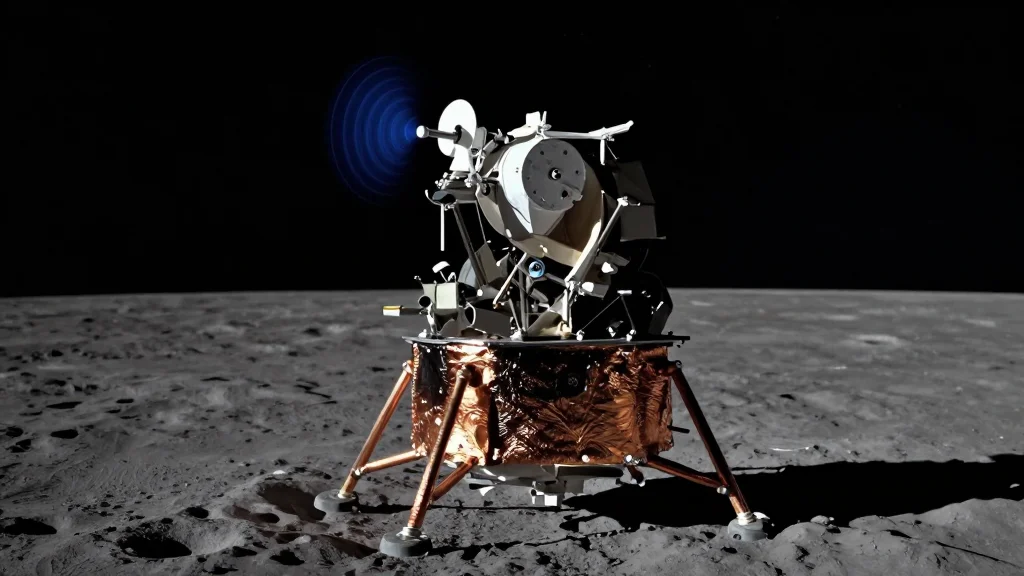
Why It Matters
The result validates the lunar far side as a viable platform for ultra‑sensitive SETI work, offering a path to overcome Earth’s pervasive radio interference and accelerate the search for extraterrestrial intelligence.
Key Takeaways
- •Chang'e‑4’s spectrometer performed first SETI scan from lunar far side.
- •No artificial periodic signals detected; results match natural background noise.
- •Study proves far‑side radio quietness viable for dedicated telescopes.
- •Analysis uses statistical filtering and timing pattern detection across dual antennas.
- •Future lunar arrays could surpass Earth‑based sensitivity by orders of magnitude.
Pulse Analysis
The search for extraterrestrial intelligence has long been hampered by Earth’s own radio chatter. Mobile phones, Wi‑Fi, radar and broadcast stations flood the spectrum, turning the planet into a noisy backdrop that drowns out faint cosmic whispers. By positioning a receiver on the Moon’s far side—permanently shielded from Earth’s emissions—scientists gain access to the quietest radio environment humanity has ever accessed, a prerequisite for detecting the ultra‑weak signals that might betray an alien technology.
In January 2019 China’s Chang E‑4 mission became the first to soft‑land on the lunar far side, and its low‑frequency radio spectrometer was later repurposed for a pioneering SETI experiment. Researchers applied advanced statistical techniques to strip away instrumental noise, align data from the lander’s dual antennas, and hunt for regular timing patterns that could indicate artificial origins. Although the analysis yielded no credible technosignatures, it demonstrated that the methodology works and that the far‑side platform can produce scientifically useful data despite the instrument’s modest sensitivity.
The implications extend beyond a single study. Demonstrating a functional far‑side SETI pipeline establishes a baseline for future missions that could deploy purpose‑built radio arrays, potentially orders of magnitude more sensitive than Earth‑based facilities. Such installations would not only boost the odds of detecting extraterrestrial signals but also serve broader astrophysical research, from probing the early universe to monitoring solar activity. For the aerospace and space‑technology sectors, the findings signal a new market for lunar infrastructure, encouraging investment in modular, low‑mass radio telescopes that could be delivered by upcoming Artemis and commercial lunar lander programs.
The quietest place we've ever listened from
Comments
Want to join the conversation?
Loading comments...