Why It Matters
The expanded sensitivity and AI‑driven analysis dramatically increase the odds of detecting technosignatures, reshaping our understanding of life in the galaxy and informing global scientific priorities.
Key Takeaways
- •Next‑gen Very Large Array to generate 40 PB of data monthly by 2035
- •Square Kilometre Array Phase 1 will be five times more sensitive than current dishes
- •AI and machine‑learning now filter billions of channels for potential alien signals
- •Only ~0.00001 % of the Milky Way has been surveyed to date
Pulse Analysis
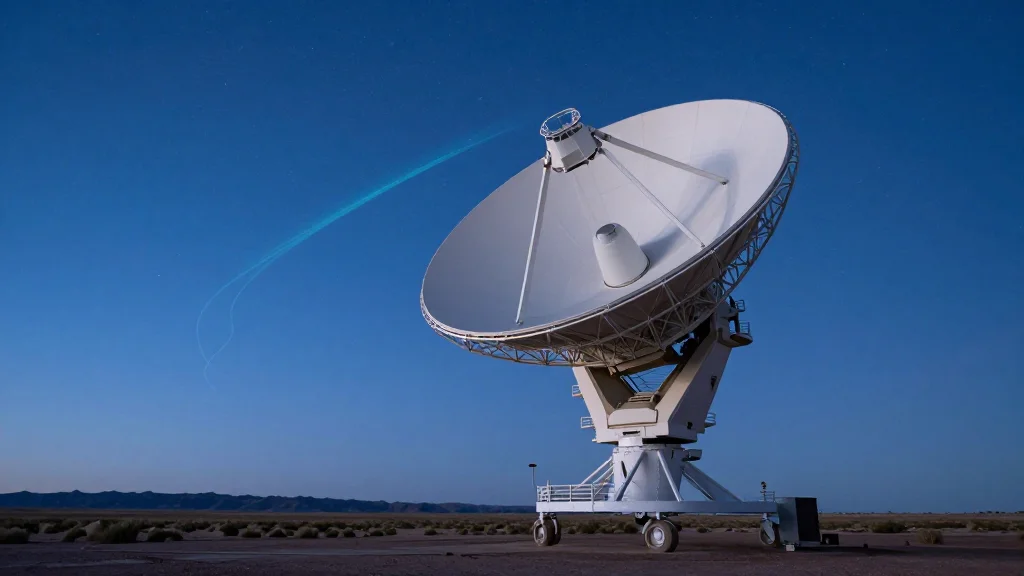
Since the 1960s, SETI has relied on modest dishes and single‑channel receivers, limiting both the sky area and frequency bands that could be examined. Today, the Very Large Array’s new design and the Square Kilometre Array’s massive collecting area represent a paradigm shift, delivering unprecedented sensitivity across 350 MHz to 15.4 GHz. This hardware upgrade alone expands the searchable volume of the Milky Way by orders of magnitude, turning what was once a needle‑in‑a‑haystack problem into a data‑rich exploration.
The real breakthrough, however, lies in how astronomers handle the deluge of information. Each month, the next‑gen array will produce about 40 petabytes—equivalent to millions of high‑definition movies—requiring sophisticated AI pipelines to flag anomalous spectra and discard terrestrial interference. Machine‑learning models trained on known radio frequency interference can isolate candidate technosignatures in near‑real time, allowing scientists to scan billions of channels and millions of stars that were previously inaccessible. Early studies suggest the SKA could detect Earth‑like leakage from up to 65 light‑years and deliberate beacons from as far as 12,000 light‑years.
Beyond the technical marvels, these capabilities force a reevaluation of policy and public engagement. Updated post‑detection protocols must account for rapid, global dissemination via social media, while the sheer scale of data invites citizen‑science initiatives similar to SETI@home. Whether the effort ultimately confirms extraterrestrial intelligence or deepens the mystery, the convergence of next‑generation telescopes and AI positions humanity at the forefront of one of science’s most profound questions, with potential cultural and philosophical ramifications that could reshape our view of civilization’s place in the cosmos.
The search for aliens levels up
Comments
Want to join the conversation?
Loading comments...