Why It Matters
The discovery revises the perceived magic‑number landscape, forcing revisions to nuclear‑structure models that underpin astrophysical nucleosynthesis predictions. It also highlights the tensor force as a dominant driver of shell evolution in exotic isotopes.
Key Takeaways
- •Measured Z=6 gap in O‑20 at 5.3 MeV
- •Gap narrowed by 1.8 MeV compared to O‑16
- •Tensor force accounts for ~95% of gap reduction
- •Findings challenge Z=6 as magic number in neutron‑rich isotopes
- •ACTAR TPC at GANIL enabled direct proton‑removal spectroscopy
Pulse Analysis
The nuclear shell model, a cornerstone of modern physics, classifies certain proton or neutron numbers as "magic" because they confer extra stability. Historically, Z = 6 was proposed as a magic number based on indirect evidence, suggesting a robust energy gap between the sixth and seventh proton orbitals. Understanding whether this gap endures in neutron‑rich environments is crucial for accurate predictions of nuclear binding energies, decay pathways, and the synthesis of elements in stellar explosions.
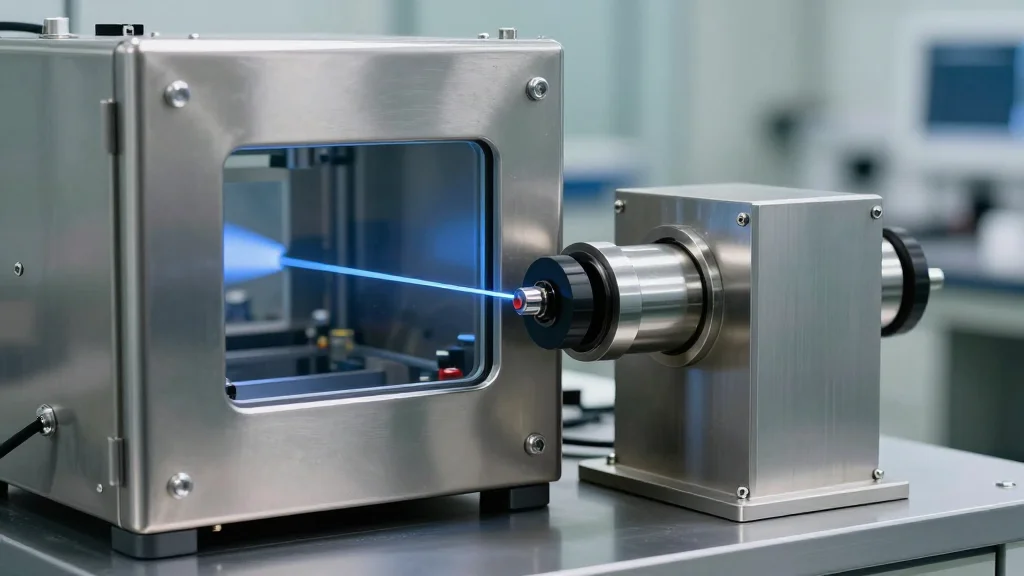
At the Active Target and Time Projection Chamber (ACTAR TPC) facility in France, a beam of oxygen‑20 nuclei collided with a deuterium gas target, stripping away a proton to form nitrogen‑19. By tracking the resulting reaction products and analyzing eight proton orbital populations, the team quantified the spin‑orbit splitting at 5.3 MeV—significantly lower than the 7.1 MeV gap observed in oxygen‑16. Advanced theoretical modeling linked this contraction almost entirely to the tensor interaction, a subtle component of the nuclear force that depends on the relative orientation of nucleon spins and positions.
These findings have far‑reaching implications. First, they compel theorists to recalibrate shell‑model calculations for light, neutron‑rich nuclei, ensuring that predictions of exotic isotopes remain reliable. Second, the pronounced role of the tensor force reshapes our understanding of how nuclear forces evolve with neutron excess, influencing models of rapid neutron‑capture (r‑process) nucleosynthesis in supernovae and neutron‑star mergers. Finally, the success of ACTAR TPC demonstrates the power of active‑target detectors for probing fleeting nuclear states, paving the way for future experiments that will map the evolving landscape of magic numbers across the nuclear chart.
The Shell Model’s Shell Game
Comments
Want to join the conversation?
Loading comments...