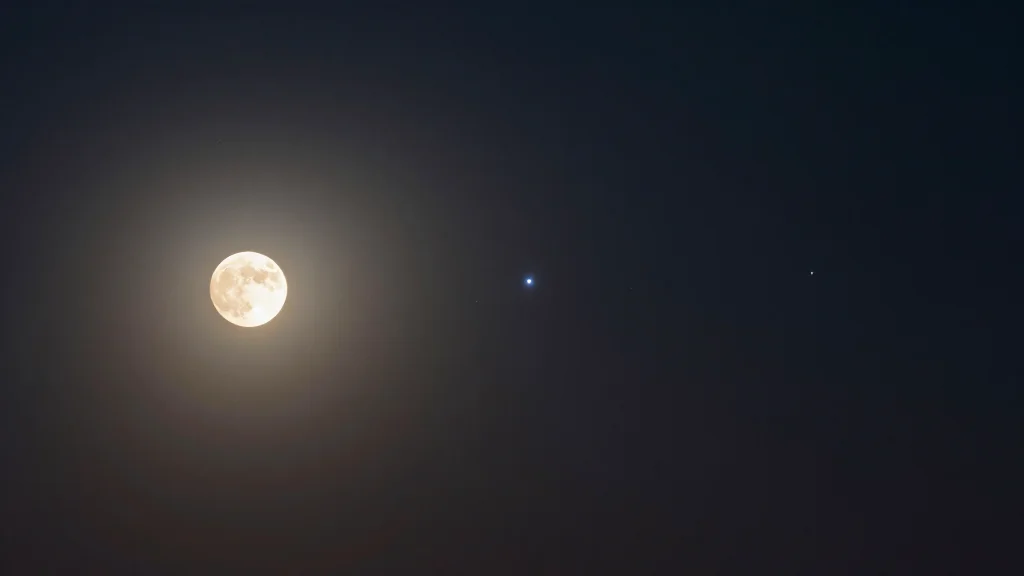
The Sky Today on Friday, April 24: Posidonius Illuminated
Why It Matters
The visibility of Posidonius offers a timely target for amateur astronomers, driving demand for portable telescopes and sky‑watching apps during a peak lunar phase.
Key Takeaways
- •Posidonius crater spans 97 km, visible with modest telescope
- •Waxing gibbous Moon rises at 12:45 PM, ideal for lunar viewing
- •Venus‑Uranus conjunction occurs April 23, offering rare planetary alignment
- •Sea of Serenity lies northeast of terminator, framing Posidonius
- •Albedo differences make crater floor appear darker or lighter
Pulse Analysis
Lunar observing spikes each month when the Moon’s illumination and terminator position align, and April 24, 2026, is a textbook example. The 97 km Posidonius crater, with its central peaks and the adjacent Posidonius B satellite, becomes a prime target for backyard astronomers using 4‑ to 8‑inch telescopes. Modern sky‑mapping apps now overlay real‑time terminator lines, allowing users to pinpoint the exact moment the crater emerges from shadow, turning a hobby into a data‑rich experience that fuels community content and social sharing.
Beyond pure visual appeal, the event underscores broader market trends in amateur astronomy. Sales of portable, high‑quality telescopes have surged by double‑digits over the past year, driven by a younger demographic seeking immersive outdoor activities. Complementary services—such as subscription‑based star‑chart platforms, AR‑enhanced binoculars, and on‑demand virtual guides—are capitalizing on these peaks in interest. The Venus‑Uranus conjunction the night before adds planetary intrigue, encouraging bundled viewing packages that combine lunar and planetary events, thereby extending consumer engagement across multiple nights.
Scientifically, observing Posidonius provides insight into lunar geology, particularly albedo variations that reveal differences between basaltic lava flows and impact‑ejecta deposits. While professional missions map these features in detail, amateur observations contribute valuable longitudinal data, especially when coordinated through citizen‑science networks. This collaborative model not only enriches public understanding of the Moon’s history but also demonstrates how hobbyist data can complement formal research, reinforcing the symbiotic relationship between commercial astronomy products and scientific discovery.
The Sky Today on Friday, April 24: Posidonius illuminated
Comments
Want to join the conversation?
Loading comments...