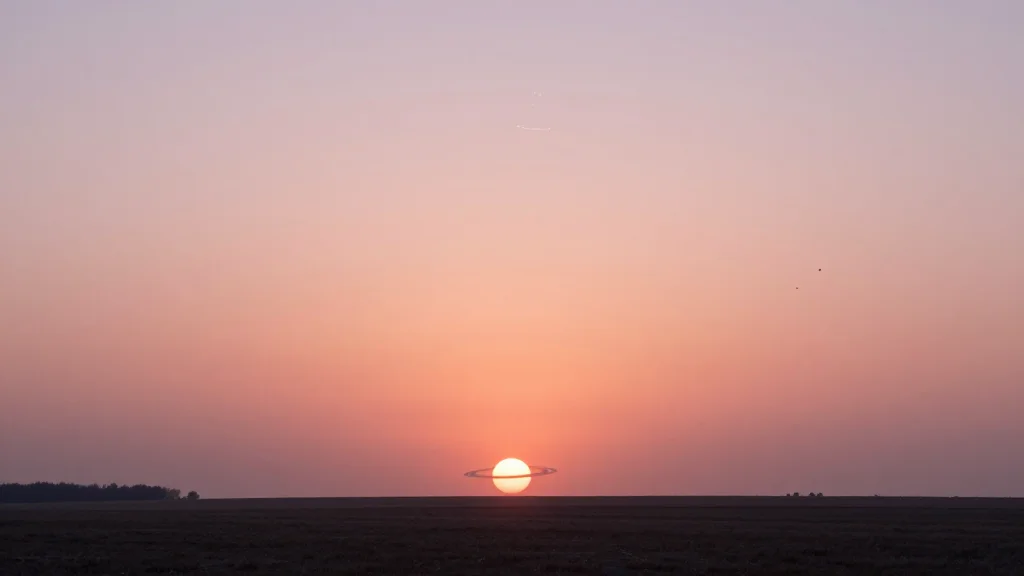
The Sky Today on Friday, May 1: Catch Saturn Before Sunrise
Why It Matters
Early‑morning planetary visibility drives increased activity among amateur astronomers and boosts demand for optical gear, while the dual full moons create a marketing hook for sky‑watching events and tourism.
Key Takeaways
- •Saturn rises 45 min before sunrise, altitude ~4°, magnitude 0.9.
- •Saturn appears below the Great Square of Pegasus in early dawn.
- •Mars sits 7.6° east of Saturn, magnitude 1.2, visible with binoculars.
- •Full Flower Moon rises at 8:21 PM EDT, illumination peaks.
- •May will feature a Blue Moon on May 31, the year's only one.
Pulse Analysis
The pre‑dawn sky on May 1 offers a rare window for planetary observation as Saturn climbs above the horizon. At an altitude of just four degrees, the ringed giant is still subject to a thicker atmospheric column, which can blur details but also adds a dramatic glow against the darkening east. Its proximity to the Great Square of Pegasus provides a convenient reference point for both seasoned observers and newcomers using star‑hopping techniques. Meanwhile, Mars, though lower and fainter, remains within reach of binoculars, giving hobbyists a chance to compare two neighboring worlds in a single view.
For the amateur astronomy market, this alignment translates into a surge of interest in portable telescopes, low‑light filters, and sky‑watching apps. Retailers often see a spike in sales weeks before such events, as enthusiasts upgrade equipment to capture clearer images of Saturn’s rings before they set. Social media platforms amplify the excitement, with hashtags like #SaturnMorning and #PreDawnViewing generating thousands of posts, further driving community engagement and potential sponsorships for local star‑gazing gatherings. Event organizers can leverage the full Flower Moon later that evening to host night‑time workshops, creating a full‑cycle experience that maximizes attendance.
Beyond the immediate hobbyist appeal, the dual full moons—first the May Flower Moon, then a Blue Moon on May 31—provide cultural and educational opportunities. Schools and planetariums can tie the celestial events to curricula on lunar cycles, planetary motion, and atmospheric science, fostering STEM interest among students. Tourism boards in regions with low light pollution may promote “Moon and Planet” tours, attracting visitors seeking both natural beauty and scientific enrichment. By aligning marketing, education, and commerce with these astronomical milestones, stakeholders can turn a fleeting sky show into lasting community value.
The Sky Today on Friday, May 1: Catch Saturn before sunrise
Comments
Want to join the conversation?
Loading comments...