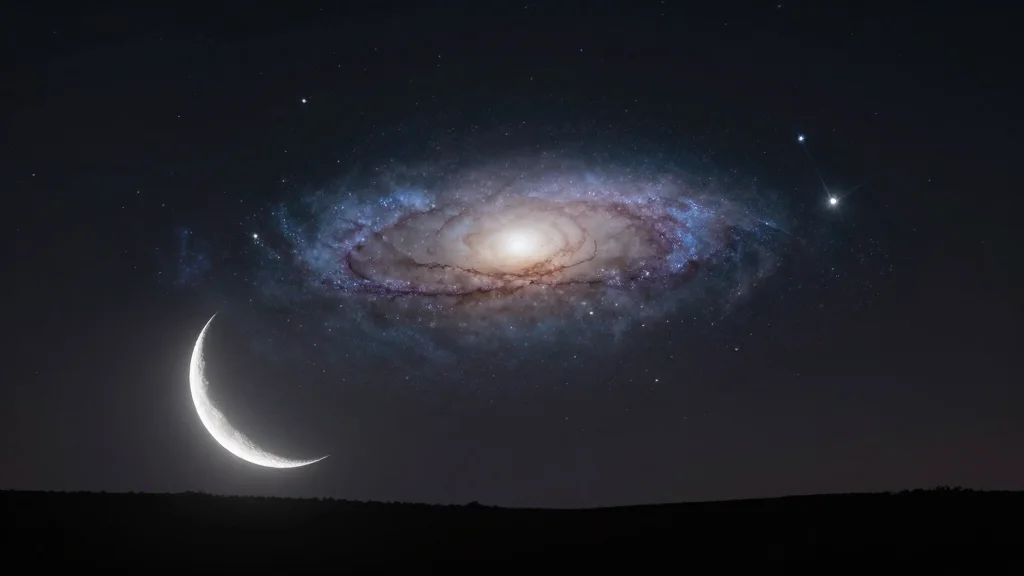
The Sky Today on Saturday, May 9: Look the Croc in the Eye
Why It Matters
The event provides a rare, high‑contrast opportunity for hobbyists to observe fine structural details of a nearby spiral galaxy, reinforcing engagement in citizen‑science astronomy and supporting the market for mid‑range telescopes.
Key Takeaways
- •M94 (Croc’s Eye Galaxy) shines at magnitude 8.2 on May 9.
- •No moonlight enhances deep‑sky visibility for amateur observers.
- •11‑inch telescopes reveal core and disk; 16‑inch shows spiral arms.
- •Located 3° NW of bright star Cor Caroli in Canes Venatici.
- •Ideal viewing after 10 P.M local time from 40° N, 90° W.
Pulse Analysis
Messier 94, also known as the Croc’s Eye Galaxy, is a face‑on spiral located roughly 16 million light‑years away in the constellation Canes Venatici. Its tightly wound arms and bright central bulge make it a favorite target for deep‑sky observers seeking to study galactic morphology. Classified as an SAB(rs)ab type, M94 offers insight into star‑formation patterns and the distribution of interstellar dust, serving as a nearby laboratory for professional research and amateur imaging alike.
The May 9 observing window is especially favorable because the waning crescent moon sets before midnight, leaving the sky virtually free of glare. At 10 P.M local time the galaxy sits high in the east, reducing atmospheric distortion. An 11‑inch Dobsonian or Schmidt‑Cassegrain will resolve the luminous core and the faint disk extending about 30 arcseconds, while a 16‑inch aperture can tease out the inner spiral arms. Observers should align their telescopes using the bright star Cor Caroli as a guide, then step north‑west by roughly three degrees to locate the galaxy’s oval glow.
Beyond the immediate visual appeal, events like this drive demand for mid‑range telescopes and accessories, a segment that has seen steady growth as hobbyists upgrade from entry‑level kits. Advances in lightweight carbon‑fiber optics and affordable motorized mounts are expanding the capabilities of backyard observatories, enabling more detailed astrophotography and data collection. As public interest in night‑sky stewardship rises, such clear‑sky opportunities reinforce community engagement, support citizen‑science projects, and sustain a vibrant market for astronomical equipment.
The Sky Today on Saturday, May 9: Look the croc in the eye
Comments
Want to join the conversation?
Loading comments...