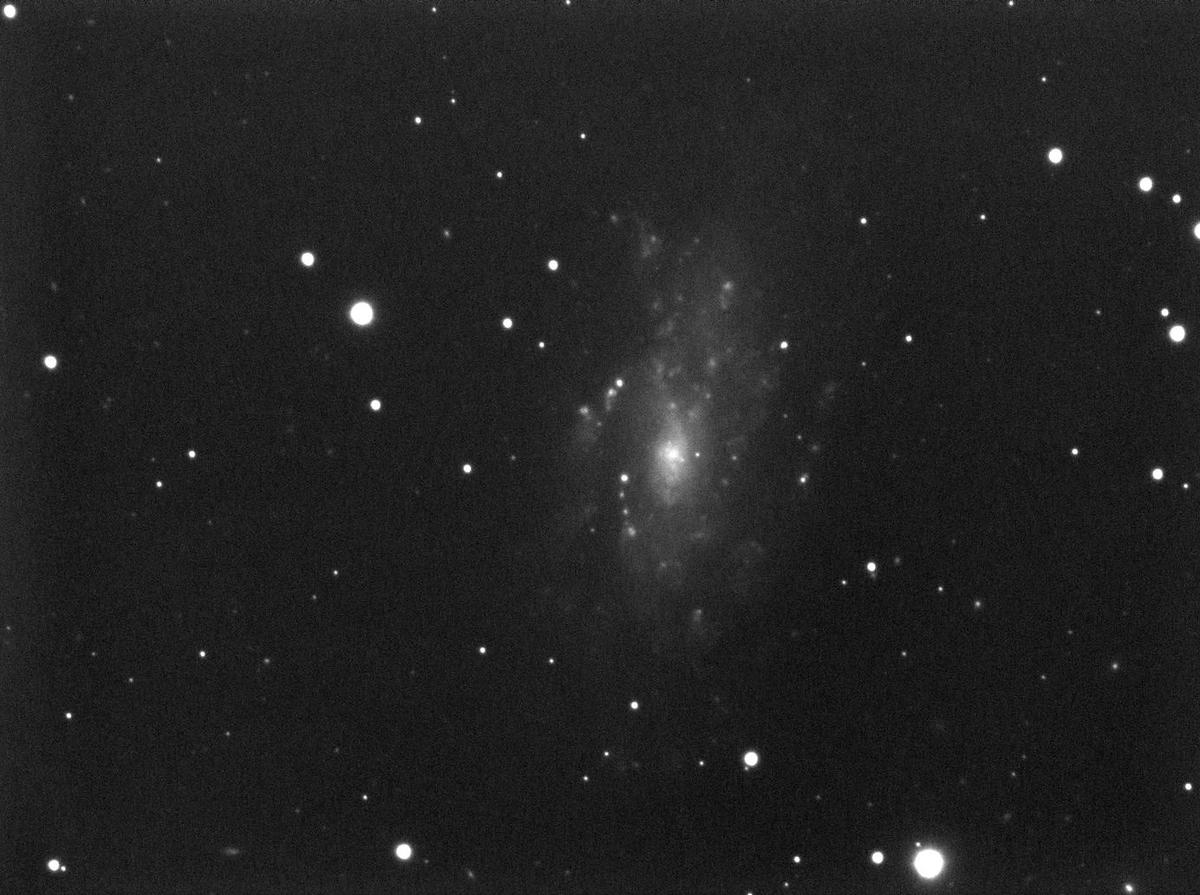
The Sky Today on Sunday, March 8: Spiral Galaxy NGC 2541
•March 8, 2026
0
Why It Matters
The timing of DST creates a narrow dark‑sky window that amateur astronomers must exploit, while the occultation offers a rare observational event for outreach and data collection.
Key Takeaways
- •NGC 2541 magnitude 12, 37 million light‑years away.
- •Visible in Lynx after DST shift, best at 9‑10 PM.
- •Requires large telescope or long‑exposure photography.
- •Callisto occultation behind Jupiter visible in western U.S.
- •Sunrise 7:22 AM, sunset 7:00 PM (40°N,90°W).
Pulse Analysis
Observing deep‑sky objects like NGC 2541 demands both dark conditions and precise timing. The recent shift to daylight‑saving time pushes the evening twilight later, granting a brief window after 9 PM when the sky is darkest and the Milky Way’s glow is minimal. This timing aligns with the galaxy’s position high in Lynx, allowing observers in the 40° N, 90° W region to maximize contrast against the background. Understanding how civil time changes affect astronomical visibility is essential for planning successful sessions.
NGC 2541’s low surface brightness makes it a challenging target, but its 7‑arcminute span and fluffy spiral arms reward those with adequate equipment. A telescope of at least 8‑inch aperture, coupled with a steady mount, can reveal the bright core, while longer exposures on a CCD camera will bring out the faint arms. Navigating from the third‑magnitude star Iota Ursae Majoris and moving roughly 7.5° east provides a reliable star‑hopping method, reducing reliance on computerized GoTo systems and honing observational skills.
Beyond the galaxy, the Callisto occultation behind Jupiter offers a compelling event for both visual observers and astrophotographers. Such occultations are valuable for refining orbital models of Jovian moons and engaging the public in real‑time skywatching. The event’s visibility limited to the western United States underscores the importance of geographic coordination among amateur networks. By leveraging the DST‑adjusted schedule, enthusiasts can capture both the deep‑sky galaxy and the dynamic planetary system in a single night, enriching data archives and fostering community participation.
The Sky Today on Sunday, March 8: Spiral galaxy NGC 2541
0
Comments
Want to join the conversation?
Loading comments...