The Sky Today on Thursday, March 5: Time to Observe Comet Wierzchoś
•March 5, 2026
0
Why It Matters
The timing provides amateur astronomers and sky‑watching platforms a rare, marketable event to drive engagement and equipment sales. Visibility of both comet and planetary transit boosts demand for binoculars, telescopes, and related mobile apps.
Key Takeaways
- •Comet Wierzchoś visible after sunset March 5
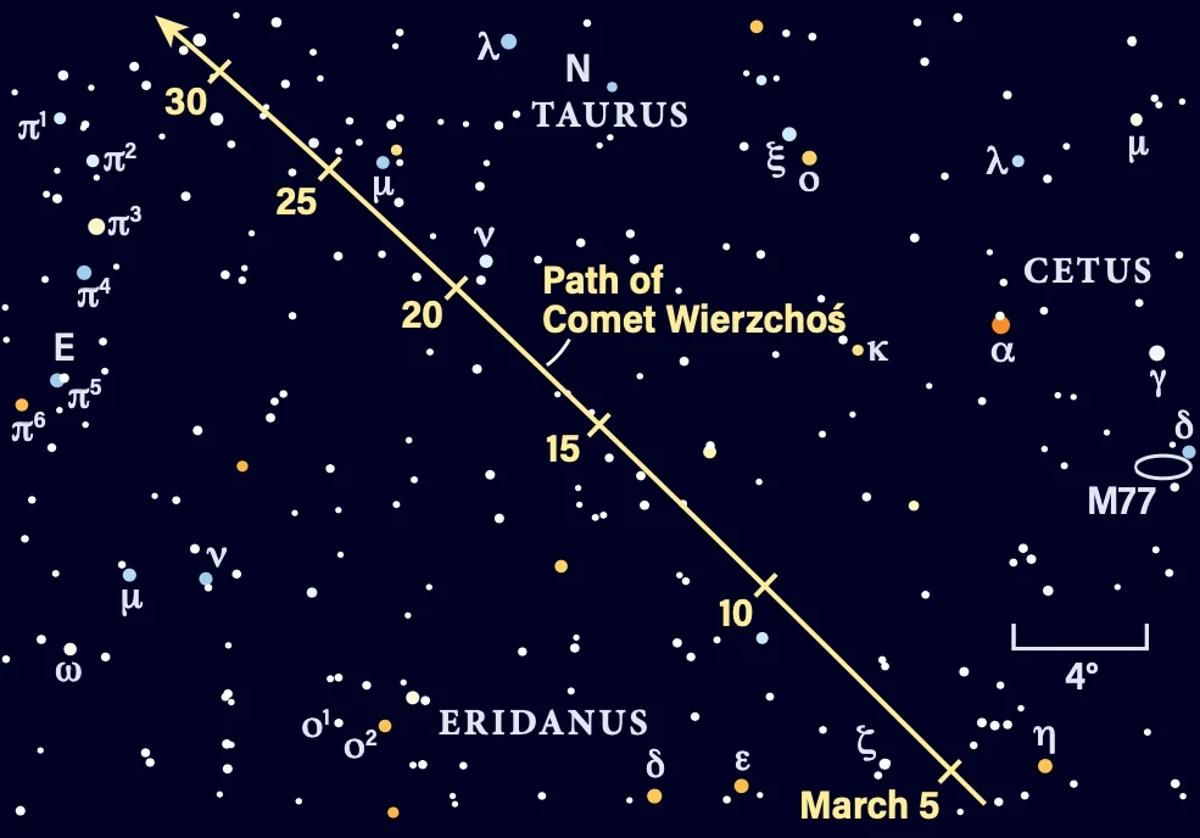
- •Located 2.9° east of Eta Eridani, 20° altitude
- •Ganymede transits Jupiter early March 4, visible Midwest
- •Variable star Mira bright at magnitude 3.6 tonight
Pulse Analysis
The evening of March 5 opens a narrow but valuable window for sky‑watchers to catch Comet C/2024 E1 (Wierzchoś) as it trails across the southwestern sky. Positioned just 2.9° east of Eta Eridani and maintaining a steady 20° altitude two hours post‑sunset, the comet’s bright nucleus and pronounced northern flank make it an ideal target for binoculars and entry‑level telescopes. This accessibility is likely to spur a spike in short‑term sales for optical gear, as hobbyists scramble to capture the event before the comet dips below the horizon.
Concurrently, the early‑morning transit of Ganymede across Jupiter on March 4 offers a complementary draw for enthusiasts in North America’s Midwest and West Coast. The brief alignment, observable just before sunrise, provides a perfect teaching moment for astronomy clubs and educational outreach programs, reinforcing the value of coordinated viewing events. Platforms that aggregate real‑time sky data stand to gain increased traffic, as users seek precise timing and location tools to maximize their viewing experience.
Beyond the immediate observational appeal, these celestial occurrences underscore a broader trend: the growing commercial ecosystem around amateur astronomy. Mobile apps that deliver augmented‑reality overlays, subscription‑based star‑mapping services, and on‑demand telescope rentals are all positioned to capitalize on heightened public interest. By aligning marketing campaigns with the comet’s visibility and the Ganymede‑Jupiter transit, businesses can tap into a motivated audience eager for authentic, shareable sky‑watching moments, translating curiosity into sustained revenue streams.
The Sky Today on Thursday, March 5: Time to observe Comet Wierzchoś
0
Comments
Want to join the conversation?
Loading comments...