The Sky Today on Tuesday, May 5: Catch Egeria in Motion
Why It Matters
Tracking Egeria offers amateurs a hands‑on lesson in asteroid motion, while the Eta Aquariids provide a glimpse of Halley‑derived meteors despite moonlight, highlighting seasonal sky‑watching opportunities.
Key Takeaways
- •Egeria shines at magnitude 10, visible with modest telescopes.
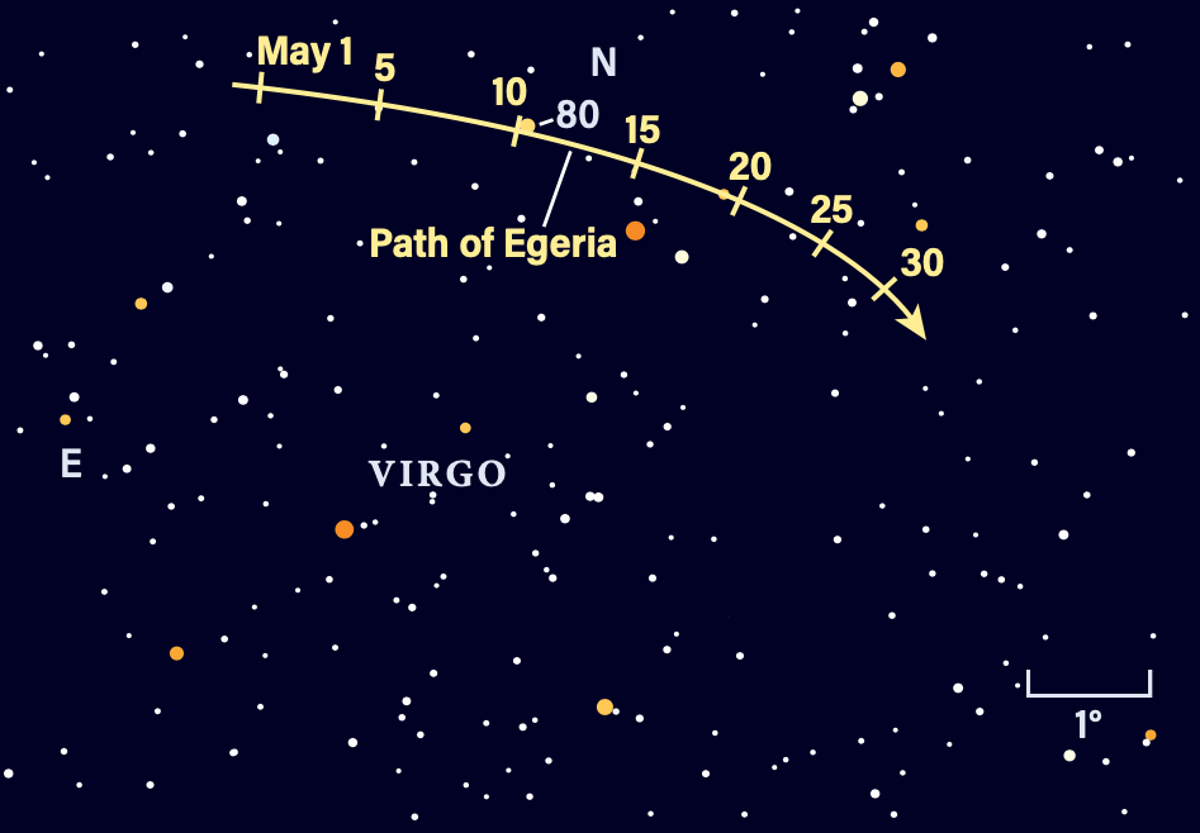
- •It passes 1.2° east of 80 Virginis, 2′ from HD 118957 on May 5.
- •Record positions now and three hours later to see asteroid motion.
- •Eta Aquariids peak May 6, offering up to 50 meteors/hour under dark skies.
- •Waning‑gibbous Moon reduces meteor counts but brightest fireballs stay visible.
Pulse Analysis
Asteroid 13 Egeria provides a rare, low‑cost laboratory for backyard astronomers. At magnitude 10 it sits just beyond naked‑eye reach, but a 4‑inch refractor or a modest Dobsonian will pull it into view even from suburban sites. Its May 5 trajectory places it a hair’s breadth—about two arcminutes—from the 8th‑magnitude star HD 118957, using 80 Virginis as a convenient guidepost. By sketching the pair at the start of the night and revisiting the field three hours later, observers can directly measure the asteroid’s proper motion, reinforcing skills used in asteroid tracking programs and citizen‑science projects.
The same evening ushers the peak of the Eta Aquariid meteor shower, a debris stream from Halley’s Comet that sweeps past Earth each May. Under pristine skies the shower can deliver 40‑50 meteors per hour, with particles blazing at roughly 40 miles per second. A waning‑gibbous Moon, however, adds roughly 83 % illumination, cutting the visual rate by half and washing out fainter fireballs. Still, the radiant in northern Aquarius climbs above the horizon an hour before sunrise, giving dedicated observers a chance to catch the fastest, brightest meteors of the season.
For the amateur community, the conjunction of an observable asteroid and a meteor shower creates a compact observing window that maximizes telescope time and naked‑eye excitement. Planning around local twilight, checking light‑pollution maps, and using star‑chart apps can streamline the session, while recording positions contributes data useful to professional surveys that monitor near‑Earth objects. Looking ahead, similar opportunities arise with the Orionid shower in October and the next close approach of Egeria in late summer, underscoring the value of seasonal sky‑watching calendars for hobbyists and educators alike.
The Sky Today on Tuesday, May 5: Catch Egeria in motion
Comments
Want to join the conversation?
Loading comments...