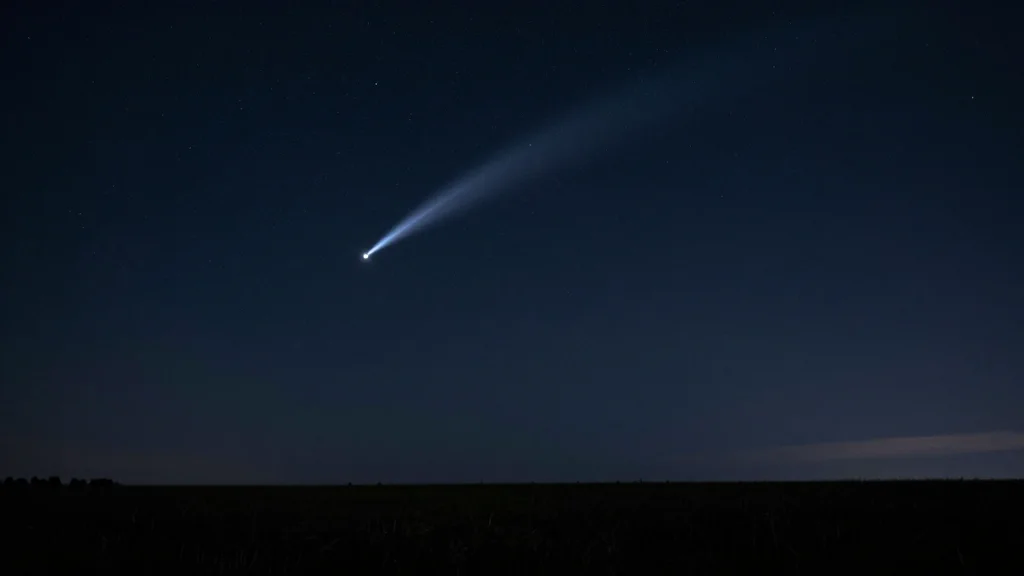
The Sky Today on Wednesday, April 22: The Lyrid Meteor Shower Peaks
Why It Matters
Peak Lyrid activity offers a prime, low‑light viewing window for amateur astronomers and can boost local stargazing tourism. The event also highlights the ongoing interaction between Earth and cometary debris, a natural laboratory for atmospheric science.
Key Takeaways
- •Lyrid meteor shower peaks early April 22, 2026, with ~20 meteors/hour
- •Radiant climbs above 60° in east by 3 A.M. local time
- •Moon sets around 1:30 A.M., leaving dark skies for viewing
- •Meteors streak at ~30 mph (48 km/s), dust from comet Thatcher
- •Moon passes 4° north of Jupiter at 6 P.M. EDT, visible
Pulse Analysis
The Lyrid meteor shower, one of the oldest recorded celestial events, returns each year in late April, but 2026 offers an unusually favorable window. With a waxing crescent moon that sets before 2 A.M. and a radiant positioned high above the horizon, the sky conditions rival those of prime meteor displays in the Northern Hemisphere. Enthusiasts in the 40° N, 90° W region can expect clear, dark skies that enhance the visibility of the roughly 20 meteors per hour, making it an ideal night for both seasoned observers and newcomers.
Beyond the spectacle, the Lyrids provide valuable data for scientists studying the interaction between cometary dust streams and Earth’s atmosphere. The meteors’ high entry speed—about 30 miles per second—creates ionization trails that can be captured by radar and optical instruments, informing models of atmospheric chemistry and space weather. Researchers also track variations in the shower’s intensity to refine orbital calculations for its parent body, comet C/1861 G1 (Thatcher), whose 400‑year orbit offers a long‑term perspective on debris evolution.
Local economies with dark‑sky parks and astronomy clubs stand to benefit from the surge in interest. Guided viewing events, telescope rentals, and educational workshops often see a spike in attendance during peak meteor nights, translating into increased revenue for hospitality and retail sectors. As social media amplifies real‑time sightings, regions that promote responsible light‑pollution practices can attract a broader audience, reinforcing the cultural and economic value of preserving clear night skies.
The Sky Today on Wednesday, April 22: The Lyrid meteor shower peaks
Comments
Want to join the conversation?
Loading comments...