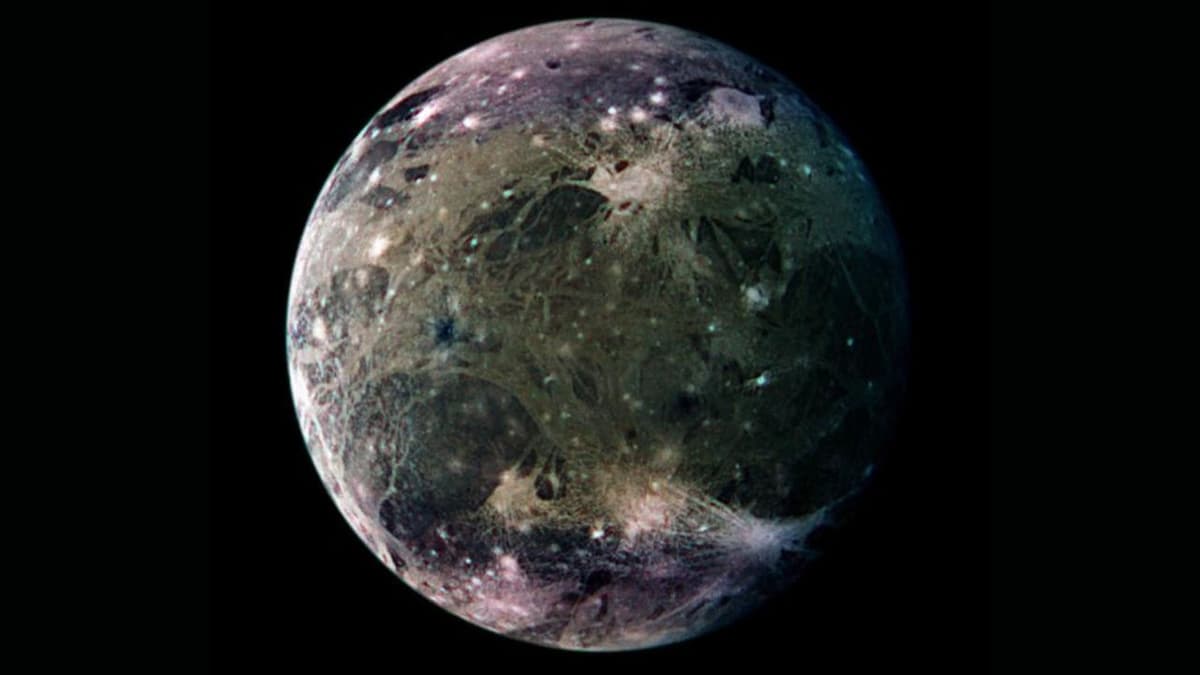
The Solar System's Largest Moon May Be Heating up — Offering Clues to Its Mysterious Origins
Why It Matters
If magnetic fields can arise long after formation, planetary evolution models and the search for life‑supporting worlds must account for new heating pathways. The finding expands the criteria for magnetic shielding, a key factor in protecting atmospheres from stellar radiation.
Key Takeaways
- •Ganymede's magnetic field may stem from ongoing core heating
- •Radioactive decay and tidal forces drive the proposed warming dynamo
- •Study suggests magnetic fields can form long after planetary birth
- •Implications extend to exoplanet magnetic field searches and habitability
Pulse Analysis
Ganymede stands out as the only moon with an intrinsic magnetic field, a discovery first made by NASA's Galileo probe in 1996. Its size—larger than Mercury—and its position among the Galilean satellites have long made it a focal point for planetary scientists seeking clues about moon formation. Traditional theories held that a dynamo requires an early, hot core, similar to Earth's, solidifying shortly after the solar system’s birth. The new research overturns that assumption, suggesting the magnetic engine may be a product of ongoing internal heating rather than a relic of a primordial furnace.
The "warming‑driven dynamo" model hinges on two heat sources: the slow release of energy from radioactive isotopes within Ganymede’s interior and the relentless tidal flexing caused by Jupiter’s massive gravity. As these processes melt iron‑rich material, molten blobs sink, augmenting the core and sustaining a convective flow capable of generating a magnetic field. This mechanism explains how a relatively small body could retain enough thermal energy to power a dynamo billions of years after its formation, a phenomenon not observed elsewhere in the solar system. By framing core formation as a protracted, temperature‑dependent event, the study invites a reevaluation of magnetic histories for other icy worlds.
Beyond our planetary backyard, the implications ripple into exoplanet research. If "cold‑start" dynamos can emerge on moons or rocky planets with modest radioactive inventories, the criteria for magnetic shielding—and thus atmospheric retention—expand dramatically. Future telescopes may target auroral signatures or magnetic interactions as indirect markers of habitability, even on worlds previously deemed too cold or old to host active fields. The Ganymede case underscores the need for interdisciplinary models that blend geophysics, orbital dynamics, and stellar environment to predict magnetic activity across the galaxy.
The solar system's largest moon may be heating up — offering clues to its mysterious origins
Comments
Want to join the conversation?
Loading comments...