The Space Race to Create Gym Equipment for Future Astronauts
Why It Matters
Reducing exercise time frees crew hours for science, lowering mission costs while preserving muscle and bone health essential for long‑duration lunar and deep‑space flights.
Key Takeaways
- •HIFIm cuts astronaut workout time to roughly 30 minutes daily.
- •Device operates without external power, minimizing spacecraft mass and energy use.
- •Tested in 22‑second weightless intervals on ESA parabolic flights.
- •Supports 300 exercise variations, including rowing, jumping, and resistance.
- •Developed by award‑winning SFX engineers, bridging entertainment tech and aerospace.
Pulse Analysis
Maintaining musculoskeletal health is one of the toughest engineering challenges in microgravity. On the International Space Station astronauts currently spend two hours each day on treadmills, cycle ergometers and resistive‑load devices, which are bulky, power‑hungry and limit valuable crew time. As agencies plan for longer stays on the lunar Gateway and eventual Mars habitats, the need for compact, efficient training solutions has become a strategic priority. The market for space‑grade exercise hardware is projected to grow alongside the commercial launch sector, prompting innovators to rethink traditional gym equipment for zero‑gravity environments.
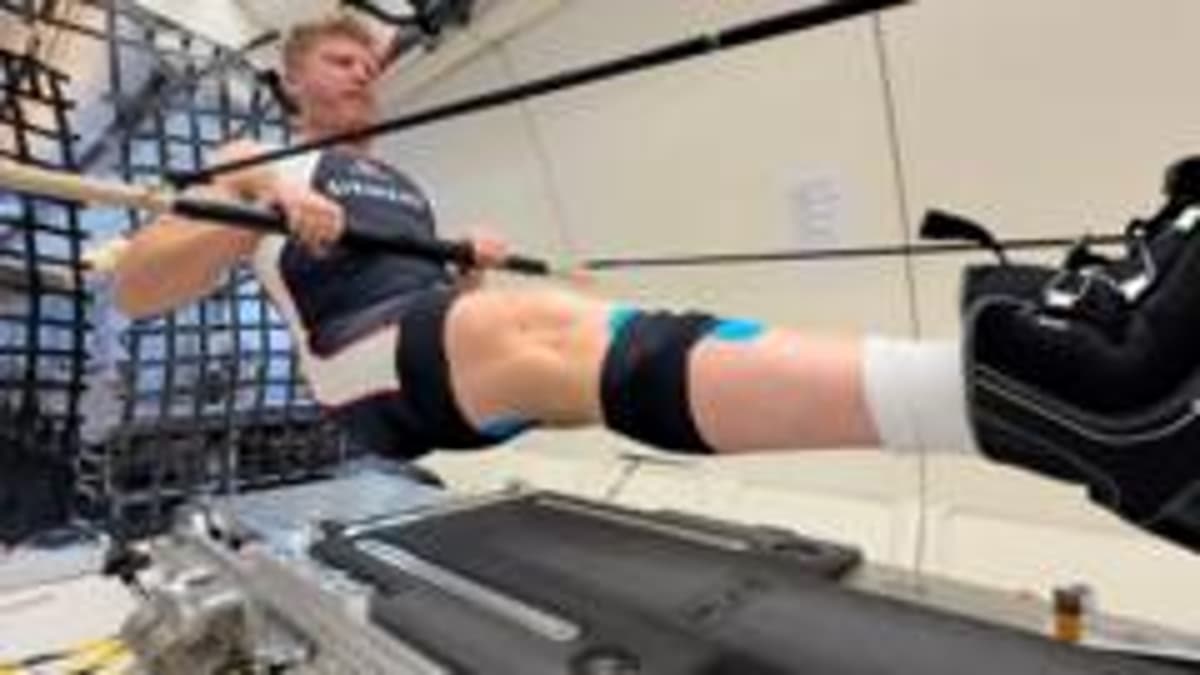
The High‑Frequency Impulse for Microgravity (HIFIm) represents a radical departure from conventional designs. Built by the Pinewood Studios special‑effects team—renowned for *Star Wars* and Oscar‑winning *1917*—the unit delivers up to 300 distinct movements using mechanical impulses rather than electricity, thereby reducing mass and power draw. Parabolic‑flight tests conducted by ESA confirmed that the system can generate effective resistance during the 22‑second weightless phases, with Olympic rower Matthew Wells demonstrating a realistic rowing motion. According to Dr. Meganne Christian, the device could shrink daily exercise to just half an hour, freeing crew time for scientific tasks.
If HIFIm proves reliable in the upcoming Gateway and Artemis missions, it could become a standard component of lunar habitats and private orbital stations. Its low‑power, vibration‑isolated architecture also makes it attractive for commercial space tourists who need quick, safe workouts without compromising cabin systems. Beyond aerospace, the technology may spin off into terrestrial rehabilitation devices for patients with limited mobility, leveraging the same impulse‑based resistance. Investors and contractors are therefore watching the HIFIm program closely, as it blends entertainment engineering, biomedical science, and space policy into a potentially lucrative niche.
The space race to create gym equipment for future astronauts
Comments
Want to join the conversation?
Loading comments...