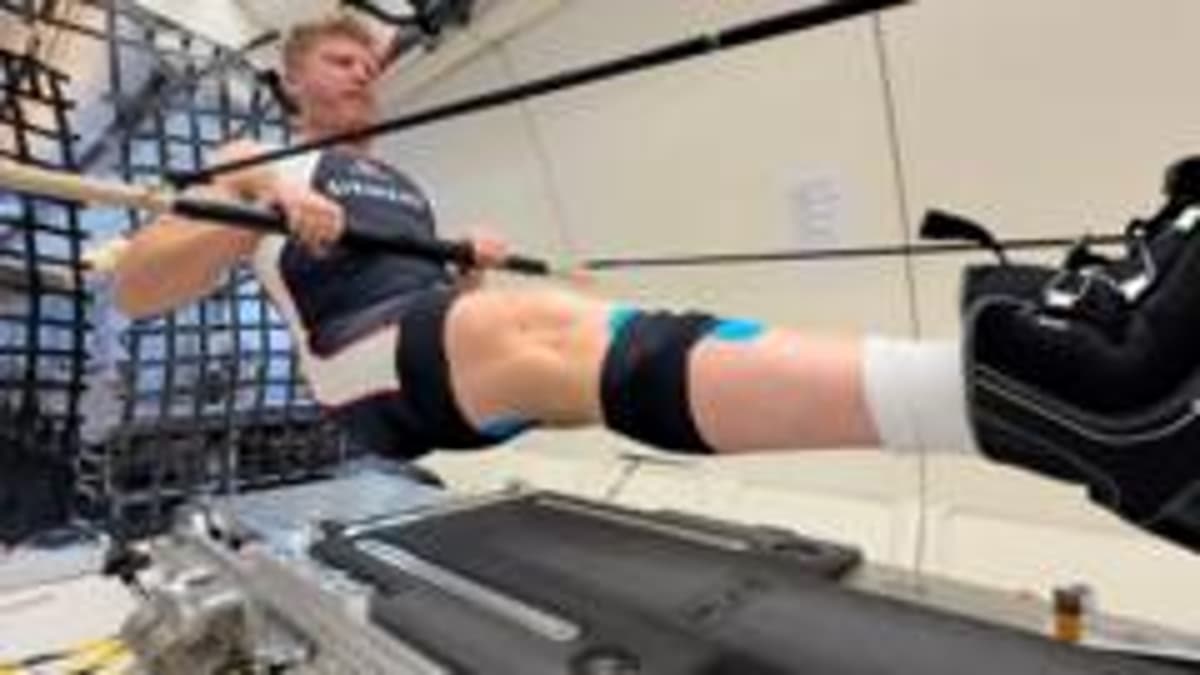
The Space Race to Create Gym Equipment for Future Astronauts
Why It Matters
Reducing exercise time frees valuable crew hours for scientific work, directly boosting mission productivity and lowering hardware mass for future lunar and deep‑space habitats.
Key Takeaways
- •HIFIm can deliver 300 exercises without electrical power
- •Device reduces daily astronaut workout from two hours to half hour
- •Tested on parabolic flights, providing 22‑second weightless intervals
- •ESA, NASA, CSA, and UK Space Agency collaborate on development
Pulse Analysis
Maintaining muscle mass and bone density in microgravity remains one of the toughest challenges for space agencies. On the International Space Station, astronauts currently spend roughly two hours each day on bulky treadmills, cycle ergometers, and resistance devices, a schedule that eats into limited research time and adds significant mass to the station. The physiological toll of prolonged inactivity includes rapid bone loss, cardiovascular deconditioning, and impaired coordination, all of which can jeopardize mission objectives and crew safety. As commercial and governmental partners eye longer stays on the Moon and eventual Mars trips, the need for more efficient, compact exercise solutions has become urgent.
Enter HIFIm – High‑Frequency Impulse for Microgravity – a compact, power‑free system capable of delivering 300 distinct movements, from rowing to jumping, within a half‑hour session. Developed by former aircraft engineer John Kennett and refined with help from special‑effects engineers at Pinewood Studios, the device was subjected to a series of parabolic‑flight tests, each offering 22 seconds of weightlessness to validate its performance. Parallel efforts such as the European Enhanced Exploration Exercise Device (E4D) and NASA’s flywheel trainer illustrate a global push, with ESA, NASA, the Canadian Space Agency and the UK Space Agency pooling resources to standardise hardware for the Artemis lunar gateway and future orbital stations.
If HIFIm and its rivals succeed, the ripple effects could be profound. Shorter, lighter workout regimes translate into reduced launch mass, lower power consumption, and more crew time for scientific experiments, habitat construction, or EVA activities. Commercial operators planning private lunar bases or orbital hotels stand to benefit from off‑the‑shelf fitness modules that require minimal integration effort. Moreover, the technology’s ability to monitor exercise efficacy in real time offers valuable health data for both astronauts and Earth‑based patients with mobility issues. In short, the next generation of space‑grade gym equipment is poised to become a cornerstone of sustainable human presence beyond Earth.
The space race to create gym equipment for future astronauts
Comments
Want to join the conversation?
Loading comments...