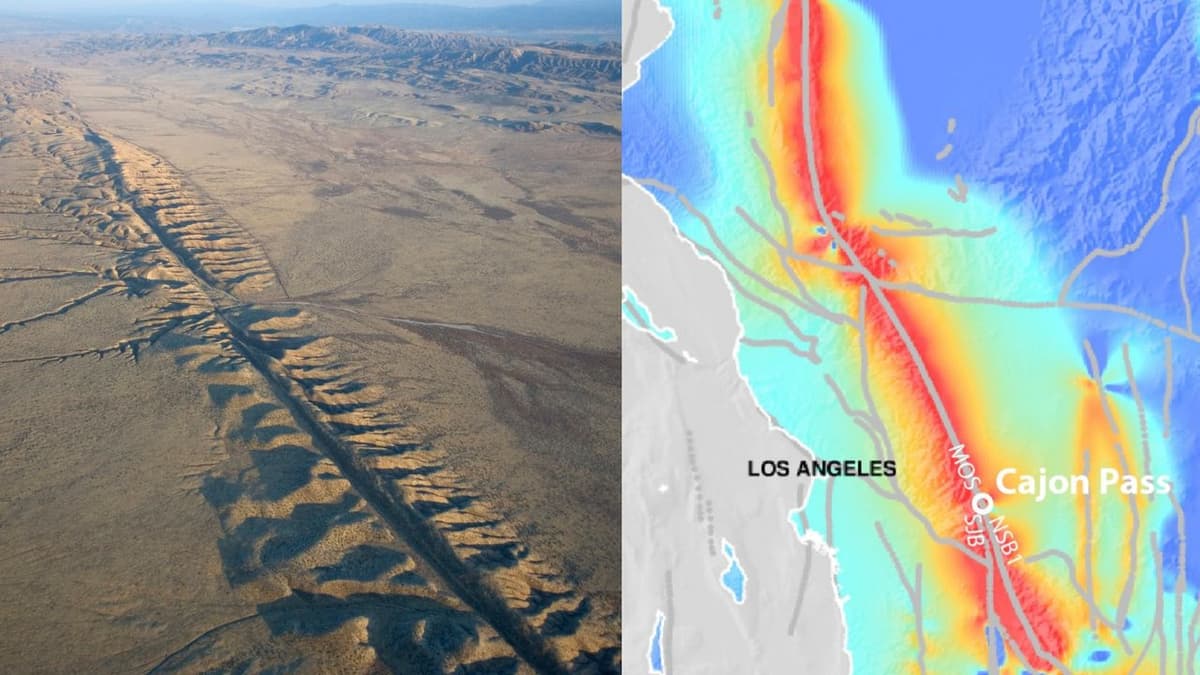
'The System Is Critically Stressed': San Andreas and San Jacinto Faults Scarily Close to Major Earthquake, Study Finds
Companies Mentioned
Why It Matters
Elevated stress on these interconnected faults could trigger a multi‑fault quake, threatening millions and demanding immediate revisions to infrastructure and emergency planning.
Key Takeaways
- •Stress on San Andreas and San Jacinto faults highest in 1,000 years.
- •Cajón Pass acts as an “earthquake gate” linking the two fault systems.
- •Joint or tripartite rupture could affect Los Angeles, Riverside, Coachella Valley.
- •Model uses tree‑ring and sediment data to reconstruct 1,000‑year quake history.
- •Findings aid hazard assessment, infrastructure planning, and emergency preparedness.
Pulse Analysis
The recent geophysical research highlights an unprecedented buildup of stress along Southern California’s two most active fault lines. By integrating millennial‑scale tree‑ring chronologies and displaced‑sediment dating, the team reconstructed a detailed earthquake chronology that reveals stress levels now matching or exceeding those recorded over the past 1,000 years. This rigorous, physics‑based approach provides a clearer picture of how stress transfers across the Cajón Pass "gate," a critical junction where the San Jacinto fault diverges from the San Andreas system.
If the stress equilibrium at Cajón Pass persists, the region faces a heightened probability of a joint rupture—where both branches of the San Andreas fault slip together—or a more catastrophic tripartite rupture that also incorporates the San Jacinto fault. Such an event would unleash seismic energy far beyond a single‑fault quake, endangering densely populated corridors including Los Angeles, San Bernardino, Riverside, and the Coachella Valley. The study’s timing is notable, as it marks 170 years since the 1857 magnitude 7.9 earthquake, suggesting the seismic cycle may be approaching a critical threshold.
Beyond local implications, the modeling framework offers a template for assessing other complex fault junctions worldwide. Policymakers and engineers can leverage these insights to refine building codes, retrofit vulnerable infrastructure, and enhance emergency response strategies. As urban development continues to expand across fault‑adjacent zones, integrating such quantitative hazard assessments into regional planning becomes essential for safeguarding lives and economic assets.
'The system is critically stressed': San Andreas and San Jacinto faults scarily close to major earthquake, study finds
Comments
Want to join the conversation?
Loading comments...