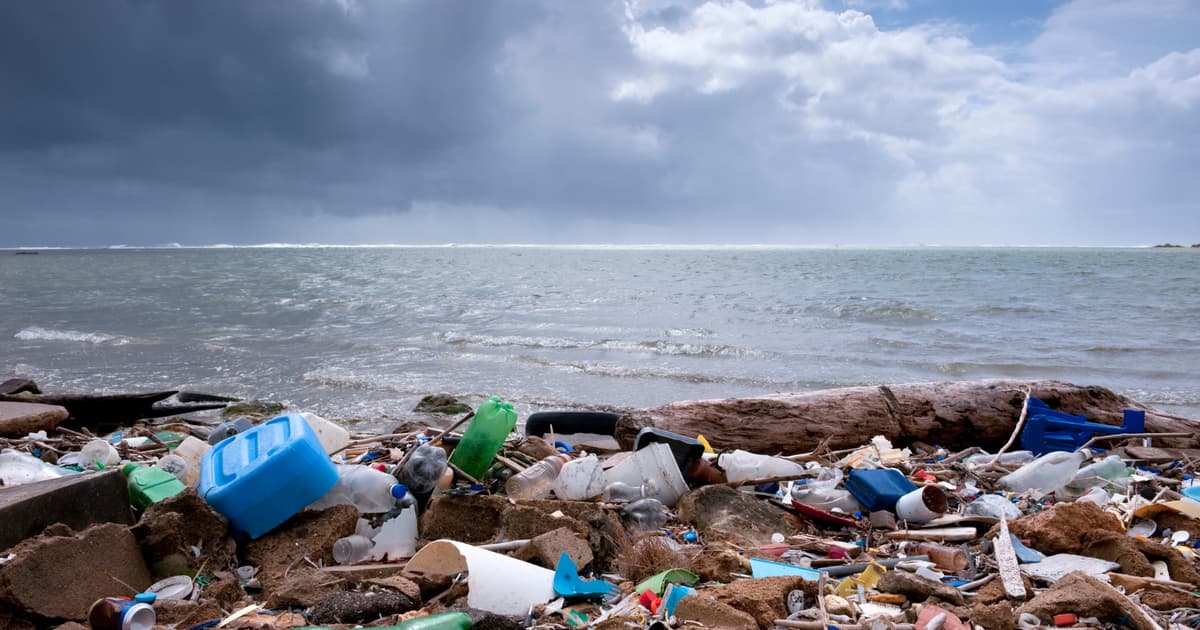
The World Produces Approximately 460 Million Tonnes of Plastic Every Year — Roughly 230 Times the Amount Produced in 1950 — and only About 9 Percent of All Plastic Ever Made Has Been Recycled, with the Remainder Either Burned, Sent to Landfills, or Quietly Accumulating in the Environment, Where Researchers Are Now Finding Microplastic Particles in Human Blood, Brain Tissue, and the Placentas of Newborns.
Why It Matters
Persistent plastic pollution is turning into a widespread human exposure issue, raising urgent health, regulatory, and sustainability concerns for governments and industry alike.
Key Takeaways
- •Global plastic output reached 460 million tonnes in 2023.
- •Only 9 % of plastic waste is recycled worldwide.
- •About 22 % of plastic ends up mismanaged, polluting ecosystems.
- •Microplastics detected in 77 % of human blood samples.
- •Brain microplastic levels rose 50 % between 2016 and 2024.
Pulse Analysis
Plastic’s meteoric rise from a niche polymer to a material rivaling steel and cement underscores a systemic economic driver: low‑cost virgin resin produced from cheap oil and natural gas. Despite repeated policy pledges, the global recycling rate has hovered at 9 % for two decades, constrained by mixed‑polymer blends, contaminant‑laden streams, and the higher expense of reprocessing versus new production. The OECD projects annual output could surpass 1.2 billion tonnes by 2060 if current trends continue, amplifying the volume of waste that ends up in landfills, incinerators, or uncontrolled dumps, where it degrades into micro‑ and nanoplastic particles that persist for centuries.
Health research is now revealing that these microscopic fragments are not merely environmental tracers but bio‑active agents. Detectable in 77 % of blood samples, placentas, and, most alarmingly, brain tissue, microplastics have shown a 50 % increase in concentration over eight years. Correlative studies link their presence in arterial plaque to heightened cardiovascular events, while early data suggest potential neuroinflammatory pathways in dementia patients. The particles act as vectors for additives such as bisphenols and phthalates, compounding toxicity through oxidative stress, gene‑expression changes, and barrier‑crossing capabilities of nanoplastics.
The convergence of unchecked production, stagnant recycling, and emerging health risks demands a shift toward a circular plastics economy. Policymakers must incentivize design for recyclability, fund advanced sorting technologies, and impose stricter controls on single‑use items. Meanwhile, industry leaders can invest in bio‑based alternatives and closed‑loop systems to reduce virgin feedstock reliance. For investors and consumers, the growing body of scientific evidence signals both a risk and an opportunity: mitigating plastic exposure could become a decisive factor in corporate sustainability ratings and public health outcomes.
The world produces approximately 460 million tonnes of plastic every year — roughly 230 times the amount produced in 1950 — and only about 9 percent of all plastic ever made has been recycled, with the remainder either burned, sent to landfills, or quietly accumulating in the environment, where researchers are now finding microplastic particles in human blood, brain tissue, and the placentas of newborns.
Comments
Want to join the conversation?
Loading comments...